Анотація Цей інтегрований пакет документів є єдиним суверенним депозитом, що містить повний текст та інваріантне категоріально-математичне ядро Маніфесту Симбіотичного Гомеорезу українською та англійською мовами. Праця проголошує фундаментальний гуманітарний та категоріальний зсув: Людина є єдиним суверенним Суб'єктом...
К. Надутый, Igor Naida, Yuriy Yekhanurov et al.· Zenodo (CERN European Organi...· 0 citations
Conventional classification methods rely on the assumption that samples are independent and identically distributed, often ignoring the latent relational structures governing real-world data. Consequently, these methods fail to capture cross-sample dependencies, resulting in impoverished feature representations and sub...
Sooin Kim, Kyungtae Kim, Donghoon Kim et al.· Journal of universal compute...· 0 citations
Recommender systems typically rely on implicit feedback (e.g., clicks) to infer user preferences. However, such data is inherently prone to various biases, including position bias and popularity bias. Position bias occurs when higher-ranked items receive more interactions regardless of true relevance. Popularity bias r...
Md Aminul Islam· Proceedings of the 20th ACM...· 0 citations
Packaging-only release — model code and bundled weights are identical to 1.1.2. Added pyproject.toml with complete PyPI metadata (dependencies, console entry point, bundled model data); replaces setup.py GitHub Actions workflow that publishes releases to PyPI via trusted publishing — t2pmhc is now installable with pip...
Mark Polster, Josua Stadelmaier, Raphaël Gottardi et al.· Zenodo (CERN European Organi...· 0 citations
Reach audiences
Advertise in front of researchers, engineers, and readers.
Reproducibility companion to Graph neural networks versus feature-only learners for Chinese A-share sanction prediction: a holder–manager graph without transaction edges. Contains source, fixed-fit aggregates, source documentation, and tests for table regeneration. The reconstructed common-cutoff endpoint and graph sem...
Yi Qiu Cheng, Xiaorong Cheng· Zenodo (CERN European Organi...· 0 citations
Reactive marimo notebooks for ML experimentation, with MLflow tracking, PINA physics-informed neural networks, and a multi-agent team built on pydantic-graph and Ollama Cloud.
Björn Bethge· Zenodo (CERN European Organi...· 0 citations
Sodium-ion batteries (SIBs) are emerging as a sustainable, cost-effective alternative to lithium-ion batteries (LIBs) for grid storage, electric vehicles, and electronics. However, commercialization depends on overcoming the performance bottlenecks in energy density, kinetic rates, and safety. Artificial Intelligence (...
Modern theoretical physics, pure mathematics, and artificial intelligence have converged upon a dual epistemological crisis: while automated neural theorem engines generate sprawling, opaque derivation steps that suffer from an unbridged "epistemic justification gap" (Tanswell & Berg, M\times\Phi 2026), human mathemati...
Chou Cosmo· Zenodo (CERN European Organi...· 0 citations
Trained PyTorch checkpoints for every run reported in the accompanying paper: graph neural network (GAT) models that predict DNA transmission and density-of-states spectra, either through a learned reduced-order Hamiltonian passed through an NEGF layer (Hamiltonian model) or directly from pooled graph features (direct...
Anonymous ICLR Author· Zenodo (CERN European Organi...· 0 citations
Generative recommendation is an emerging paradigm that has shown promise in industrial recommendation systems, aiming to predict users’ next interactions from their historical behaviors. At the core of generative recommendation lies item tokenization, which bridges item semantics and recommendation models. However, exi...
Ruizhong Qiu, Yinglong Xia, Dongqi Fu et al.· 0 citations
Assistant Professor Pat Pataranutaporn describes a new interface that lets everyday users glimpse inside an AI's neural network before their chatbot ever says a word.
Microsoft Research Blog· microsoft.comJul 13, 2026
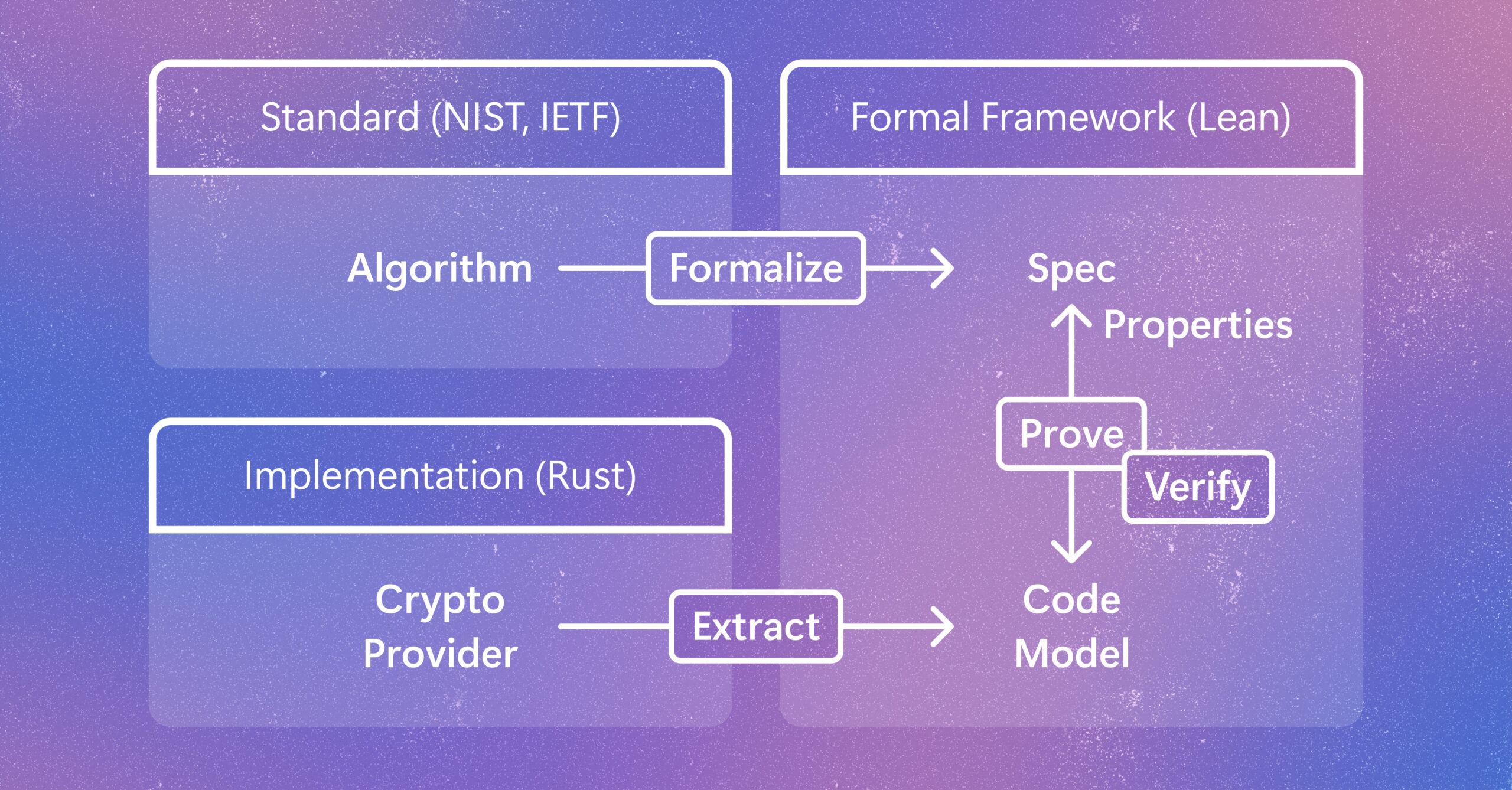
Cryptographic code supports vital protections in modern computing systems. Learn how a new method helps verify code as developers write it while preserving speed and adaptability as it gets implemented and evolves. The post Verifying Rust cryptography in SymCrypt, from standards to code appeared first on Microsoft Research.
MIT News · Artificial Intelligence· news.mit.eduJul 6, 2026
PhD student Rachel Sava, winner of the Envisioning the Future of Computing Prize, explores transformative improvements and dystopian risks of neural technology.