Generative recommendation is an emerging paradigm that has shown promise in industrial recommendation systems, aiming to predict users’ next interactions from their historical behaviors. At the core of generative recommendation lies item tokenization, which bridges item semantics and recommendation models. However, existing methods often struggle to effectively organize and inject complex user-behavioral and item-semantic contexts into recommendation models simultaneously. On the one hand, existing graph-based integration methods, such as graph serialization and graph neural networks, either suffer from scalability issues or exploit only local graph information. On the other hand, existing semantic tokenization methods typically rely on heuristics and lack explicit supervision signals, which may lead to inaccurate or suboptimal semantic representations. To address these limitations in user interest context modeling, we propose G2Rec, a scalable framework that unifies holistic graph-based user co-engagement modeling with semantic tokenization for industrial-scale generative recommendation. First, we construct a sparsified item-item co-engagement graph with \(\mathop {\operatorname{O}}(M\log M)\) edges as the item schema, where M denotes the total number of interactions. Second, we design a scalable “soft” clustering algorithm with time complexity \(\mathop {\operatorname{O}}(\rho M\log M)\) per iteration to extract distributed interest prototypes from the constructed graph, where ρ is a small constant representing the sparsity of the soft cluster membership distribution rather than a hard one-to-one assignment. Third, based on the interest prototypes and item interest profiles extracted by soft clustering, we tokenize these profiles together with users’ interested items to train a generative sequential recommendation model. Overall, G2Rec enables recommendation models to capture holistic and semantically grounded user interest prototypes without requiring ground-truth user interests, thereby providing more comprehensive and accurate modeling of user behavior contexts in industrial sequential recommendation. Online deployment across product surfaces and extensive experiments on public datasets demonstrate the superiority of G2Rec over existing methods. Proofs of theoretical results can be found at https://arxiv.org/abs/2606.20554.
Agile methods continue to gain popularity. In particular, the Scrum method appears to be on the verge of becoming a de-facto standard in the industry, leading the so called Agile movement. While there are success stories and recommendations, there is little scientifically valid evidence of the challenges in the adoptio...
A. Marchenko, P. Abrahamsson· Agile Conference· 59 citations· ⚡11
A comprehensive taxonomy of the challenges faced when a medium-scale organization decided to adopt software platforms is provided, namely: business challenges, organizational challenges, technical challenges, and people challenges.
Yaser Ghanam, F. Maurer, P. Abrahamsson· Information and Software Tec...· 41 citations· ⚡3
It is shown that high article processing charges are not sufficiently justified by the publishers, which often lack transparency and may prevent authors from adopting OA.
D. Graziotin, Xiaofeng Wang, P. Abrahamsson· Scientometrics· 21 citations· ⚡1
MCGLPPI, a novel geometric representation learning framework that combines graph neural networks (GNNs) with the MARTINI molecular coarse-grained (CG) model to predict overall PPI properties accurately and efficiently, offers an effective and efficient solution for PPI overall property predictions.
Yang Yue, Shu Li, Yihua Cheng et al.· bioRxiv· 15 citations
PepPCBench enables a robust evaluation of PFNN-based methods and supports their continued development for peptide-protein structure prediction, and highlights the influence of peptide length, conformational flexibility, and training set similarity on prediction accuracy.
Si-Long Zhai, Huifeng Zhao, Ji-Ke Wang et al.· Journal of Chemical Informat...· 13 citations· ⚡1
OmniMol is presented, a framework using hypergraphs to improve predictions of molecular properties, addressing challenges of imperfect data annotation and enhancing model explainability, and achieves state-of-the-art performance in properties prediction.
Assistant Professor Pat Pataranutaporn describes a new interface that lets everyday users glimpse inside an AI's neural network before their chatbot ever says a word.
Microsoft Research Blog· microsoft.comJul 13, 2026
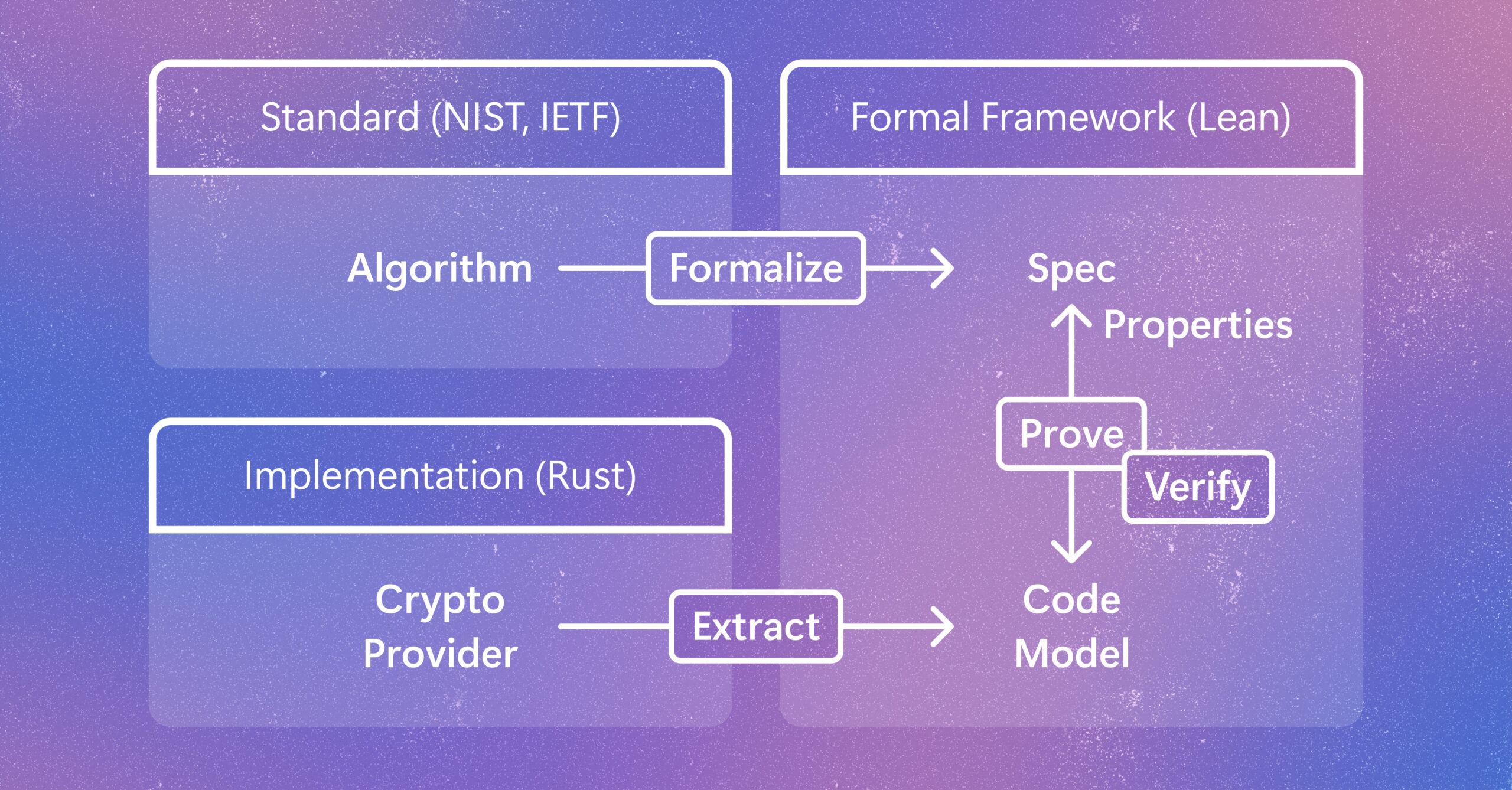
Cryptographic code supports vital protections in modern computing systems. Learn how a new method helps verify code as developers write it while preserving speed and adaptability as it gets implemented and evolves. The post Verifying Rust cryptography in SymCrypt, from standards to code appeared first on Microsoft Research.
MIT News · Artificial Intelligence· news.mit.eduJul 6, 2026
PhD student Rachel Sava, winner of the Envisioning the Future of Computing Prize, explores transformative improvements and dystopian risks of neural technology.