Intraday scheduling of cascade hydro-photovoltaic-pumped storage systems requires joint coordination of energy dispatch, photovoltaic accommodation, reserve security, and physical feasibility under photovoltaic fluctuation, load variation, inflow uncertainty, and limited storage capacity. Existing optimization methods...
Grid pattern recognition is of great significance for spatial pattern cognition, cartographic generalization, and multi-scale representation. To address the issues that existing methods rarely consider multi-level features and insufficiently utilize the learning and mining capabilities of intelligent models, this paper...
Protein function is determined not only by the static structure of molecules, but also by coordinated conformational fluctuations that occur across various spatial and temporal scales. Molecular dynamics simulations, elastic network models, principal component analysis, and related approaches offer useful descriptions...
Ionization governs molecular behavior, yet predicting aqueous pKa accurately and tractably remains a fundamental challenge. Rigorous ensemble methods require enumerating a protonation-state space that grows exponentially with the number of ionizable sites, while fast graph predictors return numbers without thermodynami...
Zhuoyan Liu, Qiuyin Zhu, Qingkun Li et al.· bioRxiv (Cold Spring Harbor...· 0 citations
Reach audiences
Advertise in front of researchers, engineers, and readers.
Medical image analysis is progressing from a unimodal visual assessment phase toward data-driven, multimodal learning methods that reflect clinical reasoning processes more closely. Traditional deep learning approaches primarily rely on imaging data; additional information from electronic health records, genetics, or o...
K. V. Satyanarayana, P. S. V. Srinu Babu, Rajesh Bose· CRC Press eBooks· 0 citations
Adverse drug reactions and ineffective medication selection remain major challenges in modern healthcare systems, especially for patients with multiple medical conditions and varying physiological characteristics.Existing drug recommendation systems primarily focus on treatment effectiveness while giving limited import...
Unknown authors· International Journal of Dru...· 0 citations
OpenFOAM data of the benchmarks of the manuscript "Label-Free Finite-Volume-Residual Training of Attention Graph Neural Networks for Coupled Thermo-Fluid Fields".
Tianyu Li· Zenodo (CERN European Organi...· 0 citations
Beyond Heuristics is a 3-page research journal on how Artificial Intelligence is changing logic gate synthesis in Electronic Design Automation (EDA). Modern chips contain billions of gates, and traditional rule-based synthesis struggles to balance power, performance, and area. The journal reviews three AI approaches to...
Jommel John Sinsuan· Zenodo (CERN European Organi...· 0 citations
This research introduces a novel, high-performance hybrid framework merging Deep Reinforcement Learning (DRL) for dynamic consensus optimization with Graph Neural Networks (GNN) for advanced smart contract security auditing. Traditional blockchain architectures frequently struggle with balancing scalability and securit...
Annu Anuj Sharma· Zenodo (CERN European Organi...· 0 citations
A generative framework driven by conditional diffusion models integrated with graph neural networks integrated with graph neural networks is proposed to solve the high-dimensional nonlinear multi-objective energy optimization in building clusters.
Assistant Professor Pat Pataranutaporn describes a new interface that lets everyday users glimpse inside an AI's neural network before their chatbot ever says a word.
Microsoft Research Blog· microsoft.comJul 13, 2026
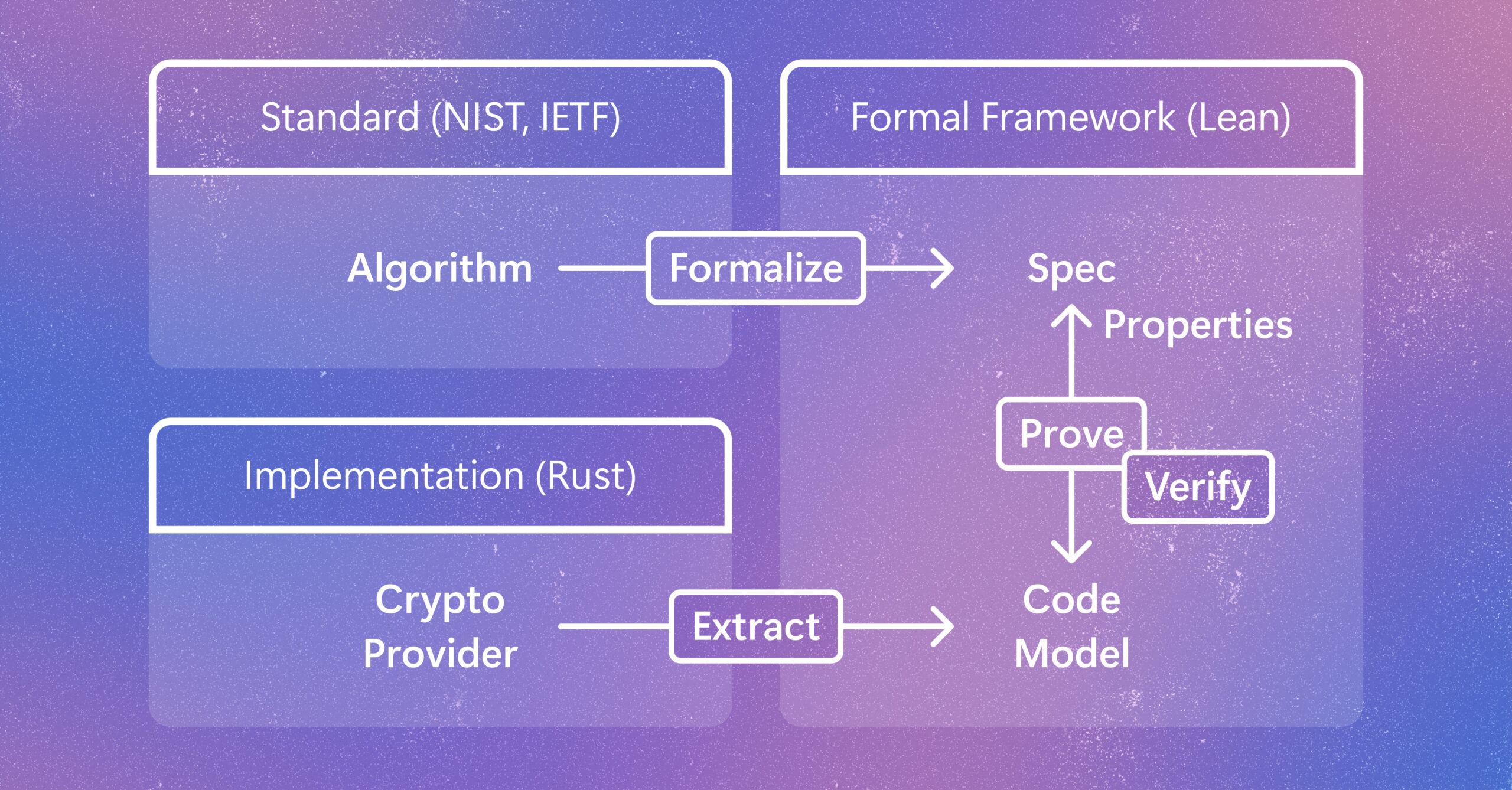
Cryptographic code supports vital protections in modern computing systems. Learn how a new method helps verify code as developers write it while preserving speed and adaptability as it gets implemented and evolves. The post Verifying Rust cryptography in SymCrypt, from standards to code appeared first on Microsoft Research.
MIT News · Artificial Intelligence· news.mit.eduJul 6, 2026
PhD student Rachel Sava, winner of the Envisioning the Future of Computing Prize, explores transformative improvements and dystopian risks of neural technology.