Supporting dataset for the manuscript “Application of artificial intelligence to classify the mechanisms of drug-induced nephrotoxicity” (VNUHCM Journal of Health Sciences, manuscript 813, under review). The study uses a two-tier workflow: a communicative message passing neural network (CMPNN) predicts binary nephrotox...
Thanh Ngoc Nguyen, Nguyen Vinh Pham, Phan Yen Nhi Huynh et al.· Zenodo (CERN European Organi...· 0 citations
Spatio-temporal graph neural networks (ST-GNNs) have been proposed for predicting the Water Quality Index (WQI) of groundwater, but published comparisons rarely control task formulation, tuning effort or evaluation uncertainty. A gated ST-GNN, recurrent networks and classical baselines were therefore benchmarked on 352...
The structural and adsorption properties of hydrogen-passivated armchair stanene nanoribbons (ASnNRs) decorated with Ti, Mn, and Ni were investigated using density functional theory (DFT). The calculations were complemented by Boltzmann transport theory and Crystal Graph Convolutional Neural Network (CGCNN) predictions...
The 240 root vectors of the E8 lattice define a 132 Hz phonon substrate whose φ‑modulated phase shifts generate Fibonacci‑spaced soliton nodes that encode Gödelian self‑referential statements. These nodes form a topologically ordered quantum graph that couples phonon phase entanglement with neural oscillation patterns,...
Andrew Stewart Caldin· Zenodo (CERN European Organi...· 0 citations
Accurately modeling intricate geographical interconnections and dynamic temporal patterns is still a significant difficulty in traffic forecasting, playing a crucial role in intelligent transportation systems. The majority of contemporary spatiotemporal graph neural networks are limited in their capacity to capture lon...
Xueyan Yin, Youcheng Qian, Wenze Zhou et al.· SAE technical papers on CD-R...· 0 citations
Accurate short-term passenger flow forecasting is important for the operational management of urban rail transit systems. However, most existing graph-based forecasting methods rely primarily on physical network topology and may fail to capture latent correlations between non-adjacent stations. To address this limitati...
EASTERN MEDITATION AND NEURAL REGULATION AT THE LIMIT F011–F015 · STARLI · White Rainbow Era · Research Working Edition v1.0 Prospective scientific technical notebook. All models are synthetic, not human, biological or clinical findings. Synthetic signals or authorized offline records; human or clinical research requir...
VOLITION FORMATION AND AUTONOMIC NEURAL DYNAMICS AT THE LIMIT F001–F005 · STARLI · White Rainbow Era · Research Working Edition v1.0 Prospective scientific technical notebook. All models are synthetic, not human, biological or clinical findings. Synthetic signals or authorized offline records; human or clinical researc...
Coordinated decisions on renewable energy generation, electricity demand, storage, distribution infrastructure, and environmental monitoring are essential for the shift to low-carbon energy systems.Although practical solutions often treat forecasting, anomaly detection, network analysis, and operational scheduling as s...
Y. Jnapika, Kunjam Nageswara Rao· International Journal of Sci...· 0 citations
Transmissible hospital-acquired infections (HAIs) arise from complex, time-varying interactions among patients, healthcare workers, and clinical environments. Although data-driven approaches like graph neural networks (GNNs) effectively model these contacts, they often function as black boxes that overlook established...
Yamil Vindas, Alban Bornet, Mohamed Abbas et al.· npj Digital Medicine· 0 citations
Machine-learning networks can learn without detailed instructions from a designer. Those that do may offer insight into how the brain reorganizes itself during learning.
MIT News · Artificial Intelligence· news.mit.eduJul 15, 2026
Assistant Professor Pat Pataranutaporn describes a new interface that lets everyday users glimpse inside an AI's neural network before their chatbot ever says a word.
Microsoft Research Blog· microsoft.comJul 13, 2026
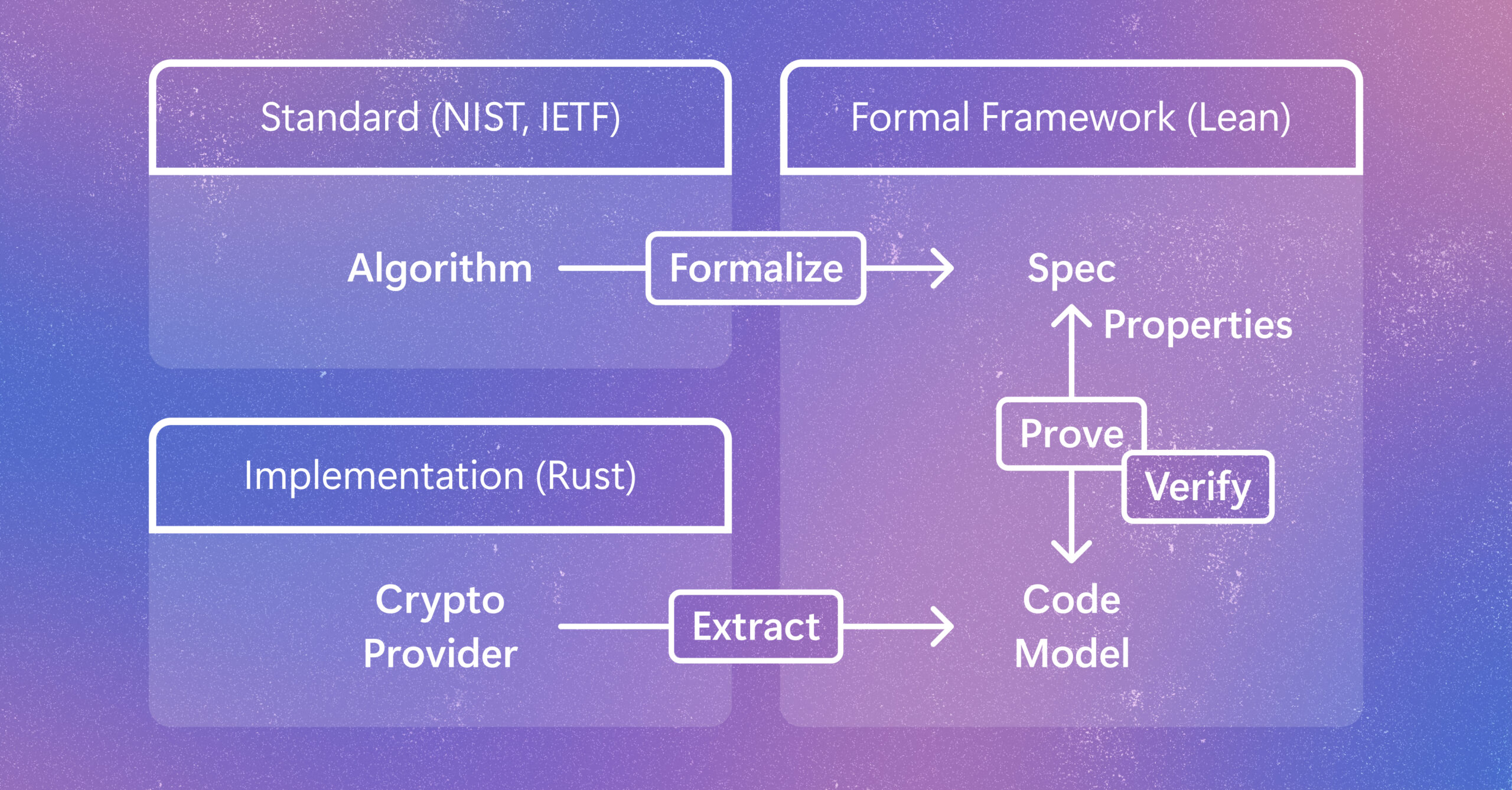
Cryptographic code supports vital protections in modern computing systems. Learn how a new method helps verify code as developers write it while preserving speed and adaptability as it gets implemented and evolves. The post Verifying Rust cryptography in SymCrypt, from standards to code appeared first on Microsoft Research.
MIT News · Artificial Intelligence· news.mit.eduJul 6, 2026
PhD student Rachel Sava, winner of the Envisioning the Future of Computing Prize, explores transformative improvements and dystopian risks of neural technology.
We use cookies to run the site and, with your consent, for analytics and to show ads.
See our Cookie Policy.