Skip to content

Generative AI versus Neurosurgeon in the Management of Head Injury Patients

Sep 2026 · Indian Journal of Neurotrauma · 0 citations · 22 references
Artificial Intelligence in Healthcare and Education

Abstract

Abstract Introduction Generative AI models are large language models capable of interacting with humans in a man–machine interface. Endowed with extensive training on an expansive corpus of textual data, these GPTs excel across diverse domains, notably in the realms of medicine and healthcare. Generative AIs like ChatGPT, if incorporated into routine practice, can prove beneficial in patient diagnosis, management, and timely referral. Objectives This study aims to evaluate and compare the currently available GPT models with the expertise of neurosurgeons. Material and methods We explored the most widely used LLMs that are free to use to test and compare them with neurosurgeon's expertise viz, ChatGPT with GPT 4o, Claude Sonnet 4, Gemini 2.5 Flash, DeepSeek v3, Perplexity (AI search engine based on multiple LLMs), Microsoft Copilot, and Grok 3. Data were collected from 32 patients with head injury coming to the OPD or emergency department of a tertiary care center in India. Statistical analysis Neurosurgeon's opinion on whether to operate or provide conservative management versus the opinions of the different GPT models were compared using McNemar's exact test, and raw agreement was calculated. Results Out of 32 patients, the neurosurgeon advised conservative management in 29 patients (90.6%) versus surgery in three patients (9.4%). Raw agreement between the neurosurgeon and each AI model ranged from 50.0 to 81.2%. DeepSeek V3 (conservative 71.9% vs. surgery 28.1%; 81.2%) and Perplexity (conservative 71.9% vs. surgery 28.1%; 81.2%) achieved the highest agreement with the neurosurgeon's preferred method of treatment, followed by ChatGPT-4o (conservative 59.4% vs. surgery 40.6%; 68.8%) and Gemini 2.5 (conservative 59.4% vs. surgery 40.6%; 68.8%), Claude Sonnet 4 (conservative 16 patients vs. surgery 16 patients; 59.4%) Copilot (conservative 16 patients vs. surgery 16 patients; p -value 59.4%), and Grok 3, which had raw agreement of only 50%. On McNemar's exact test, five of seven models – ChatGPT-4o, Gemini 2.5 Flash, Claude Sonnet 4, Copilot, and Grok 3–showed statistically significant asymmetric disagreement with the neurosurgeon after Bonferroni correction; DeepSeek V3 and Perplexity did not reach significance ( p  = 0.031 for each, above the adjusted threshold of 0.0071). Conclusion In this small, single-center retrospective comparative study – freely available generative AI tools showed a tendency to recommend surgery more often than neurosurgeons. The disagreement occurred in a single direction only across all models. We are still at the initial stages of AI development. However, as the technology advances, these AI tools can prove to be beneficial adjuncts for the care of patients, and neurosurgeons should learn and incorporate these tools in their practice.


Read PDF

Similar papers

#small language model Dataset Open access Oct 2026

Socratic guiding questions in synthetic arithmetic data: matched LoRA runs (revision v2)

Supporting data, adapters, predictions and code for the article *Low-Cost LoRA Fine-Tuning of Small Language Models for Multi-Step Arithmetic Reasoning* by Jake O'Grady, Asena Isik Gürhan, Chee Fong Ting and Effirul Ramlan (University of Galway). We generated 20,000 GSM8K-derived arithmetic problems with step-by-step s...

O'Grady, Jake, Gürhan, Asena Isik, Chee, Fong Ting et al. · 465 citations
#computer vision Open access Jun 2016

Software Development in Startup Companies: The Greenfield Startup Model

The results are packaged in the Greenfield Startup Model (GSM), which explains the priority of startups to release the product as quickly as possible, and the need to shorten time-to-market, by speeding up the development through low-precision engineering activities.

Carmine Giardino, Nicolò Paternoster, M. Unterkalmsteiner et al. · 178 citations · ⚡14
#computer vision Open access Oct 2016

Software Startups - A Research Agenda

Software startup companies develop innovative, software-intensive products within limited timeframes and with few resources, searching for sustainable and scalable business models.

M. Unterkalmsteiner, P. Abrahamsson, Xiaofeng Wang et al. · 157 citations · ⚡17
#machine learning Review Open access Oct 2016

“Failures” to be celebrated: an analysis of major pivots of software startups

This study conducts a case survey study based on the secondary data of the major pivots happened in 49 software startups, and demonstrates that customer need pivot is the most common among all pivot types.

Sohaib Shahid Bajwa, Xiaofeng Wang, Anh Nguyen-Duc et al. · 127 citations · ⚡15
#computer vision Review Open access May 2015

A survey study on major technical barriers affecting the decision to adopt cloud services

The comparison of adopter and non-adopter sample reveals three potential adoption inhibitor, security, data privacy, and portability, which underlines the importance of the technical and security perspectives for research investigating the adoption of technology.

Nattakarn Phaphoom, Xiaofeng Wang, S. Samuel et al. · 111 citations · ⚡8
#computer vision Open access Feb 2018

Lean Internal Startups for Software Product Innovation in Large Companies: Enablers and Inhibitors

This study investigates how Lean internal startup facilitates software product innovation in large companies and identifies its enablers and inhibitors, and shows the potential of the method-in-action framework to investigate the Lean startup approach in non-startup context.

Henry Edison, Nina M. Smørsgård, Xiaofeng Wang et al. · 78 citations · ⚡6

Related blog posts

MIT News · Artificial Intelligence Oct 15, 2026

AI model decodes the language cells use to communicate

A new computational approach reveals how cells communicate to assemble into tissues. This could accelerate stem cell engineering, improve disease models, and inform therapies.

Microsoft Research Blog Oct 12, 2026

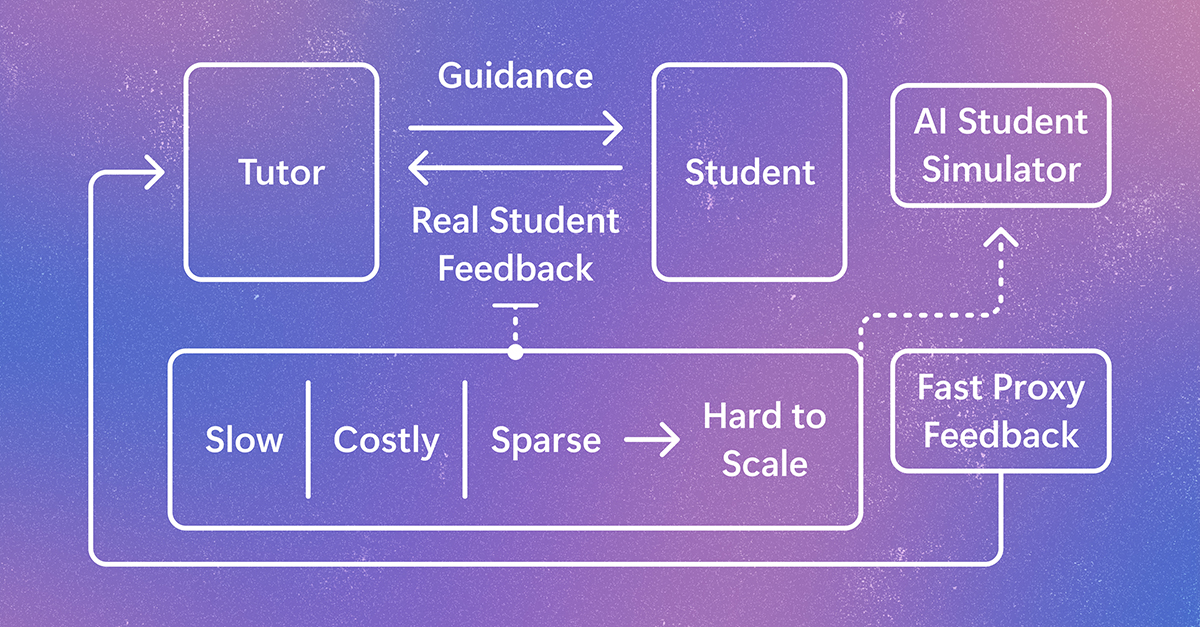
Simulating student learning for better AI tutoring

StudentSim is a research system for evaluating and improving AI tutoring tools before they are tested with learners. It models how individuals may engage with tutors, giving feedback to improve tutor performance across subjects like chess, writing, and mathematics. The post Simulating student learning for better AI tutoring appeared first on Microsoft Research.

We use cookies to run the site and, with your consent, for analytics and to show ads. See our Cookie Policy.