Sep 2026· Italian National Conference on Sensors· Vol 26· 0 citations· 41 references
Medicine
Abstract
Fault diagnosis of rotating machinery is essential for ensuring the reliable and safe operation of industrial equipment. However, imbalanced training data often bias intelligent diagnostic models toward majority classes, resulting in insufficient representation of minority faults. In addition, the high dimensionality and redundancy of vibration signals make it difficult to extract discriminative features and preserve meaningful neighborhood structures, thereby degrading diagnostic performance. To address these challenges, a waveform-prediction augmentation and deep manifold learning model for imbalanced fault diagnosis is proposed for rotating machinery. First, minority-class fault signals are augmented through time-series prediction using a nonlinear autoregressive neural network (NARNN), thereby alleviating the class imbalance at the data level. Subsequently, a deep manifold feature mapping (DMAP) is proposed to extract discriminative fault features. In DMAP, a stacked autoencoder (SAE) is employed to perform preliminary feature extraction on the training samples and obtain deep latent feature representations. The deep features extracted by the SAE are further processed using a dynamic time warping (DTW)-assisted manifold learning method for dimensionality reduction. In this process, DTW is used to calculate pairwise dissimilarities between deep representations and construct the neighborhood graph, thereby better preserving the local neighborhood relationships and topological structure of the deep features and producing more discriminative low-dimensional representations. Finally, a k-nearest neighbor classifier is adopted for fault classification. By integrating data augmentation, deep feature learning, and manifold dimensionality reduction, the proposed model effectively improves the fault diagnosis performance in imbalanced scenarios. Experiments on the bearing and planetary gearbox datasets demonstrate that, under an imbalance ratio of 0.1, the proposed method improves diagnostic accuracy by 10.2 and 1.6 percentage points, respectively. The comparative results further confirm its effectiveness in alleviating the diagnostic difficulties caused by class imbalance.

BackgroundThe prevalence of overweight and obesity is increasing in Bangladesh. It is higher among Bangladeshi women than among men. This study was conducted to assess a host of demographic and socioeconomic correlates of overweight and obesity, separately for the urban and rural women of Bangladesh.MethodsWe used data...
Haribondhu Sarma, N. Saquib, M. Hasan et al.· BMC Obesity· 75 citations· ⚡5
Purpose Overall health status indicators have improved significantly over the past three decades in Indonesia. However, the country’s maternal mortality ratio remains high with a stark inequality by region. Fewer studies have explored access inequity in maternal health care service over time using multiple inequality m...
Herfina Y. Nababan, M. Hasan, Tiara Marthias et al.· International Journal of Wom...· 64 citations· ⚡2
Agile methods continue to gain popularity. In particular, the Scrum method appears to be on the verge of becoming a de-facto standard in the industry, leading the so called Agile movement. While there are success stories and recommendations, there is little scientifically valid evidence of the challenges in the adoptio...
A. Marchenko, P. Abrahamsson· Agile Conference· 59 citations· ⚡11
The association between mother’s education and the World Health Organization’s (WHO’s) eight Infant and Young Child Feeding (IYCF) core indicators has yet to be explored in South Asia (SA). This study aimed to explore the association between mother’s education and the WHO’s eight IYCF core indicators in SA. We analyzed...
M. Tariqujjaman, M. Hasan, M. Mahfuz et al.· Nutrients· 45 citations· ⚡4
A comprehensive taxonomy of the challenges faced when a medium-scale organization decided to adopt software platforms is provided, namely: business challenges, organizational challenges, technical challenges, and people challenges.
Yaser Ghanam, F. Maurer, P. Abrahamsson· Information and Software Tec...· 41 citations· ⚡3
INTRODUCTION Exclusive breastfeeding is balanced nutrition for growth and development of the infant, prevents stunting as well as protects from infectious and chronic diseases and has also potential to reduce infant mortality. Thus, the study aimed to assess maternal knowledge, attitudes and other factors associated wi...
M. Hasan, M. Hassan, M. Khan et al.· Population Medicine· 32 citations· ⚡6
Related blog posts
MIT News · Artificial Intelligence· news.mit.eduOct 26, 2026
Machine-learning networks can learn without detailed instructions from a designer. Those that do may offer insight into how the brain reorganizes itself during learning.
MIT News · Artificial Intelligence· news.mit.eduJul 15, 2026
Assistant Professor Pat Pataranutaporn describes a new interface that lets everyday users glimpse inside an AI's neural network before their chatbot ever says a word.
Microsoft Research Blog· microsoft.comJul 13, 2026
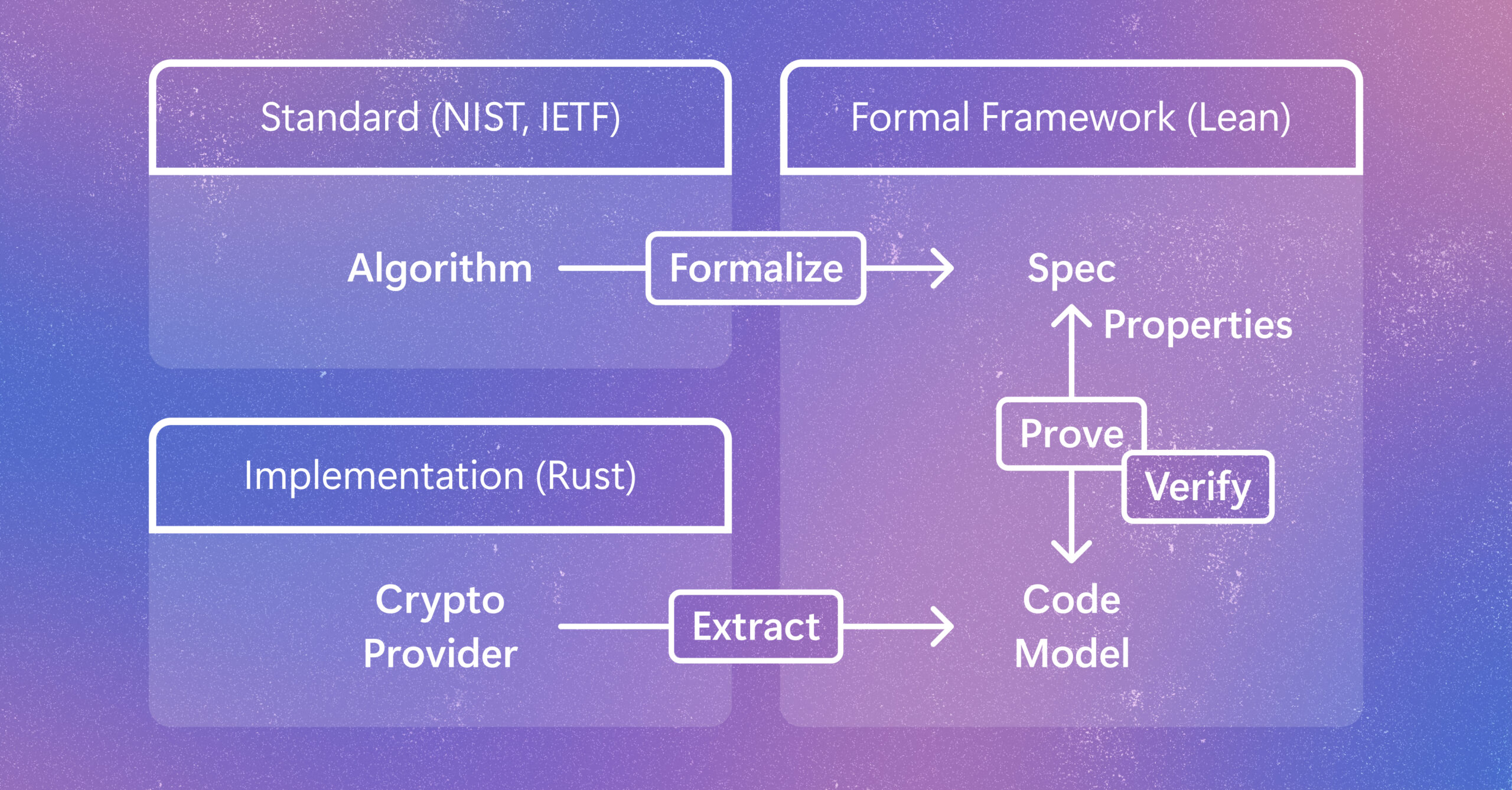
Cryptographic code supports vital protections in modern computing systems. Learn how a new method helps verify code as developers write it while preserving speed and adaptability as it gets implemented and evolves. The post Verifying Rust cryptography in SymCrypt, from standards to code appeared first on Microsoft Research.
We use cookies to run the site and, with your consent, for analytics and to show ads.
See our Cookie Policy.