A conditional transport model that represents cells as unordered sets and predicts treated populations without cell-level matching that enables perturbation-specific prediction from unpaired populations and supports experimental prioritization is presented.
Abstract
Virtual-cell models aim to predict how cell populations respond to perturbations, but control and treated cells are measured as unpaired populations, complicating the learning of perturbation-specific effects. We present SCALE, a conditional transport model that represents cells as unordered sets and predicts treated populations without cell-level matching. A shared set-aware encoder and conditional DiT backbone learn latent transport, making end-point supervision directly delta-aligned without an auxiliary delta objective. Across genetic, chemical, developmental and immune perturbations, SCALE recovered gene-expression changes, response directions and population structure. In CRISPR data with dominant cell-line effects, SCALE outperformed competing methods across seven metrics and maintained separation among gene-target representations rather than collapsing them into a shared region. SCALE further prioritized cytokines predicted to produce distinct immune activation and inflammatory responses. Experiments using matched PBMC samples from three donors confirmed these predicted differences. Together, SCALE enables perturbation-specific prediction from unpaired populations and supports experimental prioritization.
PerturbLDM, a latent-diffusion framework for conditional generation of single-cell transcriptional responses, is introduced, showing support for conditional response generation across data scales and biological settings.
Li-Shan Yu, Kang-Lin Hsieh, Y. Chu et al.· bioRxiv· 0 citations
PerturbBridge is proposed, a conditional latent Schrödinger Bridge framework that reformulates stochastic population transport over high-dimensional, sparse geneexpression profiles as bridge learning in a compact cell latent space, and achieves state-of-the-art performance in differential-expression recovery on both be...
Zhi-Hao Liu, Chang-Zhi Jiang, Can Yang et al.· bioRxiv· 0 citations
The results show that compact biological representations can support accurate and computationally efficient perturbation prediction, and highlight the importance of perturbation representations and population-construction procedures in low-data benchmarks.
Dewei Hu, Marc Pielies Avellí, L. J. Jensen et al.· bioRxiv· 0 citations
Overall, scLDM provides a robust and biologically consistent strategy for in silico perturbation screening, and exhibits strong interpretability, as the learned perturbation embeddings show high functional alignment with known biological mechanisms.
ScPILOT learns a generative latent representation through discriminator‐assisted training and separates perturbation inference into cell‐level response estimation from observed contexts and query‐specific response transfer using latent optimal transport, a query‐conditioned framework for transferring responses to previ...
Jia-Liang Wang, Zi-Qi Liu, Zheng-Qiang Zhang et al.· Advancement of science· 0 citations
PopPert predicts perturbation-induced changes in distribution parameters, eliminating the need for cell-level correspondence and reducing sensitivity to single-cell noise, establishing population-level joint distribution learning as an effective paradigm for predicting transcriptional responses from unpaired single-cel...
Han-Dong Wang, Jiaxin Qi, Hao-Chen Feng et al.· 0 citations
Related blog posts
MIT News · Artificial Intelligence· news.mit.eduSep 29, 2026
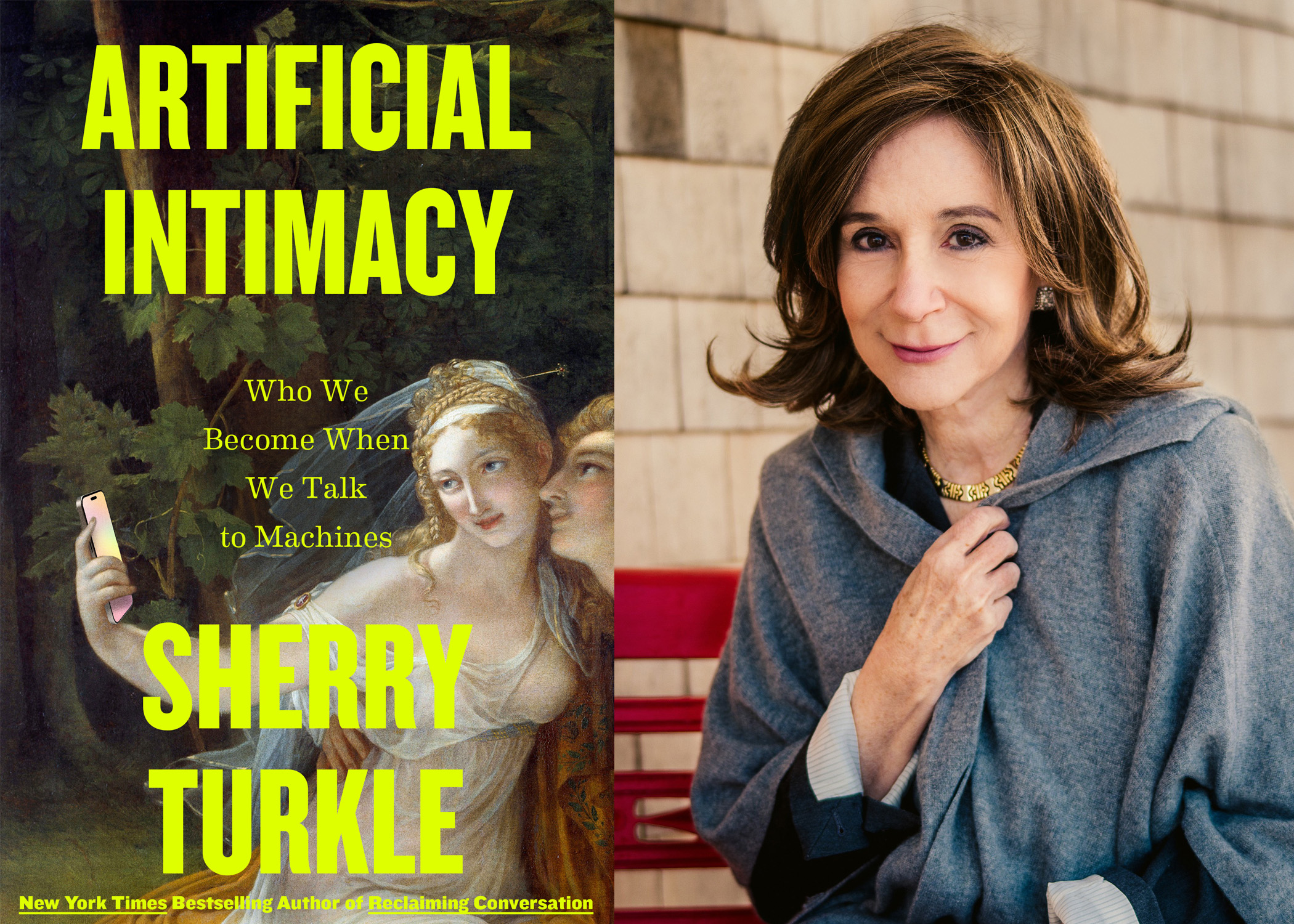
Professor Sherry Turkle’s new book, “Artificial Intimacy,” offers a withering critique of chatbots and the antisocial dynamics she believes they encourage.


