Skip to content
#graph neural networks Review Open access

Factors associated with calendar literacy and last menstrual period (LMP) recall: a prospective programmatic implication to maternal health in Bangladesh

Dec 2020 · BMJ Open · Vol 10 · 9 citations · 48 references
Medicine

Abstract

Objective To explore the prevalence and determinants of calendar literacy and last menstrual period (LMP) recall among women in Bangladesh. Design Cross-sectional survey. Settings Two rural subdistricts and one urban area from three Northern districts of Bangladesh. Participants We interviewed 2731 women who had a live birth in the last 1 year. Primary and secondary outcome measures The primary outcome variable was LMP recall and the secondary outcome was calendar literacy. Results The majority of participants (65%) correctly mentioned the current date according to the English calendar while 12% mentioned according to the Bengali calendar. During the interview sessions, we used three different calendars: Bengali, English and Hijri to assess calendar literacy. We asked women to mark the current date using the calendar on the day of the interview. Almost 61% women marked the English calendar, 16% marked the Bengali calendar and 4% marked the Hijri calendar correctly. Sixty-three per cent women were found as calendar literate who marked any of the calendars. Among the participants, 58% had calendars available at their home and only 10% of women used calendars to track their LMPs. Overall, 53% women were able to recall their recent LMP. Among the calendar literate, 60% could recall their LMPs. Factors found associated with recalling LMP were: completed eight or more years of schooling (adj.OR 1.39), primigravida (adj.OR 1.88), the richest wealth quintile (adj.OR 1.55) and calendar literacy (adj.OR 1.59). Conclusions Despite having reasonable calendar literacy and availability, the use of calendars for tracking LMP found very low. Calendar literacy and sociodemographic characteristics were found as the key factors associated with LMP recall. Maternal, neonatal and child health programmes in low-resource settings can promote a simple tool like calendar and target the communities where ultrasound is not available to ensure accurate LMP recall for early pregnancy registration and timely antenatal care coverage.


Read PDF

Similar papers

#computer vision Review Open access Mar 2016

Determinants of overweight or obesity among ever-married adult women in Bangladesh

BackgroundThe prevalence of overweight and obesity is increasing in Bangladesh. It is higher among Bangladeshi women than among men. This study was conducted to assess a host of demographic and socioeconomic correlates of overweight and obesity, separately for the urban and rural women of Bangladesh.MethodsWe used data...

Haribondhu Sarma, N. Saquib, M. Hasan et al. · 75 citations · ⚡5
#data science Review Open access Dec 2017

Trends and inequities in use of maternal health care services in Indonesia, 1986–2012

Purpose Overall health status indicators have improved significantly over the past three decades in Indonesia. However, the country’s maternal mortality ratio remains high with a stark inequality by region. Fewer studies have explored access inequity in maternal health care service over time using multiple inequality m...

Herfina Y. Nababan, M. Hasan, Tiara Marthias et al. · 64 citations · ⚡2
#computer vision Conference Aug 2008

Scrum in a Multiproject Environment: An Ethnographically-Inspired Case Study on the Adoption Challenges

Agile methods continue to gain popularity. In particular, the Scrum method appears to be on the verge of becoming a de-facto standard in the industry, leading the so called Agile movement. While there are success stories and recommendations, there is little scientifically valid evidence of the challenges in the adoptio...

A. Marchenko, P. Abrahamsson · 59 citations · ⚡11
#data science Review Open access Apr 2022

Association between Mother’s Education and Infant and Young Child Feeding Practices in South Asia

The association between mother’s education and the World Health Organization’s (WHO’s) eight Infant and Young Child Feeding (IYCF) core indicators has yet to be explored in South Asia (SA). This study aimed to explore the association between mother’s education and the WHO’s eight IYCF core indicators in SA. We analyzed...

M. Tariqujjaman, M. Hasan, M. Mahfuz et al. · 45 citations · ⚡4
#computer vision Open access Sep 2012

Making the leap to a software platform strategy: Issues and challenges

A comprehensive taxonomy of the challenges faced when a medium-scale organization decided to adopt software platforms is provided, namely: business challenges, organizational challenges, technical challenges, and people challenges.

Yaser Ghanam, F. Maurer, P. Abrahamsson · 41 citations · ⚡3
#natural language process... Review Open access Sep 2021

Prevalence, knowledge, attitudes and factors associated with exclusive breastfeeding among mothers in Dhaka, Bangladesh: A cross-sectional study

INTRODUCTION Exclusive breastfeeding is balanced nutrition for growth and development of the infant, prevents stunting as well as protects from infectious and chronic diseases and has also potential to reduce infant mortality. Thus, the study aimed to assess maternal knowledge, attitudes and other factors associated wi...

M. Hasan, M. Hassan, M. Khan et al. · 32 citations · ⚡6

Related blog posts

Microsoft Research Blog Jul 13, 2026

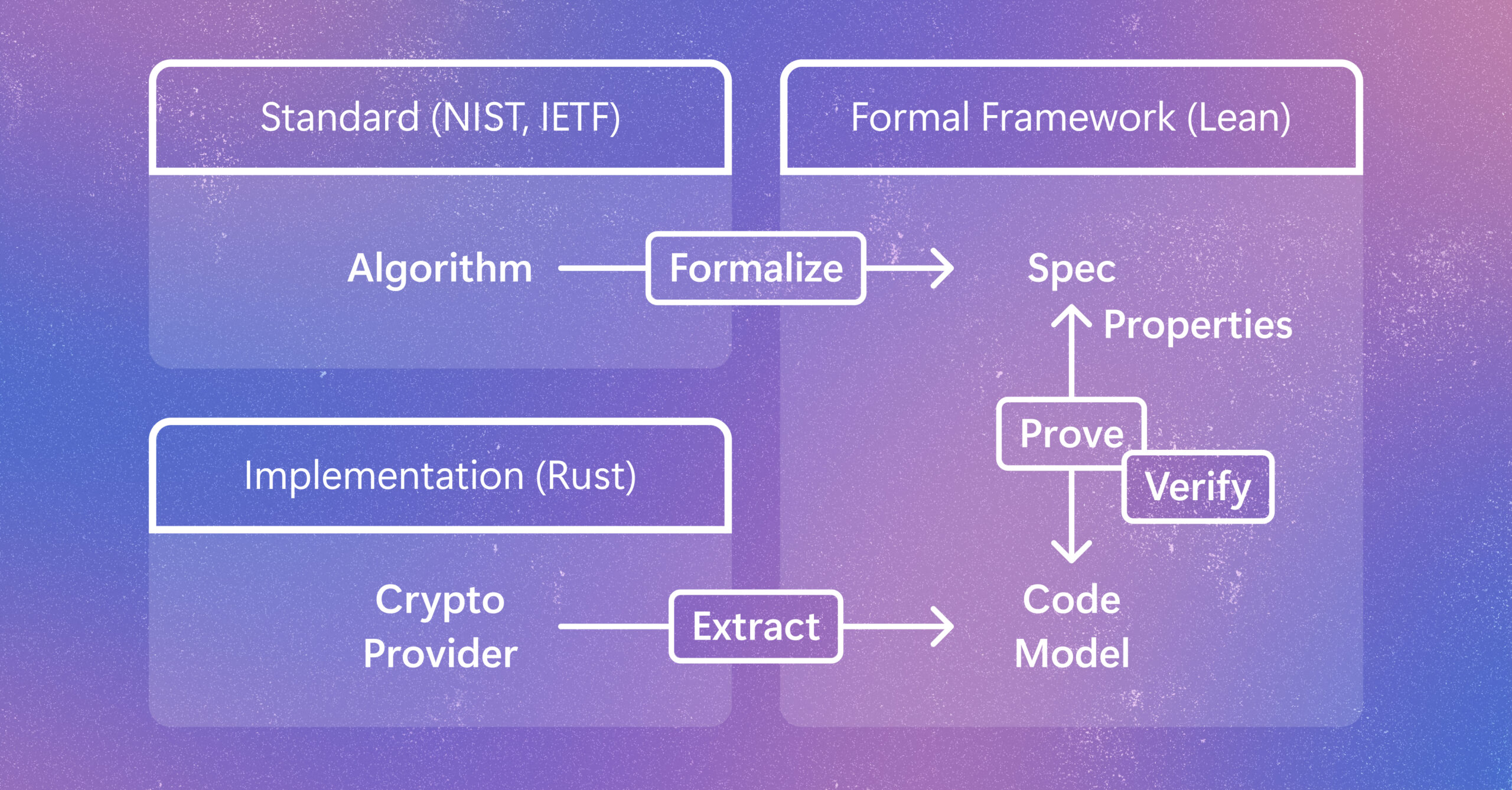
Verifying Rust cryptography in SymCrypt, from standards to code

Cryptographic code supports vital protections in modern computing systems. Learn how a new method helps verify code as developers write it while preserving speed and adaptability as it gets implemented and evolves. The post Verifying Rust cryptography in SymCrypt, from standards to code appeared first on Microsoft Research.

We use cookies to run the site and, with your consent, for analytics and to show ads. See our Cookie Policy.