Experiments on multiplicity-aware Two-Radius, motif counting, and constrained link-set prediction support this addressable and cardinality-preserving virtual memory at (O(nMd)) arithmetic cost.
Abstract
Virtual nodes give message-passing neural networks a simple global communication route, but the standard node--VN--node pipeline compresses the graph into one homogeneous state and broadcasts it identically to every node. Building on the Two-Radius analysis of Mishayev et al., we ask how auxiliary virtual memory can relieve this finite-capacity bottleneck without self-attention. We identify two requirements. First, the global memory should be factorized into independently writable and readable states: this can be achieved using addressable cross-attention slots. Second, addressability alone does not preserve multiplicity, because softmax attention is invariant to uniform replication. Inserting each slot query as a private key/value anchor recovers the discarded normalization mass and yields, on bounded color domains, an injective multiset representation able to implement a 1-WL refinement. Experiments on multiplicity-aware Two-Radius, motif counting, and constrained link-set prediction support this addressable and cardinality-preserving virtual memory at (O(nMd)) arithmetic cost.
This work proposes a BP-free algorithm, called ZeroLock, that decouples the model updates into independent chunk updates by local objective construction and provides the first theoretical framework for such local objective construction-based approaches under general model chunk division by mapping local objectives to t...
Wen-Tao Dai, Xuan-Ran Li, Yu-Xiang Zhang et al.· 0 citations
This work proposes Turbo, a first-of-its-kind in-network aggregation system that accelerates long-context inference by offloading query broadcast and attention aggregation to switches and introduces a rolling forward scheme that propagates states to enable cross-stage updates.
Ying Wan, Yuchen Xu, Chuwen Zhang et al.· Conference on Applications,...· 0 citations
On EnterpriseRAG-Bench, MEMONDEMAND outperforms the strongest published LB#1 result at every evaluated scale from 10M tokens through the complete 618M- token collection, and results on FinanceBench, HotpotQA, and FRAMES further show strong performance across financial, multi-hop, and fact-retrieval settings.
Xin-Yuan Song, Bo-Wen Zhu, H. Haque et al.· 0 citations
Dynamic sparse attention reduces long-context prefill cost by routing each query chunk to a small set of key chunks at every Transformer layer. The sparse attention kernel avoids most token interactions, but the router still rebuilds a chunk--chunk score matrix layer after layer, even when the selected routes change li...
Labeling large text corpora with LLM teachers has become a practical route to training data at scale. At millions of items, hand-labeling every batch is not feasible, and two questions dominate: what label quality a teacher buys per dollar, and how to keep a fleet of GPU workers busy under skewed, failure-prone workloa...
Results show that object-value signals rank what to retain, while persistent responsibility determines which group bears reclamation pressure, which shows that object-value signals rank what to retain, while persistent responsibility determines which group bears reclamation pressure.
Zhi-Yu Wang, Rajkummar Buyya· 2 citations
Related blog posts
MIT News · Artificial Intelligence· news.mit.eduJul 15, 2026
Assistant Professor Pat Pataranutaporn describes a new interface that lets everyday users glimpse inside an AI's neural network before their chatbot ever says a word.
Microsoft Research Blog· microsoft.comJul 13, 2026
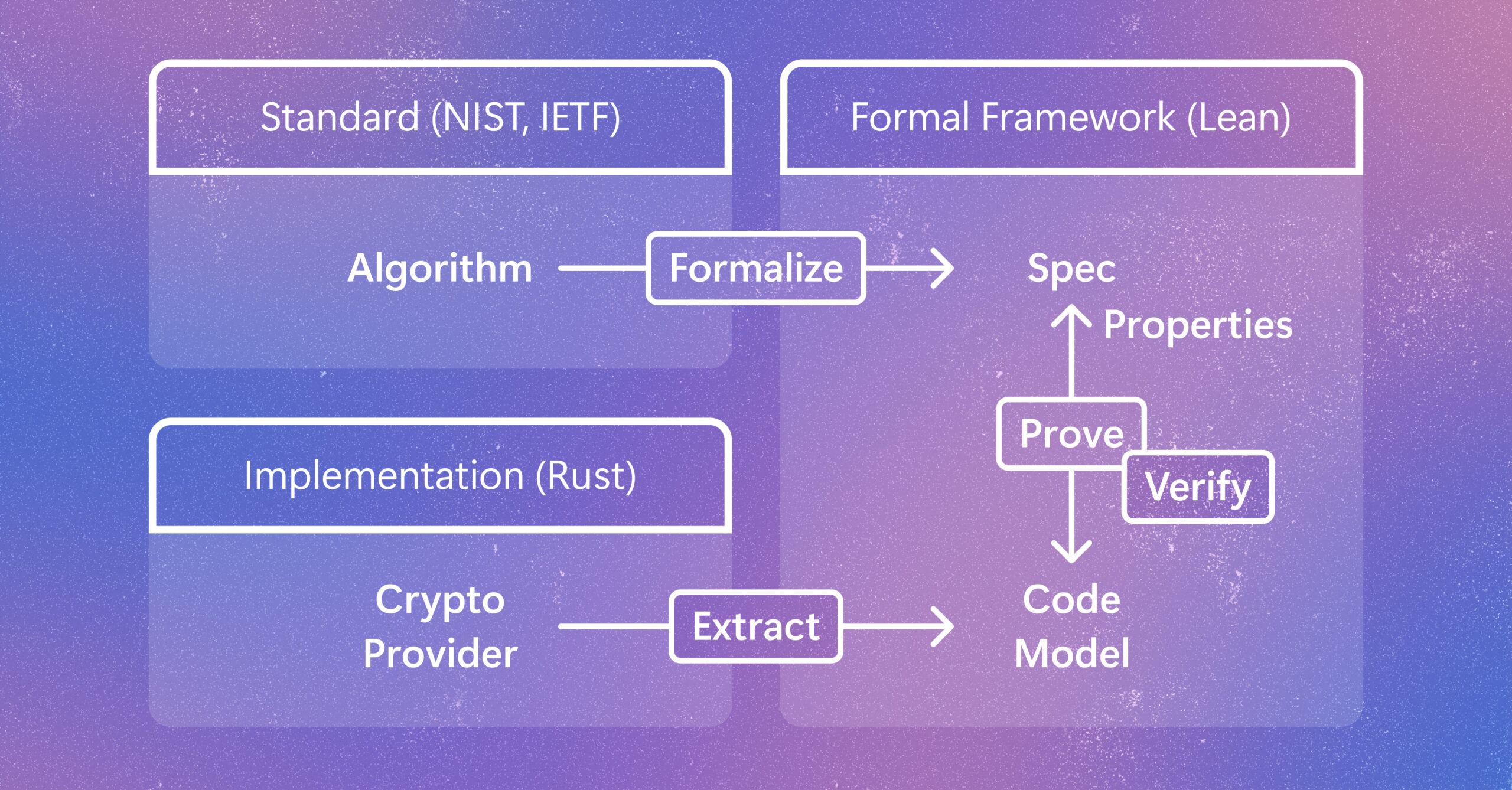
Cryptographic code supports vital protections in modern computing systems. Learn how a new method helps verify code as developers write it while preserving speed and adaptability as it gets implemented and evolves. The post Verifying Rust cryptography in SymCrypt, from standards to code appeared first on Microsoft Research.
MIT News · Artificial Intelligence· news.mit.eduJul 6, 2026
PhD student Rachel Sava, winner of the Envisioning the Future of Computing Prize, explores transformative improvements and dystopian risks of neural technology.