Skip to content

TCN-GCN: a spatiotemporal neural network for multistep InSAR deformation prediction in geologically diverse regions

Oct 2026 · International Conference on Remote Sensing, Mapping, and Geographic Systems · Vol 14502, pp. 1450210 - 1450210-7 · 0 citations · 19 references
Engineering

Abstract

Accurate multi-step prediction of surface deformation monitored by Interferometric Synthetic Aperture Radar (InSAR) is critical for proactive disaster early warning in complex engineering environments. Existing approaches either neglect spatial dependencies among monitoring points or rely on recurrent architectures that suffer from gradient vanishing over extended prediction horizons. This paper proposes TCN-GCN, a spatiotemporal neural network that integrates a Temporal Convolutional Network (TCN) for long-range temporal feature extraction with a Graph Convolutional Network (GCN) for encoding spatial correlations among InSAR coherent scatterer points. Monitoring points are modeled as graph nodes with edges weighted by a hybrid function of spatial proximity and deformation correlation. The proposed framework is evaluated on two geologically distinct InSAR datasets: reservoir-induced deformation in the Three Gorges–Gezhouba area, Hubei Province, and coastal road settlement in Xiapu County, Fujian Province. TCN-GCN achieves RMSE reductions of 33.0 and 27.2 over the strongest baseline (LSTM) on the two datasets respectively, and maintains stable prediction accuracy across forecasting horizons up to 12 time steps.


View source

Similar papers

#computer vision Conference Aug 2008

Scrum in a Multiproject Environment: An Ethnographically-Inspired Case Study on the Adoption Challenges

Agile methods continue to gain popularity. In particular, the Scrum method appears to be on the verge of becoming a de-facto standard in the industry, leading the so called Agile movement. While there are success stories and recommendations, there is little scientifically valid evidence of the challenges in the adoptio...

A. Marchenko, P. Abrahamsson · 59 citations · ⚡11
#computer vision Open access Sep 2012

Making the leap to a software platform strategy: Issues and challenges

A comprehensive taxonomy of the challenges faced when a medium-scale organization decided to adopt software platforms is provided, namely: business challenges, organizational challenges, technical challenges, and people challenges.

Yaser Ghanam, F. Maurer, P. Abrahamsson · 41 citations · ⚡3
#machine learning Open access Mar 2024

Integration of molecular coarse-grained model into geometric representation learning framework for protein-protein complex property prediction

MCGLPPI, a novel geometric representation learning framework that combines graph neural networks (GNNs) with the MARTINI molecular coarse-grained (CG) model to predict overall PPI properties accurately and efficiently, offers an effective and efficient solution for PPI overall property predictions.

Yang Yue, Shu Li, Yihua Cheng et al. · 15 citations
#data science Open access Oct 2026

Less can be more for predicting properties with large language models

Abstract Predicting properties from coordinate–category data—sets of vectors paired with categorical information—is fundamental to computational science, manifesting in materials science as predicting formation energies or elastic moduli from crystal structures. While large language models (LLMs) have increasingly been...

Nawaf Alampara, Santiago Miret, Kevin Maik Jablonka · 13 citations

PepPCBench is a Comprehensive Benchmarking Framework for Protein-Peptide Complex Structure Prediction

PepPCBench enables a robust evaluation of PFNN-based methods and supports their continued development for peptide-protein structure prediction, and highlights the influence of peptide length, conformational flexibility, and training set similarity on prediction accuracy.

Si-Long Zhai, Huifeng Zhao, Ji-Ke Wang et al. · 13 citations · ⚡1

Related blog posts

Microsoft Research Blog Jul 13, 2026

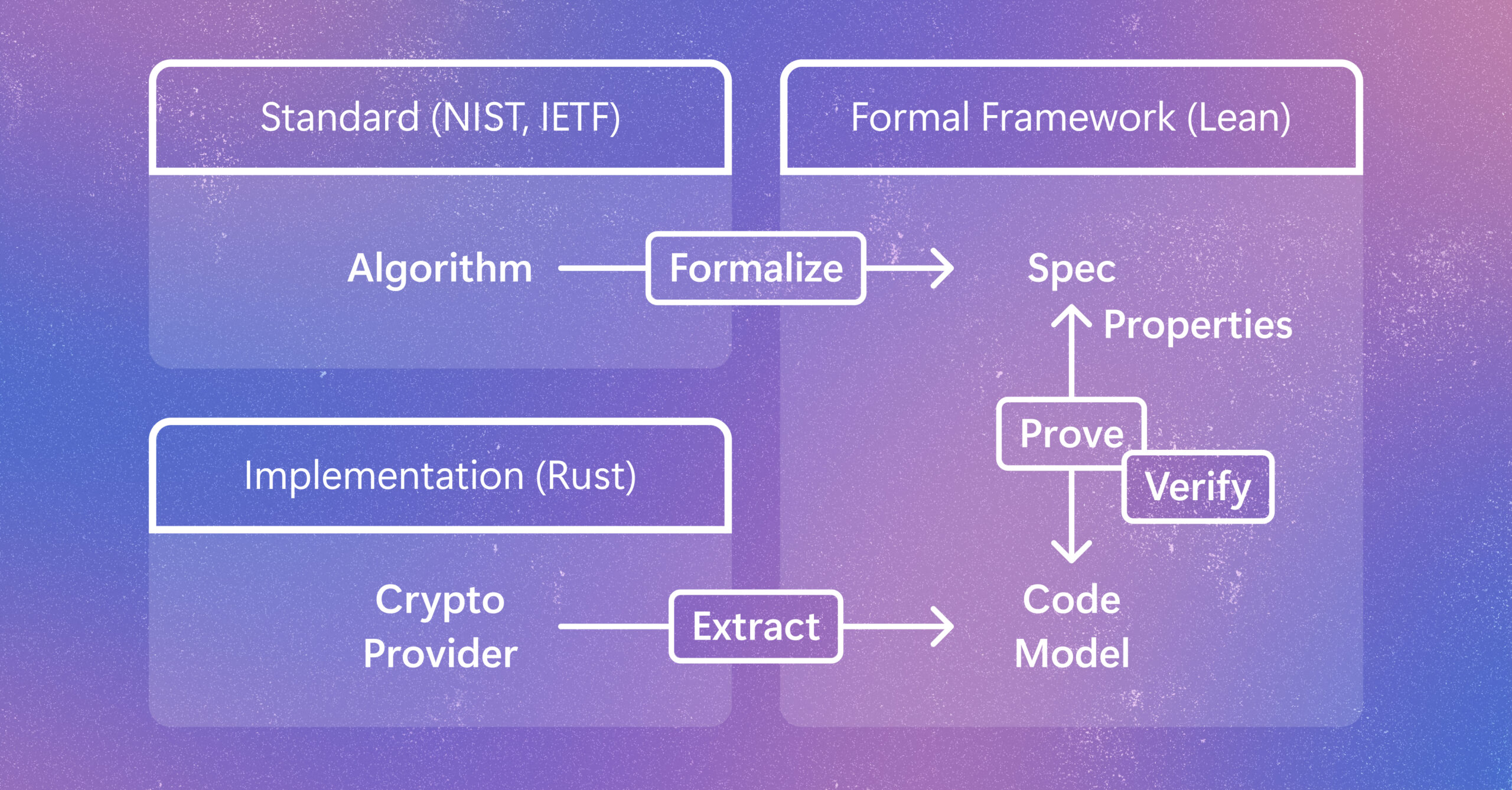
Verifying Rust cryptography in SymCrypt, from standards to code

Cryptographic code supports vital protections in modern computing systems. Learn how a new method helps verify code as developers write it while preserving speed and adaptability as it gets implemented and evolves. The post Verifying Rust cryptography in SymCrypt, from standards to code appeared first on Microsoft Research.

We use cookies to run the site and, with your consent, for analytics and to show ads. See our Cookie Policy.