Skip to content
#graph neural networks Review Open access

AI-Driven Drug Repurposing for Multidrug-Resistant Infections: Computational Rigor, Translational Realities, and Strategic Future Directions

Oct 2026 · Acta Microbiologica Hellenica · Vol 71, pp. 42 · 0 citations · 45 references
Computational Drug Discovery Methods

TL;DR

This review critically evaluates AI-driven drug repurposing for MDR infections, addressing computational methodologies, data integration, experimental validation, translational bottlenecks, and regulatory considerations and outlines strategic pathways for integrating AI predictions with experimental and clinical workflows.

Abstract

Antimicrobial resistance (AMR) is a rapidly escalating global health crisis, and multidrug-resistant (MDR) bacterial pathogens cause substantial morbidity, mortality, and economic burden. Conventional antibiotic-discovery pipelines remain slow, costly, and prone to high attrition, creating an urgent need for alternative strategies. Drug repurposing, which involves identifying new antimicrobial applications for approved or investigational agents, offers a pragmatic and cost-effective approach that leverages existing pharmacokinetic, safety, and formulation data. Advances in artificial intelligence (AI), including machine learning, deep learning, graph neural networks, and natural language processing (complemented by AI-adjacent computational approaches such as network pharmacology and molecular docking, which are treated here as distinct methods), have accelerated the high-throughput screening and prioritisation of repurposable compounds. This review critically evaluates AI-driven drug repurposing for MDR infections, addressing computational methodologies, data integration, experimental validation, translational bottlenecks, and regulatory considerations. The literature published between January 2020 and September 2026 was identified through searches of PubMed/MEDLINE, Scopus, and Web of Science, and each case-study drug is annotated for the role of AI and for the level of computational, in vitro, animal, and clinical evidence. We examine methodological limitations, including dataset bias, interpretability constraints, and pharmacokinetic gaps, and highlight the need for explainable AI and rigorous validation frameworks. Case studies of halicin, auranofin, phenothiazines, disulfiram, and clofazimine distinguish agents discovered by AI (halicin) from those whose antimicrobial activity was established by conventional screening or clinical use and illustrate both the promise and the translational hurdles of repurposed antimicrobials. We conclude by outlining strategic pathways for integrating AI predictions with experimental and clinical workflows, emphasising multidisciplinary collaboration to accelerate translation. By combining computational innovation with pharmacological and regulatory rigor, AI-driven repurposing constitutes a complementary strategy to de novo antibiotic discovery, with the potential to expand therapeutic options against MDR pathogens and strengthen global antimicrobial stewardship.


Read PDF

Similar papers

Review Sep 2026

AI-driven drug repurposing: Methods, platforms, and translational applications.

The conventional drug discovery pipeline is resource-intensive, time-consuming, and characterized by high attrition rates, often requiring more than a decade and billions of dollars to bring a single therapeutic agent to market. Drug repurposing identifying new therapeutic indications for approved or investigational dr...

Z. Malik, Kamran Ahmad, Sheheryar Ahmed · 0 citations
#artificial intelligence Review Open access Sep 2026

Combating antimicrobial resistance through multimodal data via artificial intelligence

Antimicrobial resistance (AMR) poses a critical global health challenge, leading to substantial mortality and economic losses without science-based interventions. Conventional approaches to combating AMR have important limitations in addressing this escalating threat. Recent advances in AI, including deep learning, lar...

Qiu-Hua Xia, Jia-Yang Li, Wen-Qi Wu et al. · 0 citations
Review Open access Sep 2026

A comprehensive review of AI innovations for tackling antimicrobial resistance.

AI can certainly strengthen the global AMR response by complementing key areas of AMR such as antimicrobial stewardship, infection prevention, laboratory diagnostics, and global surveillance.

Tahani Alkalaf, E. Eker, O. Albarri et al. · 0 citations
#protein folding Review Open access Sep 2026

Lab to codes: multimodel advanced AI-driven pipelines to drive antimicrobial peptide design for the post-antibiotic era

The rapid emergence of global antimicrobial resistance (AMR) has outpaced the development of new antimicrobial agents, necessitating transformative approaches such as AI-driven in-silico drug discovery. Antimicrobial peptides (AMPs) are promising alternatives due to their broad-spectrum bactericidal activity and limite...

Naveed Saleem, E. El-Omar, Naresh Kumar et al. · 0 citations
#graph neural networks Review Open access Aug 2026

Bridging the antiviral drug design gap: a combined machine learning and QSAR approach for drug repurposing of host kinase inhibitors

Viral outbreaks combined with rapid emergence of mutated viruses have highlighted an urging need for accelerating antiviral drug discovery pipelines. Unfortunately, current drug discovery remains stuck to conventional methods which are slow especially during pandemics. In this article, we present a literature-based syn...

Rand O. Shahin, Yusra Azzam, Salma Azzam · 0 citations
Review Open access Oct 2026

Research progress on the application of multi-scale computational methods in the research and development of anti-tuberculosis infection drugs

Tuberculosis (TB), driven by Mycobacterium tuberculosis (Mtb), remains a leading cause of mortality from infectious disease worldwide.​ The global dissemination of multidrug-resistant (MDR) and extensively drug-resistant (XDR) strains—coupled with protracted treatment regimens and the persistence of latent infectio...

Ya-Jing Zhao, Chao Wang, Wen-Jing Shang et al. · 0 citations

Related blog posts

Microsoft Research Blog Jul 13, 2026

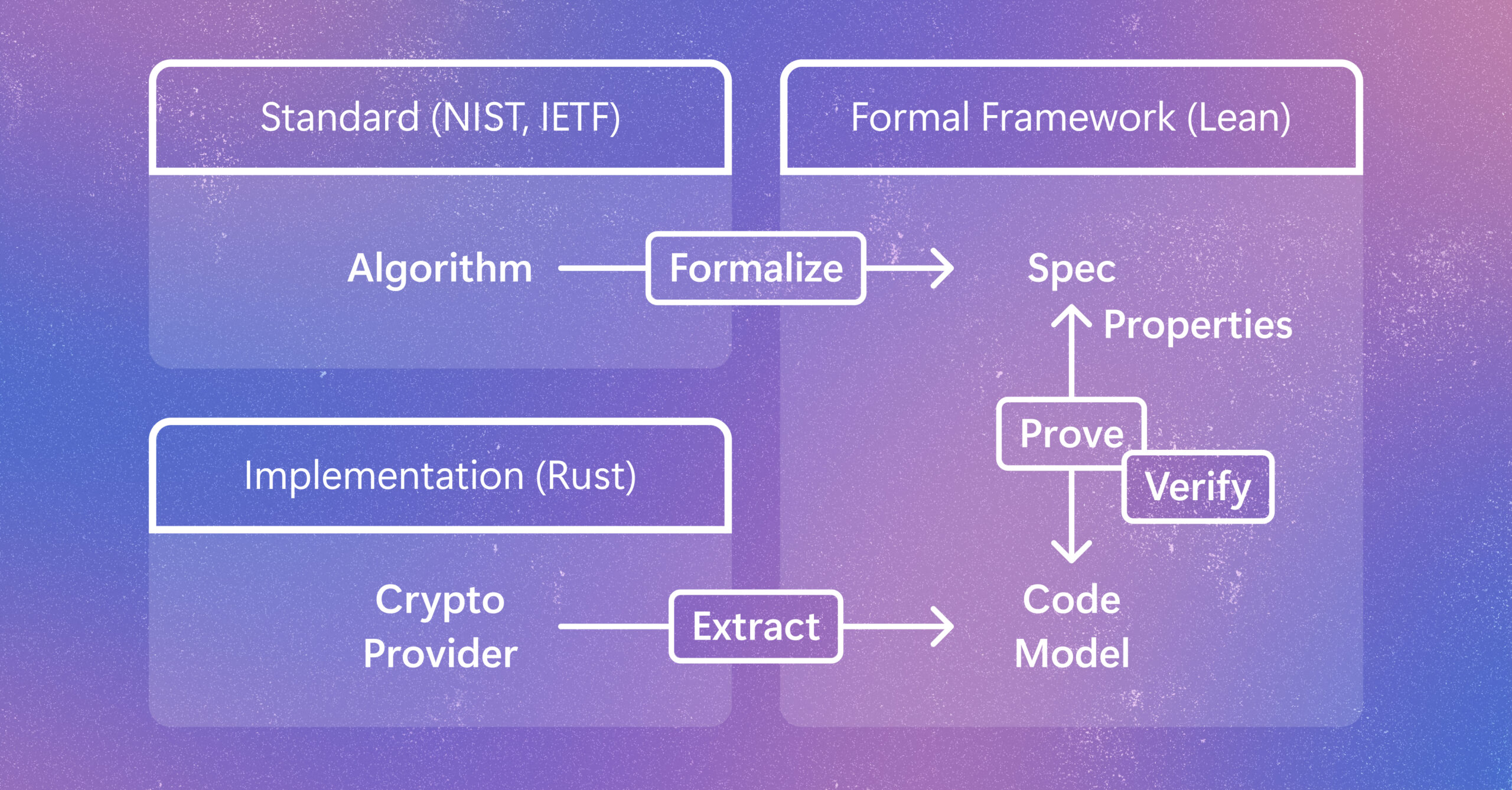
Verifying Rust cryptography in SymCrypt, from standards to code

Cryptographic code supports vital protections in modern computing systems. Learn how a new method helps verify code as developers write it while preserving speed and adaptability as it gets implemented and evolves. The post Verifying Rust cryptography in SymCrypt, from standards to code appeared first on Microsoft Research.

We use cookies to run the site and, with your consent, for analytics and to show ads. See our Cookie Policy.