Aug 2026· AI in Mathematics and Theoretical Physics· pp. 1-9· 0 citations
TL;DR
This work develops the principle that choosing a neural architecture is not a matter of choosing the largest model, but of choosing an inductive bias that matches the structure the data already has through three self-contained case studies.
Abstract
Mathematical objects rarely arrive as unstructured feature vectors. They arrive as sequences indexed by primes, as directed graphs closed under a combinatorial move, as functions constrained by a differential equation. Choosing a neural architecture is therefore not a matter of choosing the largest model, but of choosing an inductive bias that matches the structure the data already has. We develop this principle through three self-contained case studies, each implemented from scratch in JAX and each runnable on a laptop CPU. (i) Sequential data: a 1D CNN and a single-block transformer predict the rank of an elliptic curve [Formula: see text] from its normalized Frobenius traces [Formula: see text]; a saliency analysis tracked across training shows the network localizing the discriminative signal in the small primes, where the murmuration phenomenon lives. (ii) Graph data: a directed graph isomorphism network classifies quivers by Dynkin mutation type and is permutation equivariant to machine zero by construction; trained only on quivers with [Formula: see text] and [Formula: see text] vertices, it transfers to quivers on [Formula: see text] vertices. (iii) Continuous data: a physics-informed neural network solves a two-point boundary value problem, after which interval arithmetic bounds the residual rigorously over the entire domain rather than at the collocation points. Based on a tutorial delivered at DANGER: Data, Numbers, and Geometry (Banff, April 2026).
This paper initiates a systematic approach to handling mathematical data structured as (truncated) infinite $q-series, or equivalently, infinite series of integers, and demonstrates that neural networks can reliably extract essential topological information, such as homology class and underlying graph structure, direct...
Brandon Robinson, Shimal Harichurn, Fabian Ruehle et al.· 0 citations
We study the knowledge matrix of a trained feedforward network as a higher representation of its inputs. A network is a pair $(W,f)$, a thin representation $W$ of its quiver and an activation $f$; its function factorizes through the space of quiver representations, each input $x$ inducing a representation, and the know...
<jats:p>
Graph neural networks and spectral embeddings aggregate local neighbourhoods and so miss the global metric properties—growth rate, hyperbolicity, boundary at infinity—that govern large-scale structure in hierarchical, networked, and negatively curved data. We propose a fr...
K. Enakoutsa· Neural Processing Letters· 0 citations
Given a target dataset, such as faces with eyeglasses, and a background dataset, such as faces without, contrastive analysis separates \textit{salient} factors specific to the target from \textit{common} content shared by both. We aim for salient representations that capture target-specific detail in each image, such a...
Shuang Liang, Le-Jun Liao, Shi-Yuan Zhang et al.· 0 citations
One of the challenges in representational learning is how to encode part-whole hierarchies in a neural net. Prior works rely on flattening tree-like structures into string-like sequences and training a sequence-to-sequence model via autoregression. While such a representation works for parse-trees in NLP, it is not ent...
It is shown that the noncommutativity of matrix product captures word order without positional encodings (PEs) and yields several capabilities, including antisymmetric self-attention with no query, key, or value projections, and parallel composition of variable-length text chunks at a reduced attention cost.
Carla Quispe Flores, Stanley Salvatierra, Renan Cabrera· 0 citations
Related blog posts
MIT News · Artificial Intelligence· news.mit.eduJul 15, 2026
Assistant Professor Pat Pataranutaporn describes a new interface that lets everyday users glimpse inside an AI's neural network before their chatbot ever says a word.
Microsoft Research Blog· microsoft.comJul 13, 2026
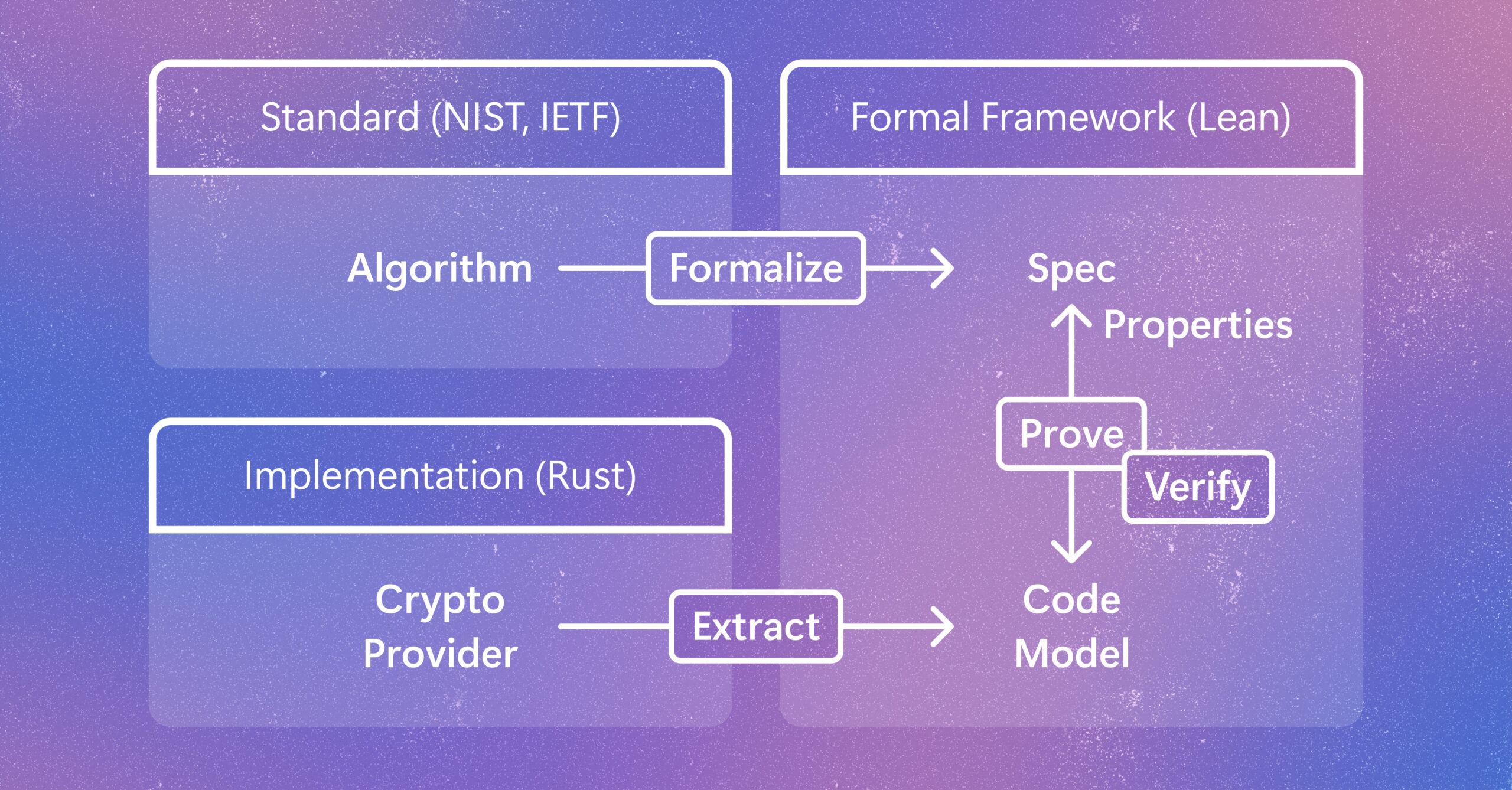
Cryptographic code supports vital protections in modern computing systems. Learn how a new method helps verify code as developers write it while preserving speed and adaptability as it gets implemented and evolves. The post Verifying Rust cryptography in SymCrypt, from standards to code appeared first on Microsoft Research.
MIT News · Artificial Intelligence· news.mit.eduJul 6, 2026
PhD student Rachel Sava, winner of the Envisioning the Future of Computing Prize, explores transformative improvements and dystopian risks of neural technology.