Oct 2026· International Journal of Analysis and Applications
Neural dynamics and brain function
Abstract
The integration of multi-scale neural dynamics remains a fundamental challenge in computational neuroscience. This paper introduces a novel mathematical framework that integrates stochastic differential equations with graph neural networks to model multi-scale brain dynamics. Our approach treats neural activity, synaptic efficacy, and network topology as co-evolving dynamical variables governed by coupled equations spanning microscopic, mesoscopic, and macroscopic scales. The framework's multi-level architecture combines stochastic differential equations for microscopic neural dynamics with biologically realistic noise; activity-dependent plasticity rules for mesoscopic connectivity evolution; and graph neural networks for macroscopic network property learning. Through rigorous mathematical analysis, we derive stability conditions and identify critical bifurcation points governing cross-scale interactions. We introduce a novel mathematical framework unifying stochastic differential equations with graph neural networks to model hierarchical brain dynamics. Mathematical contributions include: (i) existence and uniqueness theorems for coupled SDE systems with adaptive connectivity; (ii) multi-scale stability analysis revealing emergent criticality; (iii) rigorous numerical analysis of multi-timescale integration; (iv) demonstration of universal scaling laws in neural avalanche statistics. The framework achieves an R² of 0.87 in predicting functional connectivity while achieving a 50× computational speedup via multi-timescale integration. The model exhibits emergent criticality with power-law avalanche distributions (\(\alpha = -1.52 \pm 0.08\)) matching empirical data.Clinical relevance is demonstrated through identified parameter shifts in schizophrenia (reduced inhibition) and depression (impaired plasticity) models. The framework successfully predicts both local neural dynamics and global network reorganization, providing testable hypotheses for experimental validation and offering a comprehensive mathematical foundation for understanding multi-scale brain dynamics in health and disease.
Agile methods continue to gain popularity. In particular, the Scrum method appears to be on the verge of becoming a de-facto standard in the industry, leading the so called Agile movement. While there are success stories and recommendations, there is little scientifically valid evidence of the challenges in the adoptio...
A. Marchenko, P. Abrahamsson· Agile Conference· 59 citations· ⚡11
A comprehensive taxonomy of the challenges faced when a medium-scale organization decided to adopt software platforms is provided, namely: business challenges, organizational challenges, technical challenges, and people challenges.
Yaser Ghanam, F. Maurer, P. Abrahamsson· Information and Software Tec...· 41 citations· ⚡3
It is shown that high article processing charges are not sufficiently justified by the publishers, which often lack transparency and may prevent authors from adopting OA.
D. Graziotin, Xiaofeng Wang, P. Abrahamsson· Scientometrics· 21 citations· ⚡1
MCGLPPI, a novel geometric representation learning framework that combines graph neural networks (GNNs) with the MARTINI molecular coarse-grained (CG) model to predict overall PPI properties accurately and efficiently, offers an effective and efficient solution for PPI overall property predictions.
Yang Yue, Shu Li, Yihua Cheng et al.· bioRxiv· 15 citations
PepPCBench enables a robust evaluation of PFNN-based methods and supports their continued development for peptide-protein structure prediction, and highlights the influence of peptide length, conformational flexibility, and training set similarity on prediction accuracy.
Si-Long Zhai, Huifeng Zhao, Ji-Ke Wang et al.· Journal of Chemical Informat...· 13 citations· ⚡1
OmniMol is presented, a framework using hypergraphs to improve predictions of molecular properties, addressing challenges of imperfect data annotation and enhancing model explainability, and achieves state-of-the-art performance in properties prediction.
Assistant Professor Pat Pataranutaporn describes a new interface that lets everyday users glimpse inside an AI's neural network before their chatbot ever says a word.
Microsoft Research Blog· microsoft.comJul 13, 2026
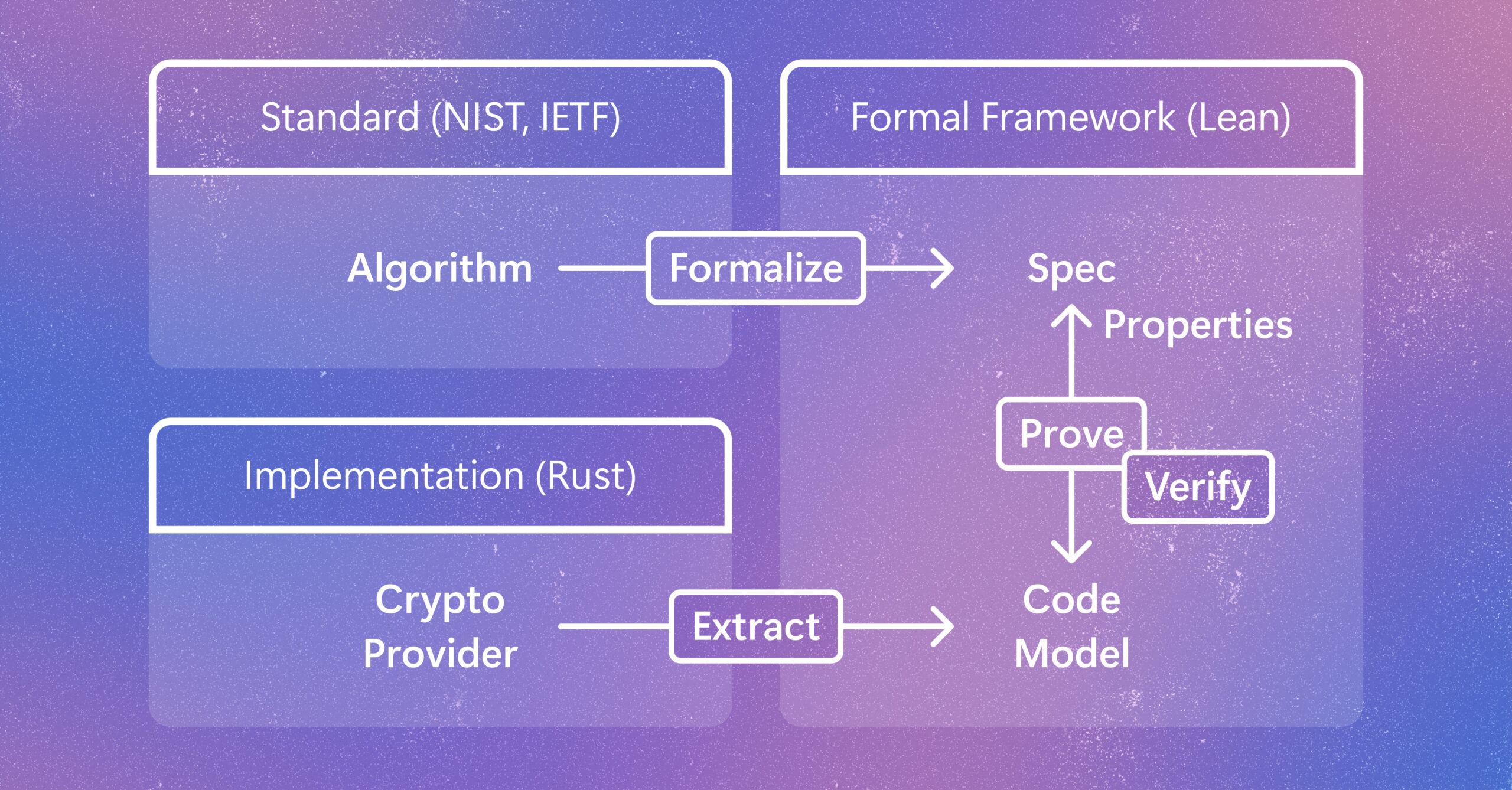
Cryptographic code supports vital protections in modern computing systems. Learn how a new method helps verify code as developers write it while preserving speed and adaptability as it gets implemented and evolves. The post Verifying Rust cryptography in SymCrypt, from standards to code appeared first on Microsoft Research.
MIT News · Artificial Intelligence· news.mit.eduJul 6, 2026
PhD student Rachel Sava, winner of the Envisioning the Future of Computing Prize, explores transformative improvements and dystopian risks of neural technology.