Skip to content

Artificial Intelligence in Photodynamic Therapy: From Molecular Design of Photosensitizers to Intelligent Delivery, Adaptive Dosimetry, and Personalized Prognostication of Results

Oct 2026 · International Journal of Molecular Sciences
Photodynamic Therapy Research Studies

Abstract

Photodynamic therapy (PDT) is a minimally invasive therapeutic approach based on the light-induced activation of a photosensitizer in the presence of molecular oxygen, resulting in the generation of reactive oxygen species, including singlet oxygen. Despite local selectivity and low systemic toxicity, reproducibility of PDT is restricted by non-uniform accumulation of the photosensitizer, aggregation and insufficient solubility of compounds, variability in the optical properties of tissues, hypoxia, oxygen consumption, photobleaching, and the lack of a universal measure of photodynamic dose. Artificial intelligence (AI), including machine learning and deep learning, graph neural networks, generative models, Bayesian optimization, and physics-informed neural networks, can integrate molecular, spectral, imaging, dosimetric, omics, and clinical data into decision-support systems. In this review, a closed AI–PDT cycle is considered, which includes the in silico design of photosensitizers, optimization of nanoformulations and delivery, personalized light exposure planning, real-time monitoring of photobleaching and oxygenation, and prediction of efficacy, toxicity, immune response, and long-term outcomes. Particular attention is given to data quality, external validation, interpretability, uncertainty assessment, and clinical readiness. This review emphasizes that the greatest potential of AI in PDT lies in its integration with mechanistic models of photochemistry, light transport, and oxygen dynamics, enabling the transition from empirical treatment protocols toward adaptive, reproducible, and personalized photomedicine. Unlike reviews focused on individual AI applications, this work considers the entire AI–PDT workflow as an interconnected system linking molecular design, drug delivery, dosimetry, treatment monitoring, and outcome prediction, while maintaining clinician oversight and the need for experimental and clinical validation.
View source

Similar papers

#computer vision Conference Aug 2008

Scrum in a Multiproject Environment: An Ethnographically-Inspired Case Study on the Adoption Challenges

Agile methods continue to gain popularity. In particular, the Scrum method appears to be on the verge of becoming a de-facto standard in the industry, leading the so called Agile movement. While there are success stories and recommendations, there is little scientifically valid evidence of the challenges in the adoptio...

A. Marchenko, P. Abrahamsson · 59 citations · ⚡11
#computer vision Open access Sep 2012

Making the leap to a software platform strategy: Issues and challenges

A comprehensive taxonomy of the challenges faced when a medium-scale organization decided to adopt software platforms is provided, namely: business challenges, organizational challenges, technical challenges, and people challenges.

Yaser Ghanam, F. Maurer, P. Abrahamsson · 41 citations · ⚡3
#machine learning Open access Mar 2024

Integration of molecular coarse-grained model into geometric representation learning framework for protein-protein complex property prediction

MCGLPPI, a novel geometric representation learning framework that combines graph neural networks (GNNs) with the MARTINI molecular coarse-grained (CG) model to predict overall PPI properties accurately and efficiently, offers an effective and efficient solution for PPI overall property predictions.

Yang Yue, Shu Li, Yihua Cheng et al. · 15 citations

PepPCBench is a Comprehensive Benchmarking Framework for Protein-Peptide Complex Structure Prediction

PepPCBench enables a robust evaluation of PFNN-based methods and supports their continued development for peptide-protein structure prediction, and highlights the influence of peptide length, conformational flexibility, and training set similarity on prediction accuracy.

Si-Long Zhai, Huifeng Zhao, Ji-Ke Wang et al. · 13 citations · ⚡1
#machine learning Open access Sep 2025

Unified and explainable molecular representation learning for imperfectly annotated data from the hypergraph view

OmniMol is presented, a framework using hypergraphs to improve predictions of molecular properties, addressing challenges of imperfect data annotation and enhancing model explainability, and achieves state-of-the-art performance in properties prediction.

Bowen Wang, Junyou Li, Donghao Zhou et al. · 11 citations

Related blog posts

Microsoft Research Blog Jul 13, 2026

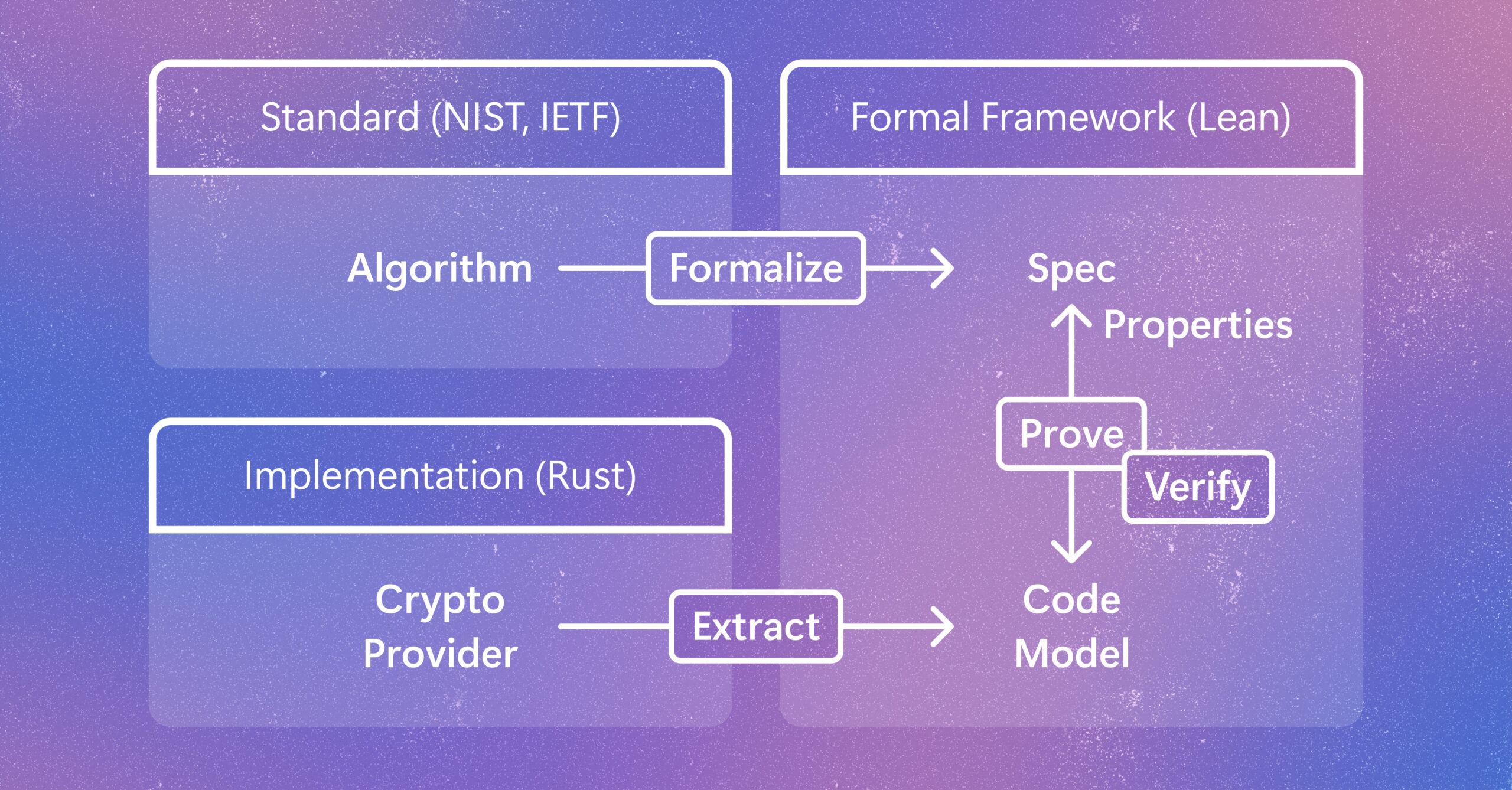
Verifying Rust cryptography in SymCrypt, from standards to code

Cryptographic code supports vital protections in modern computing systems. Learn how a new method helps verify code as developers write it while preserving speed and adaptability as it gets implemented and evolves. The post Verifying Rust cryptography in SymCrypt, from standards to code appeared first on Microsoft Research.

We use cookies to run the site and, with your consent, for analytics and to show ads. See our Cookie Policy.