Automated Road and Building ExtractionRemote-Sensing Image Classification
Abstract
The precise delineation of urban land use, particularly mixed land use, is essential for sustainable urban planning and resource allocation. However, traditional pixel-based mapping methods face a profound "semantic gap" and struggle to decode the complex, overlapping functional dynamics of modern cities. This study proposes a novel object-based GeoAI framework that integrates morphological segmentation, multimodal feature fusion, and Large Language Model (LLM) reasoning to identify urban mixed functions at the parcel level. Using the core districts of Beijing and Changsha as study areas. We first generat high-fidelity, seamless urban parcels by applying dynamic semantic buffering and topological repair to crowdsourced road networks. To capture deep socio-economic semantics, we utilize a contrastive learning architecture to align spatial locations with textual Point of Interest (POI) embeddings, fusing them with multispectral imagery, 3D building morphology, and space syntax metrics. Following Graph Neural Network (GNN) spatial contextual smoothing and HDBSCAN unsupervised clustering, we develop a zero-shot Chain-of-Thought (CoT) inference mechanism using an LLM. This approach accurately deduces primary land use categories and quantifies mixed land use proportions based on soft-clustering probabilities. Our results demonstrate exceptional capability in identifying intricate micro-level spatial patterns, such as transit-oriented developments and commercial-residential integrations. Validation against the 2022 EULUC-China 2.0 baseline yielded area-weighted Overall Accuracies of 70.91% for Beijing and 76.90% for Changsha. In-depth analysis reveals that this statistical attenuation is not a model failure, but rather the manifestation of a systematic mismatch in time—capturing rapid urban renewal between 2022 and 2024—and ontological dissonance between classification taxonomies. By transcending deterministic single-label paradigms, this framework provides a highly authentic, interpretable representation of urban complexity, establishing a new methodological framework for LLM integration in Geospatial AI (GeoAI).
Agile methods continue to gain popularity. In particular, the Scrum method appears to be on the verge of becoming a de-facto standard in the industry, leading the so called Agile movement. While there are success stories and recommendations, there is little scientifically valid evidence of the challenges in the adoptio...
A. Marchenko, P. Abrahamsson· Agile Conference· 59 citations· ⚡11
A comprehensive taxonomy of the challenges faced when a medium-scale organization decided to adopt software platforms is provided, namely: business challenges, organizational challenges, technical challenges, and people challenges.
Yaser Ghanam, F. Maurer, P. Abrahamsson· Information and Software Tec...· 41 citations· ⚡3
It is shown that high article processing charges are not sufficiently justified by the publishers, which often lack transparency and may prevent authors from adopting OA.
D. Graziotin, Xiaofeng Wang, P. Abrahamsson· Scientometrics· 21 citations· ⚡1
MCGLPPI, a novel geometric representation learning framework that combines graph neural networks (GNNs) with the MARTINI molecular coarse-grained (CG) model to predict overall PPI properties accurately and efficiently, offers an effective and efficient solution for PPI overall property predictions.
Yang Yue, Shu Li, Yihua Cheng et al.· bioRxiv· 15 citations
PepPCBench enables a robust evaluation of PFNN-based methods and supports their continued development for peptide-protein structure prediction, and highlights the influence of peptide length, conformational flexibility, and training set similarity on prediction accuracy.
Si-Long Zhai, Huifeng Zhao, Ji-Ke Wang et al.· Journal of Chemical Informat...· 13 citations· ⚡1
OmniMol is presented, a framework using hypergraphs to improve predictions of molecular properties, addressing challenges of imperfect data annotation and enhancing model explainability, and achieves state-of-the-art performance in properties prediction.
Assistant Professor Pat Pataranutaporn describes a new interface that lets everyday users glimpse inside an AI's neural network before their chatbot ever says a word.
Microsoft Research Blog· microsoft.comJul 13, 2026
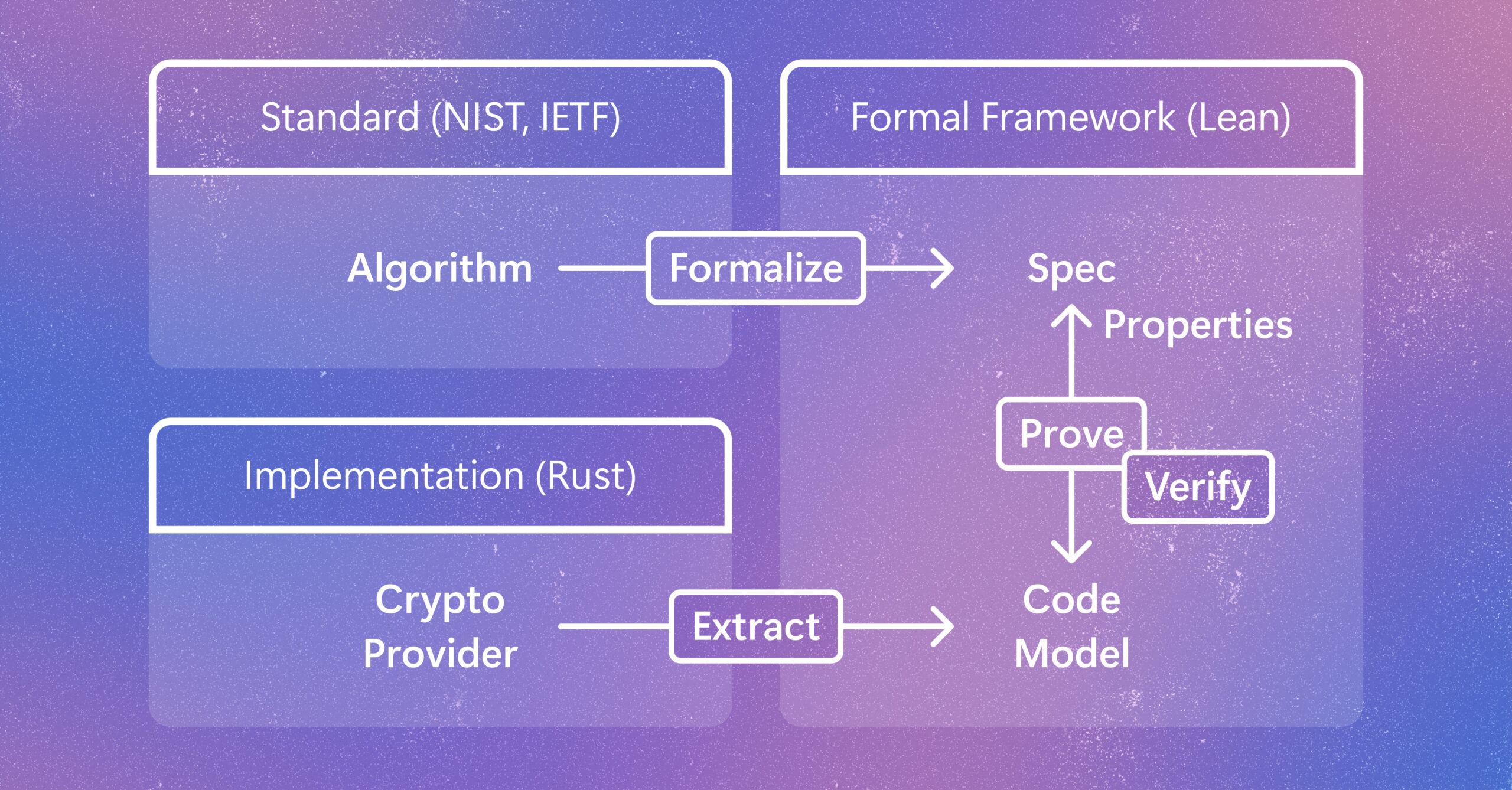
Cryptographic code supports vital protections in modern computing systems. Learn how a new method helps verify code as developers write it while preserving speed and adaptability as it gets implemented and evolves. The post Verifying Rust cryptography in SymCrypt, from standards to code appeared first on Microsoft Research.
MIT News · Artificial Intelligence· news.mit.eduJul 6, 2026
PhD student Rachel Sava, winner of the Envisioning the Future of Computing Prize, explores transformative improvements and dystopian risks of neural technology.