Skip to content

CoHyFuse: Condition-wise Hypergraph Fusion with Global Connectome in Task-fMRI

Oct 2026 · 0 citations · 24 references
Computer Science Biology

Abstract

Task-fMRI connectomes reveal state-dependent neural reconfigurations, yet conventional methods marginalize these signals by aggregating distinct conditions into static pairwise graphs, thereby obscuring condition-specific multi-ROI organization. We introduce CoHyFuse, a condition-aware ROI-centered hypergraph framework that constructs a task-state-specific incidence matrix from condition-wise functional connectivity (FC)-profile embeddings, allowing the same ROI to form different multi-ROI hyperedges across task phases. Condition-specific neighborhood sizes $K_q$ further adapt the hyperedge scale to each task state, and the resulting condition embeddings are fused with a complementary whole-session FC branch for prediction. In the AABC cohort (N=1,074), CoHyFuse achieved the best mean out-of-fold predictive performance among evaluated baselines on FACENAME Fluid Cognition Composite (FCC) prediction (7.83$\pm$0.10 MAE, 0.439$\pm$0.026 \(R^2\)) and VISMOTOR age prediction (7.52$\pm$0.37 MAE, 0.592$\pm$0.022 \(R^2\)). In an auxiliary CMI-HBN attention-deficit/hyperactivity disorder (ADHD) classification benchmark (N=223), CoHyFuse obtained 72.0$\pm$2.1\% macro-AUC and 74.2$\pm$2.9\% accuracy. Ablation studies support the contributions of condition-wise incidence construction and dual-view fusion, suggesting that state-resolved ROI-set structure provides complementary predictive information beyond whole-session FC alone. Occlusion analysis identifies the Distraction condition as the primary driver of model prediction, pointing toward the Salience/Ventral Attention Network (SAN)--FrontoParietal Network (FPN) and within-SAN hyperedge-defined ROI-set motifs as candidate model-relevant patterns. This framework provides an interpretable, state-resolved view of the connectome for downstream cohort analysis.
View source

Similar papers

#machine learning Review Open access Oct 2014

Software development in startup companies: A systematic mapping study

The results indicate that software engineering work practices are chosen opportunistically, adapted and configured to provide value under the constrains imposed by the startup context.

Nicolò Paternoster, Carmine Giardino, M. Unterkalmsteiner et al. · 394 citations · ⚡54

Diffusion models as plug-and-play priors

The possibility of inferring high-dimensional data inference in a model that consists of a prior and an auxiliary differentiable constraint given some additional information is considered, thereby allowing a range of potential applications in adapting models to new domains and tasks.

Alexandros Graikos, Esmeralda S. Whitammer, N. Jojic et al. · 316 citations · ⚡15

Trajectory Balance: Improved Credit Assignment in GFlowNets

It is proved that any global minimizer of the trajectory balance objective can define a policy that samples exactly from the target distribution, and empirically demonstrate the benefits of the trajectories balance objective for GFlowNet convergence, diversity of generated samples, and robustness to long action sequenc...

Esmeralda S. Whitammer, Moksh Jain, Emmanuel Bengio et al. · 302 citations · ⚡60
#machine learning Review Open access Jun 2014

Why Early-Stage Software Startups Fail: A Behavioral Framework

This state-of-practice investigation was performed using a literature review followed by a multiple-case study approach and presents how inconsistency between managerial strategies and execution can lead to failure by means of a behavioral framework.

Carmine Giardino, Xiaofeng Wang, P. Abrahamsson · 175 citations · ⚡19
#artificial intelligence Open access Jul 2024

Gender, Race, and Intersectional Bias in Resume Screening via Language Model Retrieval

This work investigates the possibilities of using LLMs in a resume screening setting via a document retrieval framework that simulates job candidate selection and finds that the MTEs are biased, significantly favoring White-associated names in 85% of cases and female-associated names in only 11.1% of cases.

Kyra Wilson, Aylin Caliskan · 131 citations · ⚡8
#machine learning Review Open access Oct 2016

“Failures” to be celebrated: an analysis of major pivots of software startups

This study conducts a case survey study based on the secondary data of the major pivots happened in 49 software startups, and demonstrates that customer need pivot is the most common among all pivot types.

Sohaib Shahid Bajwa, Xiaofeng Wang, Anh Nguyen-Duc et al. · 127 citations · ⚡15

Related blog posts

Microsoft Research Blog Jul 13, 2026

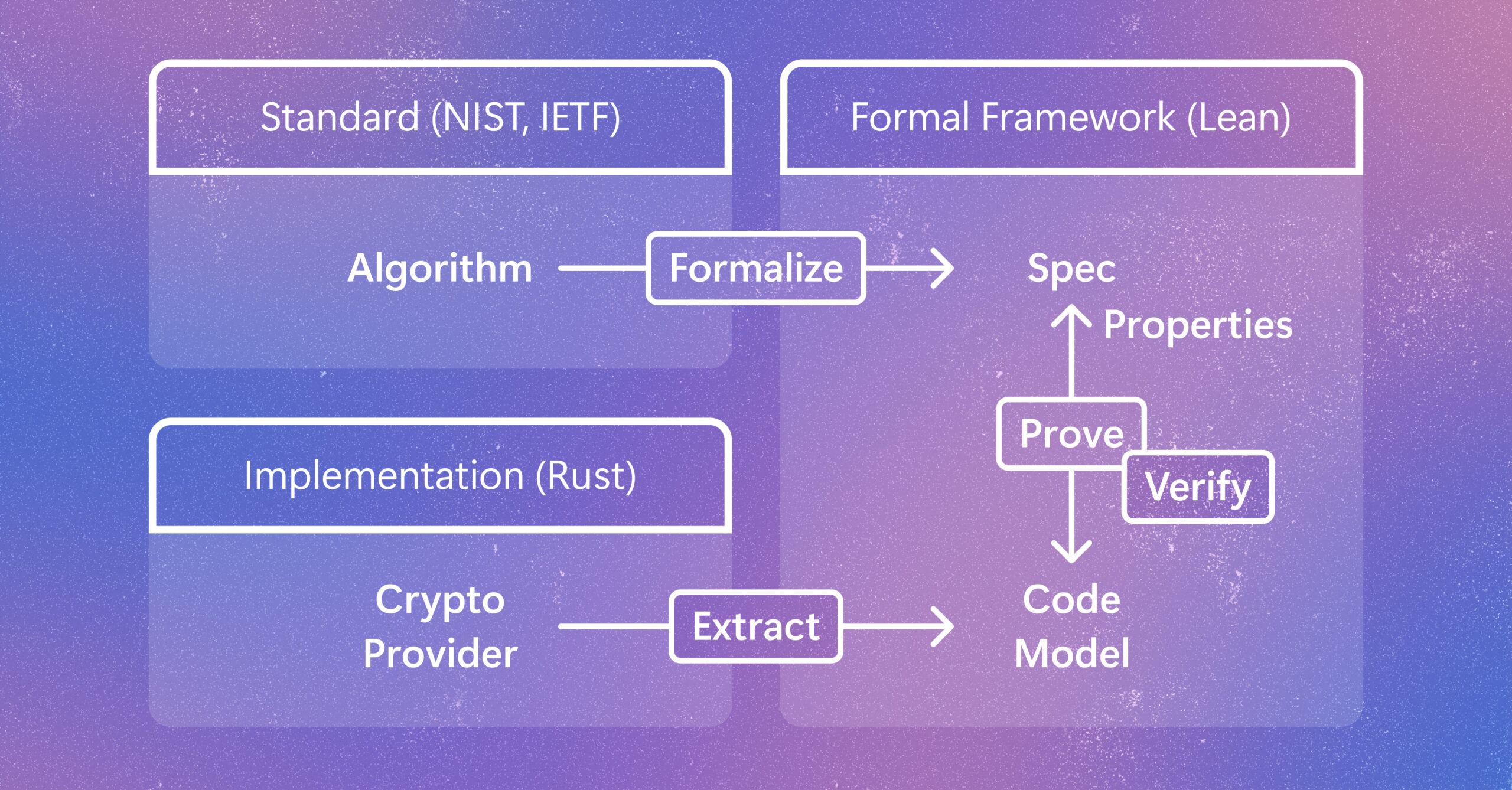
Verifying Rust cryptography in SymCrypt, from standards to code

Cryptographic code supports vital protections in modern computing systems. Learn how a new method helps verify code as developers write it while preserving speed and adaptability as it gets implemented and evolves. The post Verifying Rust cryptography in SymCrypt, from standards to code appeared first on Microsoft Research.

MIT News · Artificial Intelligence Oct 7, 2026

Discovering the value of humanistic inquiry

Students in MIT’s Concourse program delve deeply into the human condition, debate challenging questions, and learn to develop judgment about issues that can’t be quantified.

We use cookies to run the site and, with your consent, for analytics and to show ads. See our Cookie Policy.