Oct 2026· Italian National Conference on Sensors· 0 citations· 25 references
Human Pose and Action Recognition
Abstract
Human pose estimation in real-world indoor environments remains challenging due to privacy concerns, occlusions, varying numbers of people, and noisy sensor data. In this work, we investigate pose estimation from depth images captured over an extended period in a nursing home setting. We explore multiple input representations, including depth-only and silhouette-based representations, as well as depth-based Sobel gradient features. To systematically analyze the impact of model complexity and input representation, we design an experimental framework comparing lightweight Convolutional Neural Networks (CNNs), graph-based models, and deeper architectures, including ResNet and HRNet. Among the evaluated configurations, CNN+GCN with Depth+Sobel input achieved the highest test PCK on the seven-joint baseline, reaching 77.18% in the room-dependent setting and 76.03% in the room-independent setting. Lightweight models generally outperformed higher-capacity architectures on this dataset, but the experiments do not identify the mechanism behind this difference. CNN+LSTM reduced frame-level performance compared to the corresponding frame-wise CNN. Under realistic conditions, performance decreased for partially visible and multi-person scenes. Adding a visibility prediction head produced modest improvements in the evaluated scenarios. Unoccupied-room training reduced spurious pose predictions. The results indicate that lightweight architectures with structural depth representations are promising for privacy-sensitive pose estimation in real-world nursing home environments. However, substantial challenges remain for partial visibility, multi-person scenes, annotation uncertainty for occluded joints, and end-to-end deployment. Computational measurements show low model inference time on the tested hardware but do not establish end-to-end real-time system performance.
Agile methods continue to gain popularity. In particular, the Scrum method appears to be on the verge of becoming a de-facto standard in the industry, leading the so called Agile movement. While there are success stories and recommendations, there is little scientifically valid evidence of the challenges in the adoptio...
A. Marchenko, P. Abrahamsson· Agile Conference· 59 citations· ⚡11
A comprehensive taxonomy of the challenges faced when a medium-scale organization decided to adopt software platforms is provided, namely: business challenges, organizational challenges, technical challenges, and people challenges.
Yaser Ghanam, F. Maurer, P. Abrahamsson· Information and Software Tec...· 41 citations· ⚡3
It is shown that high article processing charges are not sufficiently justified by the publishers, which often lack transparency and may prevent authors from adopting OA.
D. Graziotin, Xiaofeng Wang, P. Abrahamsson· Scientometrics· 21 citations· ⚡1
MCGLPPI, a novel geometric representation learning framework that combines graph neural networks (GNNs) with the MARTINI molecular coarse-grained (CG) model to predict overall PPI properties accurately and efficiently, offers an effective and efficient solution for PPI overall property predictions.
Yang Yue, Shu Li, Yihua Cheng et al.· bioRxiv· 15 citations
PepPCBench enables a robust evaluation of PFNN-based methods and supports their continued development for peptide-protein structure prediction, and highlights the influence of peptide length, conformational flexibility, and training set similarity on prediction accuracy.
Si-Long Zhai, Huifeng Zhao, Ji-Ke Wang et al.· Journal of Chemical Informat...· 13 citations· ⚡1
OmniMol is presented, a framework using hypergraphs to improve predictions of molecular properties, addressing challenges of imperfect data annotation and enhancing model explainability, and achieves state-of-the-art performance in properties prediction.
Assistant Professor Pat Pataranutaporn describes a new interface that lets everyday users glimpse inside an AI's neural network before their chatbot ever says a word.
Microsoft Research Blog· microsoft.comJul 13, 2026
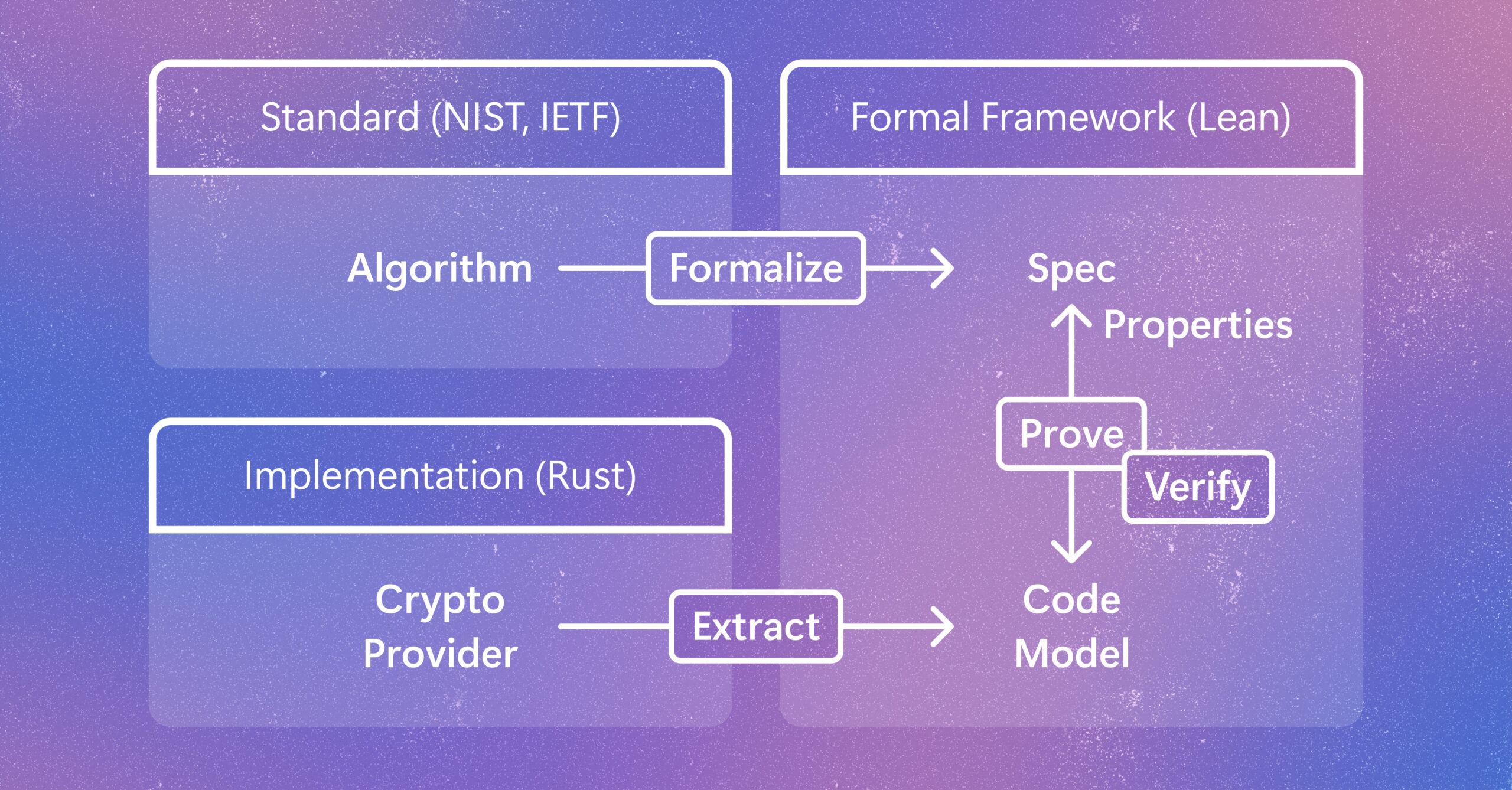
Cryptographic code supports vital protections in modern computing systems. Learn how a new method helps verify code as developers write it while preserving speed and adaptability as it gets implemented and evolves. The post Verifying Rust cryptography in SymCrypt, from standards to code appeared first on Microsoft Research.
MIT News · Artificial Intelligence· news.mit.eduJul 6, 2026
PhD student Rachel Sava, winner of the Envisioning the Future of Computing Prize, explores transformative improvements and dystopian risks of neural technology.