Oct 2026· Journal of Chemical Theory and Computation· 26 references
Machine Learning in Materials Science
Abstract
Abstract Machine learning interatomic potentials (MLIPs) have emerged as scalable alternatives to first-principles methods such as density functional theory (DFT). Among them, E(3)-equivariant graph neural networks (GNNs) like PACE and MACE are highly accurate but structurally rigid, limiting the incorporation of rich, multichannel electronic descriptors. We introduce convolutional kernel-embedded E(3)-equivariant networks (KEN), a hybrid architecture that combines the local environmental extraction of 2D convolutional kernels with the many-body expressivity of an E(3)-equivariant GNN backbone. This design preserves symmetry while enabling flexible, multimodal input features without increasing training data requirements. Trained and tested on heavy element 26 (HE26) dataset, KEN was compared with MACE-osaka26 model. Further validation on lattice parameter prediction through Birch–Murnaghan equation of state, magnetic moment prediction, and comparison with CHGNet framework, and microcanonical molecular dynamics confirms robust energy conservation and accurate reproduction of the forces, and thus, demonstrates a viable pathway to overcoming architectural rigidity in state-of-the-art MLIPs.
Agile methods continue to gain popularity. In particular, the Scrum method appears to be on the verge of becoming a de-facto standard in the industry, leading the so called Agile movement. While there are success stories and recommendations, there is little scientifically valid evidence of the challenges in the adoptio...
A. Marchenko, P. Abrahamsson· Agile Conference· 59 citations· ⚡11
A comprehensive taxonomy of the challenges faced when a medium-scale organization decided to adopt software platforms is provided, namely: business challenges, organizational challenges, technical challenges, and people challenges.
Yaser Ghanam, F. Maurer, P. Abrahamsson· Information and Software Tec...· 41 citations· ⚡3
It is shown that high article processing charges are not sufficiently justified by the publishers, which often lack transparency and may prevent authors from adopting OA.
D. Graziotin, Xiaofeng Wang, P. Abrahamsson· Scientometrics· 21 citations· ⚡1
MCGLPPI, a novel geometric representation learning framework that combines graph neural networks (GNNs) with the MARTINI molecular coarse-grained (CG) model to predict overall PPI properties accurately and efficiently, offers an effective and efficient solution for PPI overall property predictions.
Yang Yue, Shu Li, Yihua Cheng et al.· bioRxiv· 15 citations
PepPCBench enables a robust evaluation of PFNN-based methods and supports their continued development for peptide-protein structure prediction, and highlights the influence of peptide length, conformational flexibility, and training set similarity on prediction accuracy.
Si-Long Zhai, Huifeng Zhao, Ji-Ke Wang et al.· Journal of Chemical Informat...· 13 citations· ⚡1
OmniMol is presented, a framework using hypergraphs to improve predictions of molecular properties, addressing challenges of imperfect data annotation and enhancing model explainability, and achieves state-of-the-art performance in properties prediction.
Assistant Professor Pat Pataranutaporn describes a new interface that lets everyday users glimpse inside an AI's neural network before their chatbot ever says a word.
Microsoft Research Blog· microsoft.comJul 13, 2026
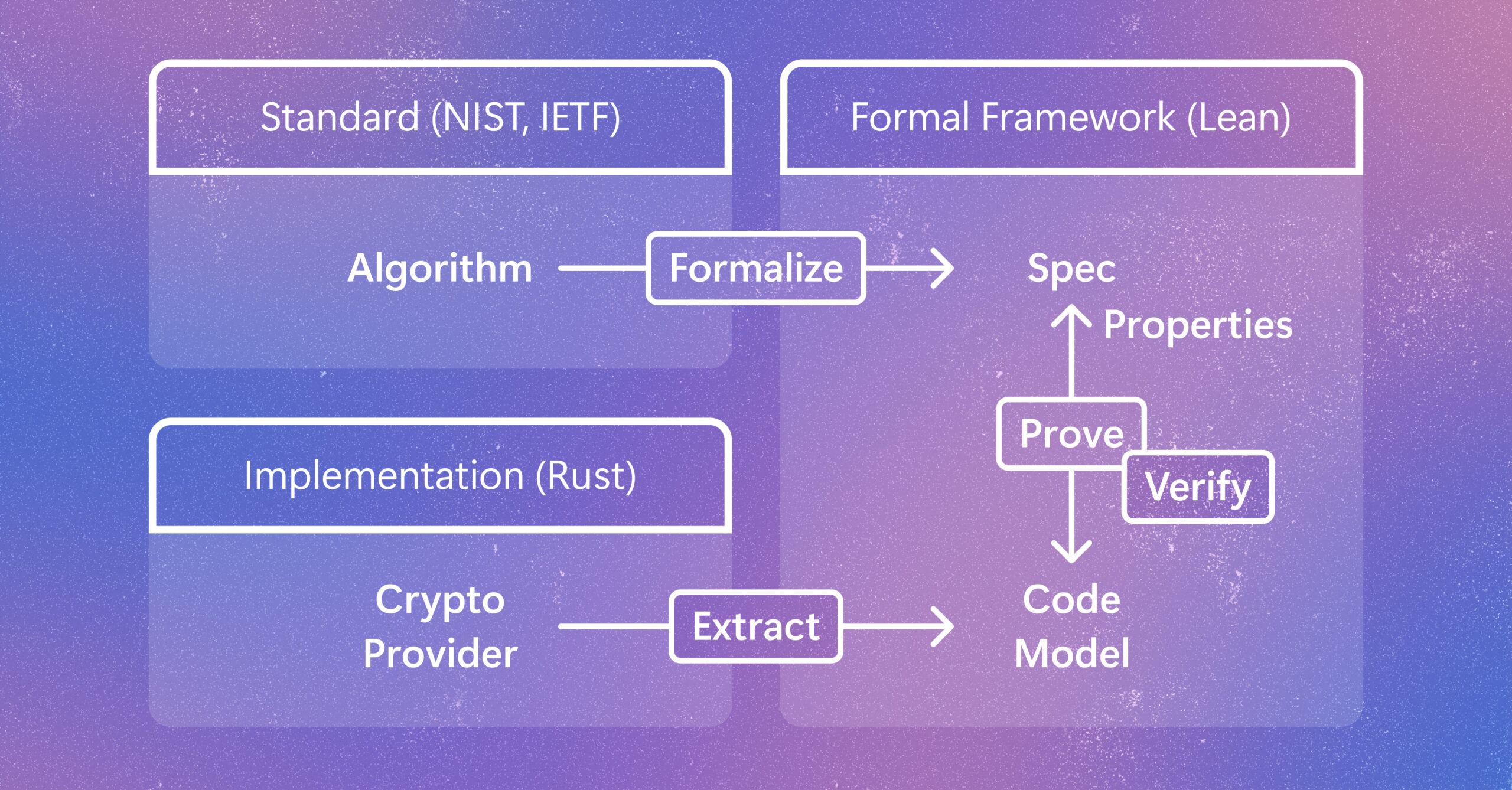
Cryptographic code supports vital protections in modern computing systems. Learn how a new method helps verify code as developers write it while preserving speed and adaptability as it gets implemented and evolves. The post Verifying Rust cryptography in SymCrypt, from standards to code appeared first on Microsoft Research.
MIT News · Artificial Intelligence· news.mit.eduJul 6, 2026
PhD student Rachel Sava, winner of the Envisioning the Future of Computing Prize, explores transformative improvements and dystopian risks of neural technology.