Skip to content

Artificial Intelligence of Things (AIoT): Technologies, Applications, and Challenges

Oct 2026 · Zenodo (CERN European Organization for Nuclear Research)
IoT and Edge/Fog Computing

Abstract

Artificial Intelligence of Things (AIoT) refers to the deliberate pairing of artificial intelligence with the sensing and connectivity that the Internet of Things (IoT) already provides, so that the data streaming in from distributed devices turns into insight and, ultimately, action [1]. A properly designed AIoT system does not push every decision to one place — some things are decided instantly on the device, some at a nearby gateway, and others only once data from many devices has been pooled centrally. This layered approach already underpins predictive maintenance on factory floors, continuous patient monitoring in hospitals, precision irrigation on farms, adaptive traffic signals in cities, and the everyday automation found in connected homes. None of this comes for free: sensor readings are frequently noisy or even tampered with [6], edge hardware is squeezed for memory, compute, and battery life [8], distributed training runs into communication bottlenecks [4], [5], and questions around security, privacy, and explainability remain largely unresolved [9], [10]. This report walks through the core ideas, the layered architecture, and the key enabling technologies behind AIoT — deep learning, graph neural networks, federated learning, and edge computing — before closing with the technical hurdles that still stand between today's research prototypes and dependable, large-scale AIoT deployment.

View source

Similar papers

#computer vision Review Sep 2017

Agile Software Development Methods: Review and Analysis

This publication proposes a definition and a classification of agile software development approaches and analyses ten software development methods that can be characterized as being "agile" against the defined criterion.

P. Abrahamsson, O. Salo, Jussi Ronkainen et al. · 727 citations · ⚡54
#computer vision Jun 2008

The impact of agile practices on communication in software development

The study shows that agile practices improve both informal and formal communication, but indicates that, in larger development situations involving multiple external stakeholders, a mismatch of adequate communication mechanisms can sometimes even hinder the communication.

M. Pikkarainen, Jukka Haikara, O. Salo et al. · 401 citations · ⚡48
#machine learning Review Open access Oct 2014

Software development in startup companies: A systematic mapping study

The results indicate that software engineering work practices are chosen opportunistically, adapted and configured to provide value under the constrains imposed by the startup context.

Nicolò Paternoster, Carmine Giardino, M. Unterkalmsteiner et al. · 394 citations · ⚡54

Related blog posts

Microsoft Research Blog Jul 13, 2026

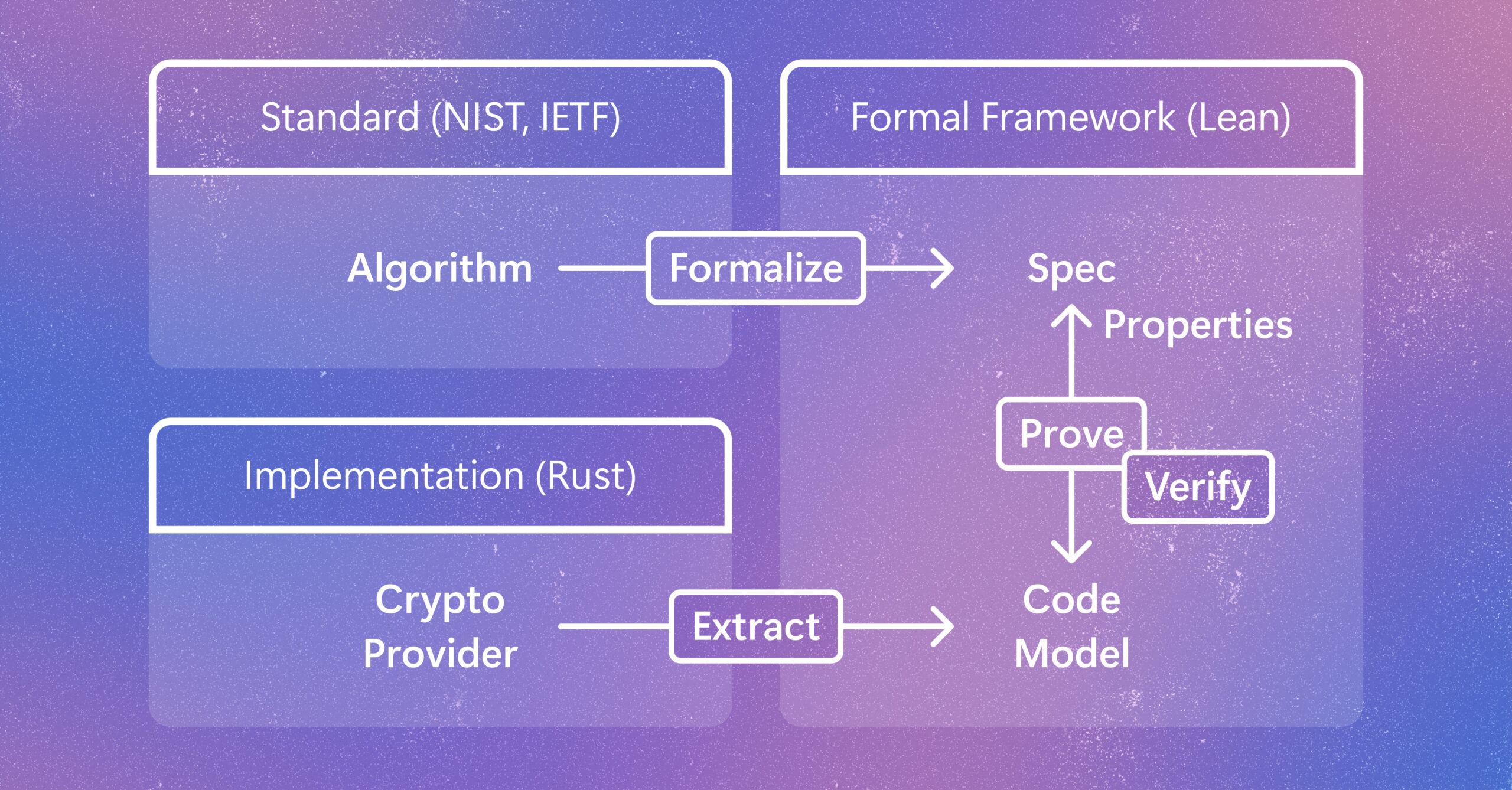
Verifying Rust cryptography in SymCrypt, from standards to code

Cryptographic code supports vital protections in modern computing systems. Learn how a new method helps verify code as developers write it while preserving speed and adaptability as it gets implemented and evolves. The post Verifying Rust cryptography in SymCrypt, from standards to code appeared first on Microsoft Research.

MIT News · Artificial Intelligence Aug 27, 2026

Looking beyond natural sequences

A new machine-learning framework aims to improve the success rate of computational protein design while moving away from results that reproduce sequences found in nature.

We use cookies to run the site and, with your consent, for analytics and to show ads. See our Cookie Policy.