Oct 2026· Discover Telecommunications· Vol 1· 0 citations· 29 references
Software-Defined Networks and 5GNetwork Traffic and Congestion Control
TL;DR
Graph Neural Network Guided Progressive Metric Updates (GNN-PMU), a graph-aware scheduler that ranks metric changes using topology, utilization, queue, capacity, and pending-update information, is presented.
Abstract
Metric reconfiguration in OSPF can create transient routing states whose link utilization exceeds capacity even when the initial and target configurations are both feasible. This paper presents Graph Neural Network Guided Progressive Metric Updates (GNN-PMU), a graph-aware scheduler that ranks metric changes using topology, utilization, queue, capacity, and pending-update information. The learned ordering is checked with the exact Dijkstra and ECMP routing operator before deployment, and Serialized Min-Margin Greedy (SMG) provides a conservative fallback when the learned schedule fails exact validation. The framework distinguishes safety soundness from scheduling completeness and evaluates direct acceptance, fallback activation, final request rejection, and oracle-confirmed SMG false-infeasibility. Simulation-derived experiments also examine telemetry corruption, stale measurements, localized traffic spikes, soft-routing approximation error, embedding distribution shift for batches larger than those used in training, forwarding-table churn, and end-to-end OSPF reconfiguration time. Across the tested benchmark and simulation topologies, direct GNN acceptance ranges from 90.5% to 96.9%, final rejection remains between 0.4% and 2.4%, and accepted schedules satisfy the link-capacity constraint. GNN scheduling remains below 10 ms throughout the tested batch-size range, while exact validation preserves the safety property under out-of-distribution conditions.
Agile methods continue to gain popularity. In particular, the Scrum method appears to be on the verge of becoming a de-facto standard in the industry, leading the so called Agile movement. While there are success stories and recommendations, there is little scientifically valid evidence of the challenges in the adoptio...
A. Marchenko, P. Abrahamsson· Agile Conference· 59 citations· ⚡11
A comprehensive taxonomy of the challenges faced when a medium-scale organization decided to adopt software platforms is provided, namely: business challenges, organizational challenges, technical challenges, and people challenges.
Yaser Ghanam, F. Maurer, P. Abrahamsson· Information and Software Tec...· 41 citations· ⚡3
It is shown that high article processing charges are not sufficiently justified by the publishers, which often lack transparency and may prevent authors from adopting OA.
D. Graziotin, Xiaofeng Wang, P. Abrahamsson· Scientometrics· 21 citations· ⚡1
MCGLPPI, a novel geometric representation learning framework that combines graph neural networks (GNNs) with the MARTINI molecular coarse-grained (CG) model to predict overall PPI properties accurately and efficiently, offers an effective and efficient solution for PPI overall property predictions.
Yang Yue, Shu Li, Yihua Cheng et al.· bioRxiv· 15 citations
PepPCBench enables a robust evaluation of PFNN-based methods and supports their continued development for peptide-protein structure prediction, and highlights the influence of peptide length, conformational flexibility, and training set similarity on prediction accuracy.
Si-Long Zhai, Huifeng Zhao, Ji-Ke Wang et al.· Journal of Chemical Informat...· 13 citations· ⚡1
OmniMol is presented, a framework using hypergraphs to improve predictions of molecular properties, addressing challenges of imperfect data annotation and enhancing model explainability, and achieves state-of-the-art performance in properties prediction.
Assistant Professor Pat Pataranutaporn describes a new interface that lets everyday users glimpse inside an AI's neural network before their chatbot ever says a word.
Microsoft Research Blog· microsoft.comJul 13, 2026
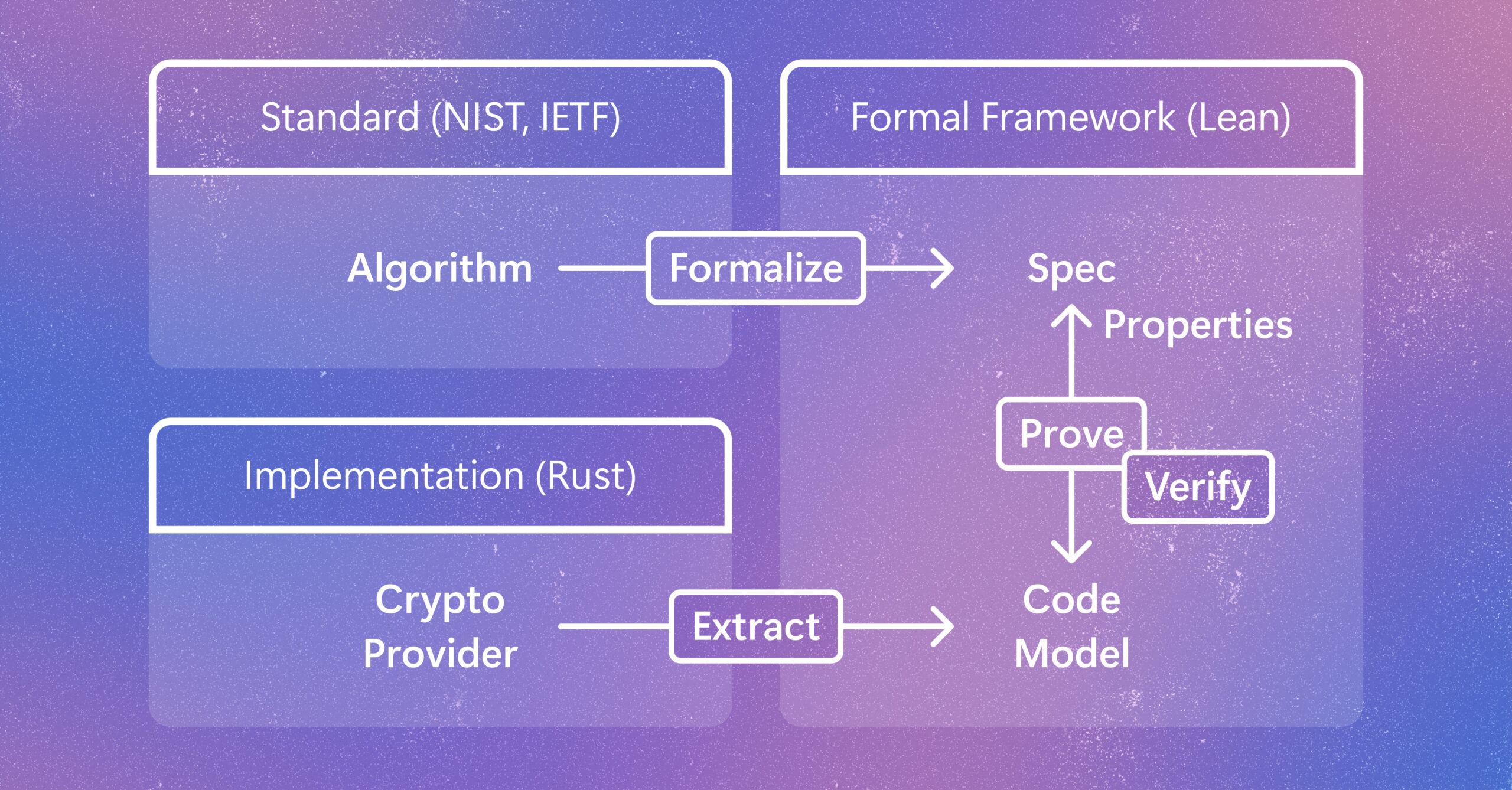
Cryptographic code supports vital protections in modern computing systems. Learn how a new method helps verify code as developers write it while preserving speed and adaptability as it gets implemented and evolves. The post Verifying Rust cryptography in SymCrypt, from standards to code appeared first on Microsoft Research.
MIT News · Artificial Intelligence· news.mit.eduJul 6, 2026
PhD student Rachel Sava, winner of the Envisioning the Future of Computing Prize, explores transformative improvements and dystopian risks of neural technology.