Oct 2026· Proceedings of the ACM on software engineering.· 48 references
Abstract
Software vulnerabilities are a primary threat to modern infrastructure. While static analysis and Graph Neural Networks have long served as the foundation for vulnerability detection, the emergence of Large Language Models (LLMs) has introduced a transformative paradigm driven by superior semantic reasoning and cross-environment generalization. However, in the context of LLM-based vulnerability detection, we identify a fundamental bottleneck in these models termed Signal Submersion : a state where features related to vulnerability are activated internally but numerically overwhelmed by dominant functional semantics. To address this, we propose SAGE ( S ignal- A mplified G uided E mbeddings), a framework that shifts from passive signal submersion to active signal recovery. SAGE integrates task-conditional Sparse Autoencoders (SAEs) to isolate and amplify these faint vulnerability signals. Extensive evaluations on BigVul, PrimeVul, and PreciseBugs demonstrate that SAGE achieves state-of-the-art performance. Notably, SAGE mitigates Signal Submersion by increasing the internal Signal-to-Noise Ratio (SNR) by 12.7× via sparse manifold projection. This mechanistic intervention enables a 7B model to achieve up to 318% Matthews Correlation Coefficient (MCC) gains on unseen distributions and a 319% gain on classic datasets. By maintaining robust performance across 13 programming languages and outperforming 34B baselines, SAGE establishes a more efficient and scalable path to software security than simple parameter scaling.
Agile methods continue to gain popularity. In particular, the Scrum method appears to be on the verge of becoming a de-facto standard in the industry, leading the so called Agile movement. While there are success stories and recommendations, there is little scientifically valid evidence of the challenges in the adoptio...
A. Marchenko, P. Abrahamsson· Agile Conference· 59 citations· ⚡11
A comprehensive taxonomy of the challenges faced when a medium-scale organization decided to adopt software platforms is provided, namely: business challenges, organizational challenges, technical challenges, and people challenges.
Yaser Ghanam, F. Maurer, P. Abrahamsson· Information and Software Tec...· 41 citations· ⚡3
It is shown that high article processing charges are not sufficiently justified by the publishers, which often lack transparency and may prevent authors from adopting OA.
D. Graziotin, Xiaofeng Wang, P. Abrahamsson· Scientometrics· 21 citations· ⚡1
MCGLPPI, a novel geometric representation learning framework that combines graph neural networks (GNNs) with the MARTINI molecular coarse-grained (CG) model to predict overall PPI properties accurately and efficiently, offers an effective and efficient solution for PPI overall property predictions.
Yang Yue, Shu Li, Yihua Cheng et al.· bioRxiv· 15 citations
PepPCBench enables a robust evaluation of PFNN-based methods and supports their continued development for peptide-protein structure prediction, and highlights the influence of peptide length, conformational flexibility, and training set similarity on prediction accuracy.
Si-Long Zhai, Huifeng Zhao, Ji-Ke Wang et al.· Journal of Chemical Informat...· 13 citations· ⚡1
OmniMol is presented, a framework using hypergraphs to improve predictions of molecular properties, addressing challenges of imperfect data annotation and enhancing model explainability, and achieves state-of-the-art performance in properties prediction.
Assistant Professor Pat Pataranutaporn describes a new interface that lets everyday users glimpse inside an AI's neural network before their chatbot ever says a word.
Microsoft Research Blog· microsoft.comJul 13, 2026
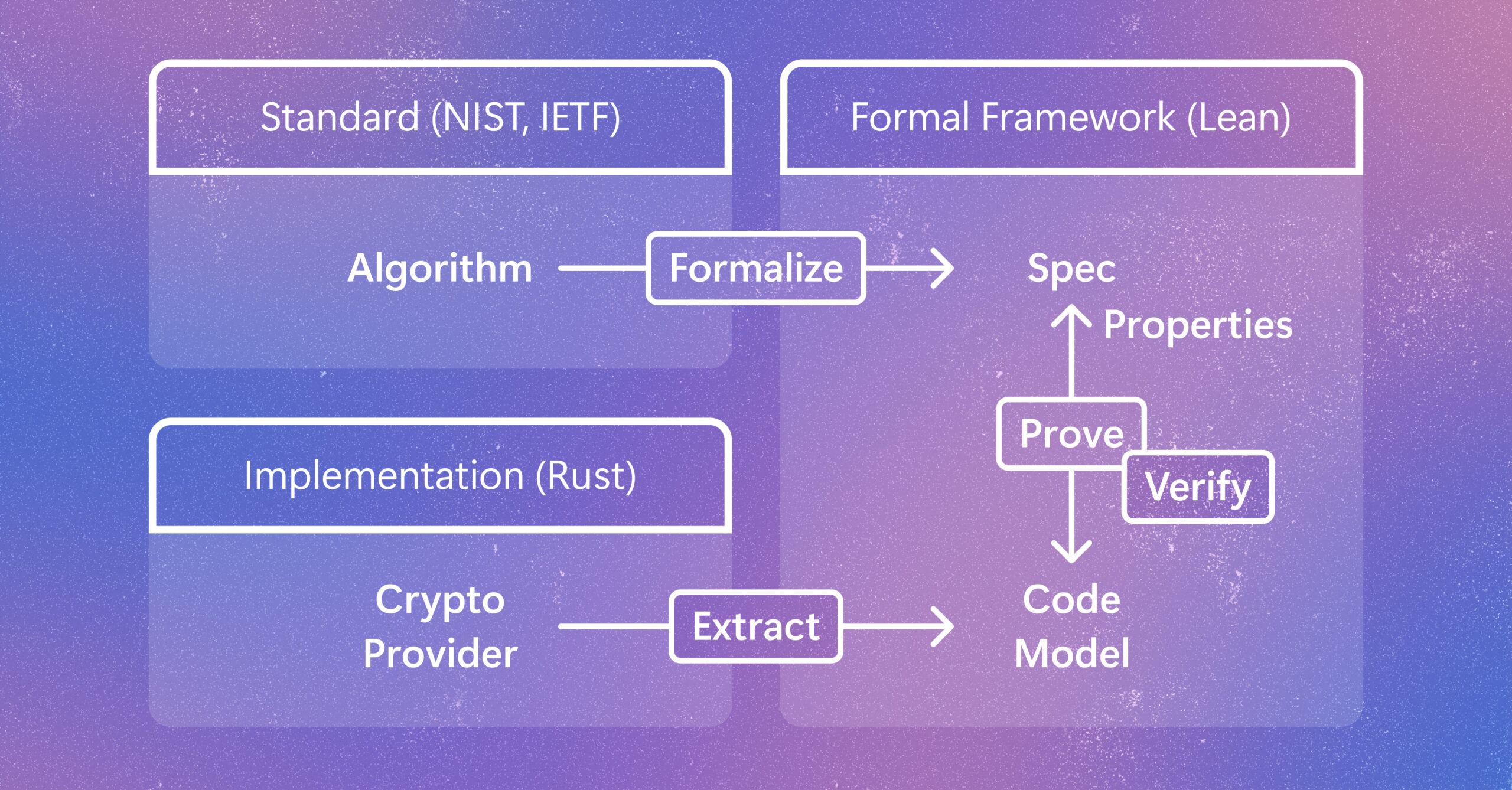
Cryptographic code supports vital protections in modern computing systems. Learn how a new method helps verify code as developers write it while preserving speed and adaptability as it gets implemented and evolves. The post Verifying Rust cryptography in SymCrypt, from standards to code appeared first on Microsoft Research.
MIT News · Artificial Intelligence· news.mit.eduJul 6, 2026
PhD student Rachel Sava, winner of the Envisioning the Future of Computing Prize, explores transformative improvements and dystopian risks of neural technology.