Extracellular recordings carry information about neuronal location, and pooling per-unit predictions across neighboring electrodes improves its readout, but whether this local pooling should be learned is untested. We present MYCEL (Message-passing Yields Cellular Embeddings of Location), a graph neural network whose nodes are spike-sorted units carrying waveform and spike-timing features selected on cell-type ground truth, and whose edges encode recording geometry. On the Allen Brain Observatory Visual Coding Neuropixels dataset, learned message passing outperforms fixed aggregation, with the largest gains where single units are least informative. On the International Brain Laboratory Brain Wide Map, MYCEL matches the strongest population model at one-tenth the pairwise interactions. On held-out animals, the embeddings recover laminar depth within visual cortex. Retrained with only the edge geometry changed, the same framework decodes anatomy in macaque visual cortex and human medial temporal lobe. Thus, how neighboring neurons are combined matters as much as the features that describe them.
Agile methods continue to gain popularity. In particular, the Scrum method appears to be on the verge of becoming a de-facto standard in the industry, leading the so called Agile movement. While there are success stories and recommendations, there is little scientifically valid evidence of the challenges in the adoptio...
A. Marchenko, P. Abrahamsson· Agile Conference· 59 citations· ⚡11
A comprehensive taxonomy of the challenges faced when a medium-scale organization decided to adopt software platforms is provided, namely: business challenges, organizational challenges, technical challenges, and people challenges.
Yaser Ghanam, F. Maurer, P. Abrahamsson· Information and Software Tec...· 41 citations· ⚡3
It is shown that high article processing charges are not sufficiently justified by the publishers, which often lack transparency and may prevent authors from adopting OA.
D. Graziotin, Xiaofeng Wang, P. Abrahamsson· Scientometrics· 21 citations· ⚡1
MCGLPPI, a novel geometric representation learning framework that combines graph neural networks (GNNs) with the MARTINI molecular coarse-grained (CG) model to predict overall PPI properties accurately and efficiently, offers an effective and efficient solution for PPI overall property predictions.
Yang Yue, Shu Li, Yihua Cheng et al.· bioRxiv· 15 citations
PepPCBench enables a robust evaluation of PFNN-based methods and supports their continued development for peptide-protein structure prediction, and highlights the influence of peptide length, conformational flexibility, and training set similarity on prediction accuracy.
Si-Long Zhai, Huifeng Zhao, Ji-Ke Wang et al.· Journal of Chemical Informat...· 13 citations· ⚡1
OmniMol is presented, a framework using hypergraphs to improve predictions of molecular properties, addressing challenges of imperfect data annotation and enhancing model explainability, and achieves state-of-the-art performance in properties prediction.
Assistant Professor Pat Pataranutaporn describes a new interface that lets everyday users glimpse inside an AI's neural network before their chatbot ever says a word.
Microsoft Research Blog· microsoft.comJul 13, 2026
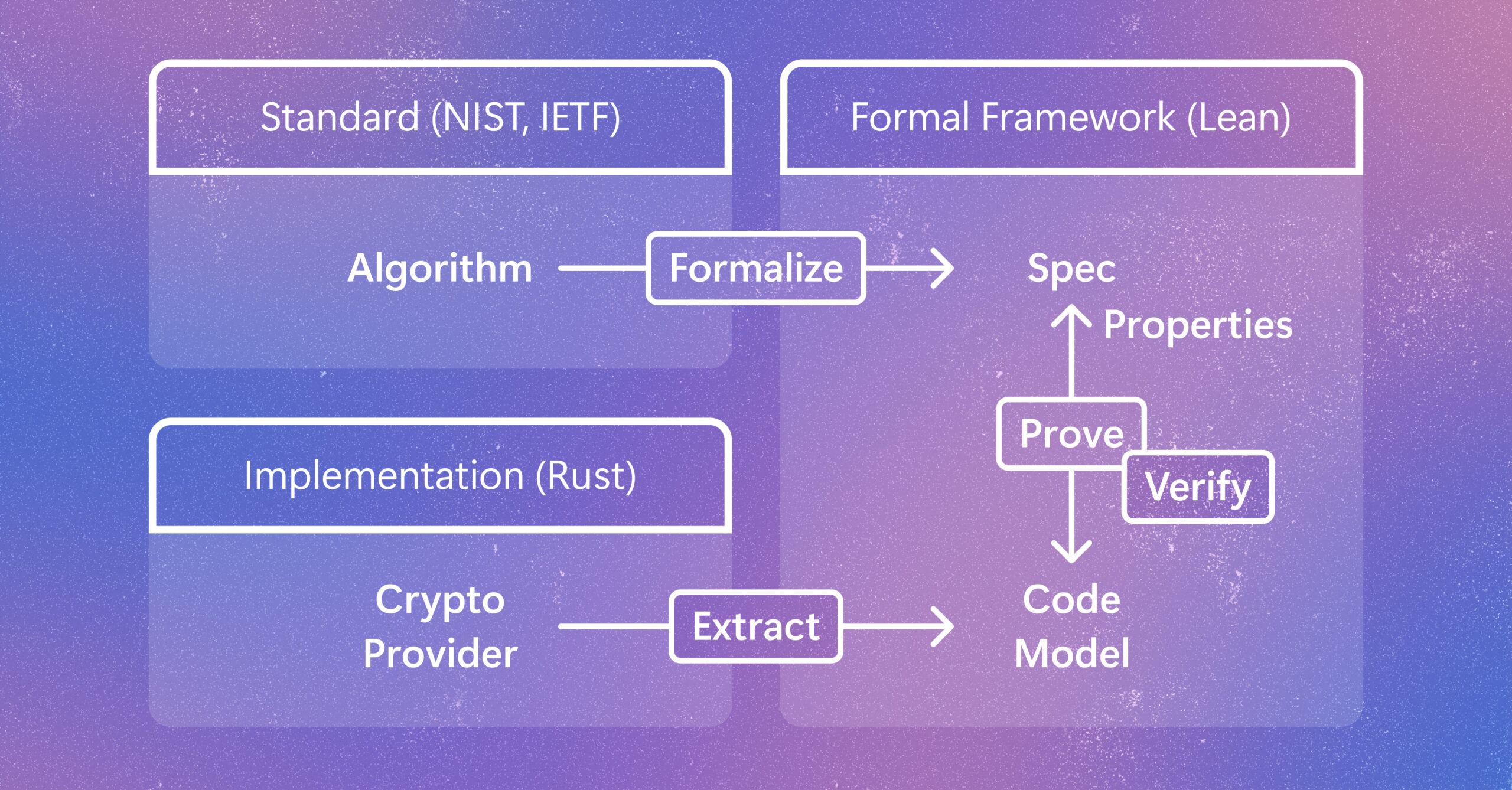
Cryptographic code supports vital protections in modern computing systems. Learn how a new method helps verify code as developers write it while preserving speed and adaptability as it gets implemented and evolves. The post Verifying Rust cryptography in SymCrypt, from standards to code appeared first on Microsoft Research.
MIT News · Artificial Intelligence· news.mit.eduJul 6, 2026
PhD student Rachel Sava, winner of the Envisioning the Future of Computing Prize, explores transformative improvements and dystopian risks of neural technology.