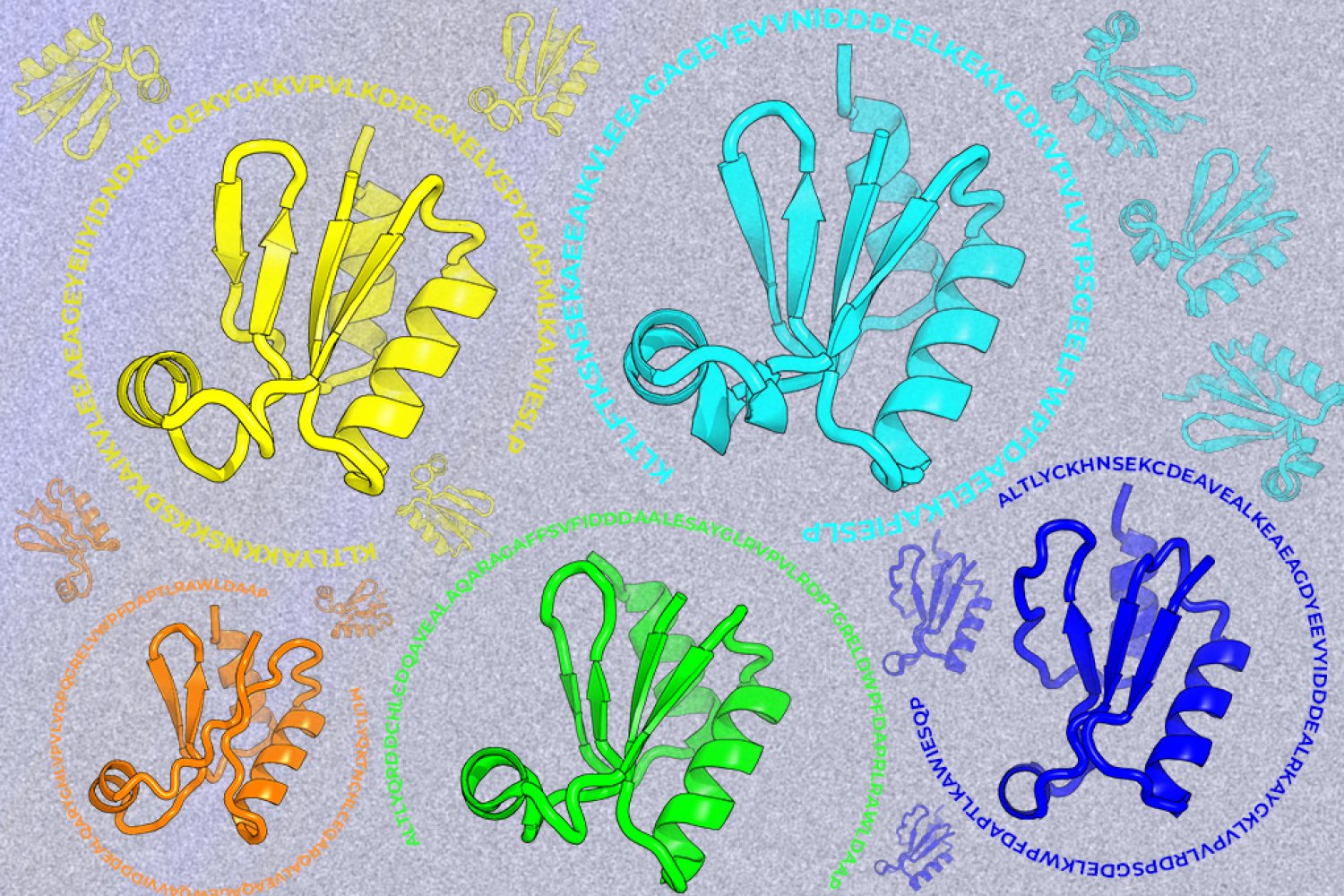
Intrinsically disordered protein regions (IDRs) play central roles in cellular processes such as transcriptional regulation, signal transduction, and subcellular localization, yet their functional design remains challenging. Structure-based design methods do not readily apply to IDRs, and existing protein language models are trained on full-length protein sequences, thus learning a prior that is biased towards folded domains. Here, we present IDiom, an autoregressive protein language model trained on IDiom-DB, a dataset of 54 million predicted IDRs curated from the AlphaFold Database. IDiom generates diverse sequences that recapitulate the composition, patterning, motifs, and predicted disorder of natural IDRs. To control function-associated sequence patterns, we also introduce reinforcement learning with sparse autoencoder features (RL-SAE), a post-training method that rewards the generation of sequences that activate specified feature sets. Across eight IDR design tasks, RL-SAE sequences activate, on average, 90% of 30 targeted features, compared to 24% for activation steering. We demonstrate that RL-SAE improves the predicted subcellular localization and transcriptional activity of generated IDRs compared to steering and supervised fine-tuning, and enables features associated with distinct biological functions to be combined within individual sequences. Thus, IDiom and RL-SAE enable interpretable and composable IDR design through explicit control of function-associated sequence features. More broadly, RL-SAE could extend to other protein design settings where interpretable features provide useful design targets. Code is available at https://github.com/rotskoff-group/idiom.
It is found that Llama 3 delivers comparable quality to leading language models such as GPT-4 on a plethora of tasks, and performs competitively with the state-of-the-art on image, video, and speech recognition tasks.
This paper investigates developing real-world perception for active agents, proposes Gibson Environment for this purpose, and showcases a set of perceptual tasks learned therein.
F. Xia, Amir Zamir, Zhi-Yang He et al.· 2018 IEEE/CVF Conference on...· 1,069 citations· ⚡112
The results indicate that software engineering work practices are chosen opportunistically, adapted and configured to provide value under the constrains imposed by the startup context.
Nicolò Paternoster, Carmine Giardino, M. Unterkalmsteiner et al.· Information and Software Tec...· 394 citations· ⚡54
The possibility of inferring high-dimensional data inference in a model that consists of a prior and an auxiliary differentiable constraint given some additional information is considered, thereby allowing a range of potential applications in adapting models to new domains and tasks.
Alexandros Graikos, Esmeralda S. Whitammer, N. Jojic et al.· Neural Information Processin...· 316 citations· ⚡15
It is proved that any global minimizer of the trajectory balance objective can define a policy that samples exactly from the target distribution, and empirically demonstrate the benefits of the trajectories balance objective for GFlowNet convergence, diversity of generated samples, and robustness to long action sequenc...
Esmeralda S. Whitammer, Moksh Jain, Emmanuel Bengio et al.· Neural Information Processin...· 302 citations· ⚡60
An algorithm is proposed which leverages disentangled semantic factors to generate adversarial perturbation by altering controlled semantic attributes to fool the learner towards various "adversarial" targets.
Haonan Qiu, Chaowei Xiao, Lei Yang et al.· arXiv.org· 208 citations· ⚡17
Related blog posts
MIT News · Artificial Intelligence· news.mit.eduNov 9, 2026
A new machine-learning framework aims to improve the success rate of computational protein design while moving away from results that reproduce sequences found in nature.