Context. The growing integration of distributed energy resources (DERs) into power distribution networks demands fast and accurate power flow (PF) analysis for real-time monitoring, state estimation, and optimal dispatch. The Newton-Raphson (NR) method, while robust, becomes computationally expensive when invoked repeatedly in optimization loops and probabilistic analyses. Graph neural networks (GNNs) have emerged as promising surrogate models, yet existing benchmarks focus exclusively on IEEE transmission test cases with fewer than 300 buses. Distribution networks – characterized by radial topologies, high R/X ratios, and heterogeneous load profiles – remain largely unexplored.Objective. The goal of this work is to systematically evaluate four GNN architectures (GCN, GAT, GraphSAGE, MPNN) and an MLP baseline for AC power flow approximation on medium-voltage (MV) and low-voltage (LV) distribution networks, quantifying the value of graph-based message passing and identifying the topological factors that govern prediction accuracy.Method. Five architectures are benchmarked on ten SimBench distribution grids (15–144 buses, rural to commercial topologies). For each grid, power flow scenarios with ±30% load variation are solved using Newton-Raphson. All models share identical hyperparameters and three random seeds (150 experiments total). Metrics: mean absolute error for voltage magnitude and angle, and inference speedup.Results. All GNNs reduce voltage magnitude error by 62–75% over the topology-agnostic MLP. GraphSAGE achieves the best speed-accuracy trade-off (22× speedup). LV grids are significantly harder than MV (Mann-Whitney p = 0.002), with error correlated to network diameter and bridge fraction. MPNN underperforms with 2 layers but reaches competitive accuracy with 4 layers.Conclusions. For the first time, a systematic GNN benchmark for distribution-level power flow is presented, demonstrating thatgraph structure reduces prediction error by 62–75% over a topology-agnostic baseline. A statistically significant MV/LV performance gap is identified and traced to network diameter and bridge fraction, revealing a fundamental limitation of shallow GNNs on radial networks. GraphSAGE is recommended as the default architecture for real-time applications
Agile methods continue to gain popularity. In particular, the Scrum method appears to be on the verge of becoming a de-facto standard in the industry, leading the so called Agile movement. While there are success stories and recommendations, there is little scientifically valid evidence of the challenges in the adoptio...
A. Marchenko, P. Abrahamsson· Agile Conference· 59 citations· ⚡11
A comprehensive taxonomy of the challenges faced when a medium-scale organization decided to adopt software platforms is provided, namely: business challenges, organizational challenges, technical challenges, and people challenges.
Yaser Ghanam, F. Maurer, P. Abrahamsson· Information and Software Tec...· 41 citations· ⚡3
It is shown that high article processing charges are not sufficiently justified by the publishers, which often lack transparency and may prevent authors from adopting OA.
D. Graziotin, Xiaofeng Wang, P. Abrahamsson· Scientometrics· 21 citations· ⚡1
MCGLPPI, a novel geometric representation learning framework that combines graph neural networks (GNNs) with the MARTINI molecular coarse-grained (CG) model to predict overall PPI properties accurately and efficiently, offers an effective and efficient solution for PPI overall property predictions.
Yang Yue, Shu Li, Yihua Cheng et al.· bioRxiv· 15 citations
PepPCBench enables a robust evaluation of PFNN-based methods and supports their continued development for peptide-protein structure prediction, and highlights the influence of peptide length, conformational flexibility, and training set similarity on prediction accuracy.
Si-Long Zhai, Huifeng Zhao, Ji-Ke Wang et al.· Journal of Chemical Informat...· 13 citations· ⚡1
OmniMol is presented, a framework using hypergraphs to improve predictions of molecular properties, addressing challenges of imperfect data annotation and enhancing model explainability, and achieves state-of-the-art performance in properties prediction.
Assistant Professor Pat Pataranutaporn describes a new interface that lets everyday users glimpse inside an AI's neural network before their chatbot ever says a word.
Microsoft Research Blog· microsoft.comJul 13, 2026
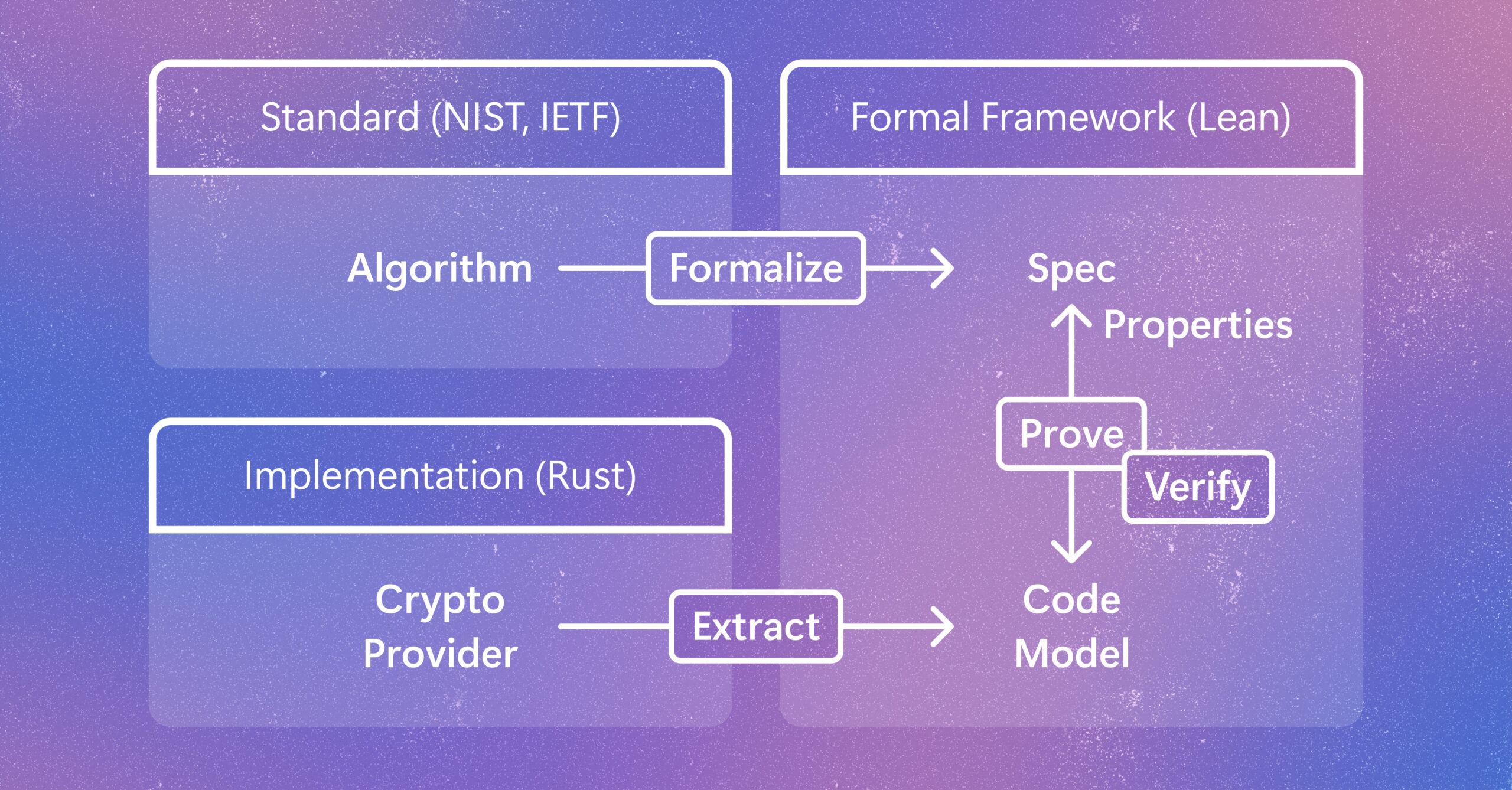
Cryptographic code supports vital protections in modern computing systems. Learn how a new method helps verify code as developers write it while preserving speed and adaptability as it gets implemented and evolves. The post Verifying Rust cryptography in SymCrypt, from standards to code appeared first on Microsoft Research.
MIT News · Artificial Intelligence· news.mit.eduJul 6, 2026
PhD student Rachel Sava, winner of the Envisioning the Future of Computing Prize, explores transformative improvements and dystopian risks of neural technology.