Skip to content

Enhancing protein–ligand pose prediction via dual-branch deep learning with docking-oriented multi-component loss and iterative refinement

Sep 2026 · Applied intelligence (Boston) · Vol 56 · 0 citations · 32 references
Computational Drug Discovery Methods

Abstract

Protein-ligand pose prediction is a core task in structure-based drug discovery because it determines how a ligand fits within a protein pocket and directly affects downstream virtual screening and lead-optimization workflows. Recent graph neural network (GNN) methods have shown promise for protein-ligand pose prediction, while improving the accuracy of an initial docked pose remains an important task. In this work, we present KTransPose, a GNN-based protein-ligand pose-refinement framework that combines a dual-branch architecture, a docking-oriented multi-component loss, and iterative refinement. The dual-branch architecture combines a global pose transformation branch that predicts rotation and translation with a local coordinate correction branch that predicts atom-wise coordinate adjustments. The multi-component loss combines root mean squared distance (RMSD) when computed without rotational or translational alignment, mean squared error (MSE) after alignment by the Kabsch algorithm, intraligand distance regularization, and a protein-ligand clash penalty. We instantiate the framework with several GNN architectures and find that a TransformerConv-based model provides the strongest overall performance. Using the same preprocessing, initial docked poses, and evaluation procedure, KTransPose improves upon MedusaGraph on both PDBbind-2020 and CASF-2016 benchmark datasets, reducing the mean RMSD from 5.08 Å to 4.47 Å and from 4.81 Å to 4.24 Å respectively, corresponding to improvements of approximately 12% in both datasets.
Read PDF

Similar papers

#computer vision Conference Aug 2008

Scrum in a Multiproject Environment: An Ethnographically-Inspired Case Study on the Adoption Challenges

Agile methods continue to gain popularity. In particular, the Scrum method appears to be on the verge of becoming a de-facto standard in the industry, leading the so called Agile movement. While there are success stories and recommendations, there is little scientifically valid evidence of the challenges in the adoptio...

A. Marchenko, P. Abrahamsson · 59 citations · ⚡11
#computer vision Open access Sep 2012

Making the leap to a software platform strategy: Issues and challenges

A comprehensive taxonomy of the challenges faced when a medium-scale organization decided to adopt software platforms is provided, namely: business challenges, organizational challenges, technical challenges, and people challenges.

Yaser Ghanam, F. Maurer, P. Abrahamsson · 41 citations · ⚡3
#machine learning Open access Mar 2024

Integration of molecular coarse-grained model into geometric representation learning framework for protein-protein complex property prediction

MCGLPPI, a novel geometric representation learning framework that combines graph neural networks (GNNs) with the MARTINI molecular coarse-grained (CG) model to predict overall PPI properties accurately and efficiently, offers an effective and efficient solution for PPI overall property predictions.

Yang Yue, Shu Li, Yihua Cheng et al. · 15 citations

PepPCBench is a Comprehensive Benchmarking Framework for Protein-Peptide Complex Structure Prediction

PepPCBench enables a robust evaluation of PFNN-based methods and supports their continued development for peptide-protein structure prediction, and highlights the influence of peptide length, conformational flexibility, and training set similarity on prediction accuracy.

Si-Long Zhai, Huifeng Zhao, Ji-Ke Wang et al. · 13 citations · ⚡1
#machine learning Open access Sep 2025

Unified and explainable molecular representation learning for imperfectly annotated data from the hypergraph view

OmniMol is presented, a framework using hypergraphs to improve predictions of molecular properties, addressing challenges of imperfect data annotation and enhancing model explainability, and achieves state-of-the-art performance in properties prediction.

Bowen Wang, Junyou Li, Donghao Zhou et al. · 11 citations

Related blog posts

Microsoft Research Blog Jul 13, 2026

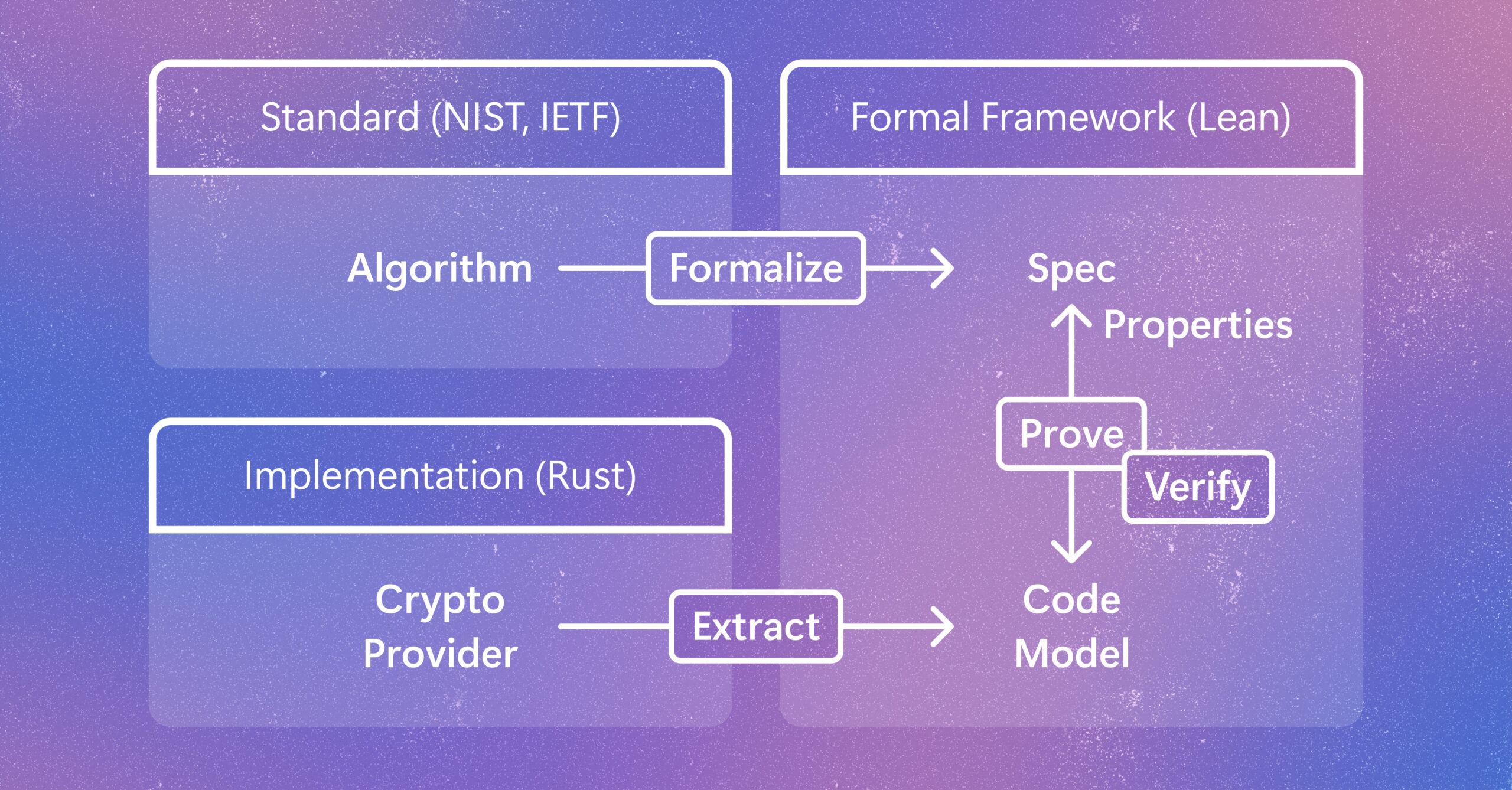
Verifying Rust cryptography in SymCrypt, from standards to code

Cryptographic code supports vital protections in modern computing systems. Learn how a new method helps verify code as developers write it while preserving speed and adaptability as it gets implemented and evolves. The post Verifying Rust cryptography in SymCrypt, from standards to code appeared first on Microsoft Research.

We use cookies to run the site and, with your consent, for analytics and to show ads. See our Cookie Policy.