Sep 2026· Proceedings of the Institution of mechanical engineers. Part D, journal of automobile engineering· 0 citations· 23 references
Machine Fault Diagnosis Techniques
Abstract
Non-contact acoustic diagnosis is attractive for automotive maintenance because abnormal sounds can be recorded without installing additional sensors on compact or inaccessible components. Practical service recordings, however, are affected by low-frequency dominance, transient impacts, device differences, propagation paths, and background noise. This study proposes a lightweight evidence-guided convolutional neural network (CNN)-graph convolutional network (GCN) for 12-class automotive component acoustic fault detection. Long-window short-time Fourier transform (STFT), short-window STFT, and log-Mel spectrograms are combined as a three-channel time-frequency representation to preserve low-frequency spectral details, impact-related temporal changes, and perceptual acoustic information. A dual-branch network is then used: the CNN branch extracts local time-frequency textures, while the GCN branch treats temporal frames as graph nodes and constructs a sample-adaptive Top-K graph to model non-local temporal relations. To reduce dependence on noise-related shortcuts, a frequency-band attribution-prior loss is introduced using class-specific fault-sensitive bands estimated from the training data. Under a source-group-level evaluation protocol, the proposed model achieves 0.9749 segment-level accuracy, 0.9749 macro-
F
1, and 0.9976 macro-AUC on an independent test set. Ablation, noise robustness, and prototype deployment tests indicate the value of the proposed representation, local-global architecture, and evidence-guided loss for maintenance-oriented acoustic diagnosis.
Agile methods continue to gain popularity. In particular, the Scrum method appears to be on the verge of becoming a de-facto standard in the industry, leading the so called Agile movement. While there are success stories and recommendations, there is little scientifically valid evidence of the challenges in the adoptio...
A. Marchenko, P. Abrahamsson· Agile Conference· 59 citations· ⚡11
A comprehensive taxonomy of the challenges faced when a medium-scale organization decided to adopt software platforms is provided, namely: business challenges, organizational challenges, technical challenges, and people challenges.
Yaser Ghanam, F. Maurer, P. Abrahamsson· Information and Software Tec...· 41 citations· ⚡3
It is shown that high article processing charges are not sufficiently justified by the publishers, which often lack transparency and may prevent authors from adopting OA.
D. Graziotin, Xiaofeng Wang, P. Abrahamsson· Scientometrics· 21 citations· ⚡1
MCGLPPI, a novel geometric representation learning framework that combines graph neural networks (GNNs) with the MARTINI molecular coarse-grained (CG) model to predict overall PPI properties accurately and efficiently, offers an effective and efficient solution for PPI overall property predictions.
Yang Yue, Shu Li, Yihua Cheng et al.· bioRxiv· 15 citations
PepPCBench enables a robust evaluation of PFNN-based methods and supports their continued development for peptide-protein structure prediction, and highlights the influence of peptide length, conformational flexibility, and training set similarity on prediction accuracy.
Si-Long Zhai, Huifeng Zhao, Ji-Ke Wang et al.· Journal of Chemical Informat...· 13 citations· ⚡1
OmniMol is presented, a framework using hypergraphs to improve predictions of molecular properties, addressing challenges of imperfect data annotation and enhancing model explainability, and achieves state-of-the-art performance in properties prediction.
Assistant Professor Pat Pataranutaporn describes a new interface that lets everyday users glimpse inside an AI's neural network before their chatbot ever says a word.
Microsoft Research Blog· microsoft.comJul 13, 2026
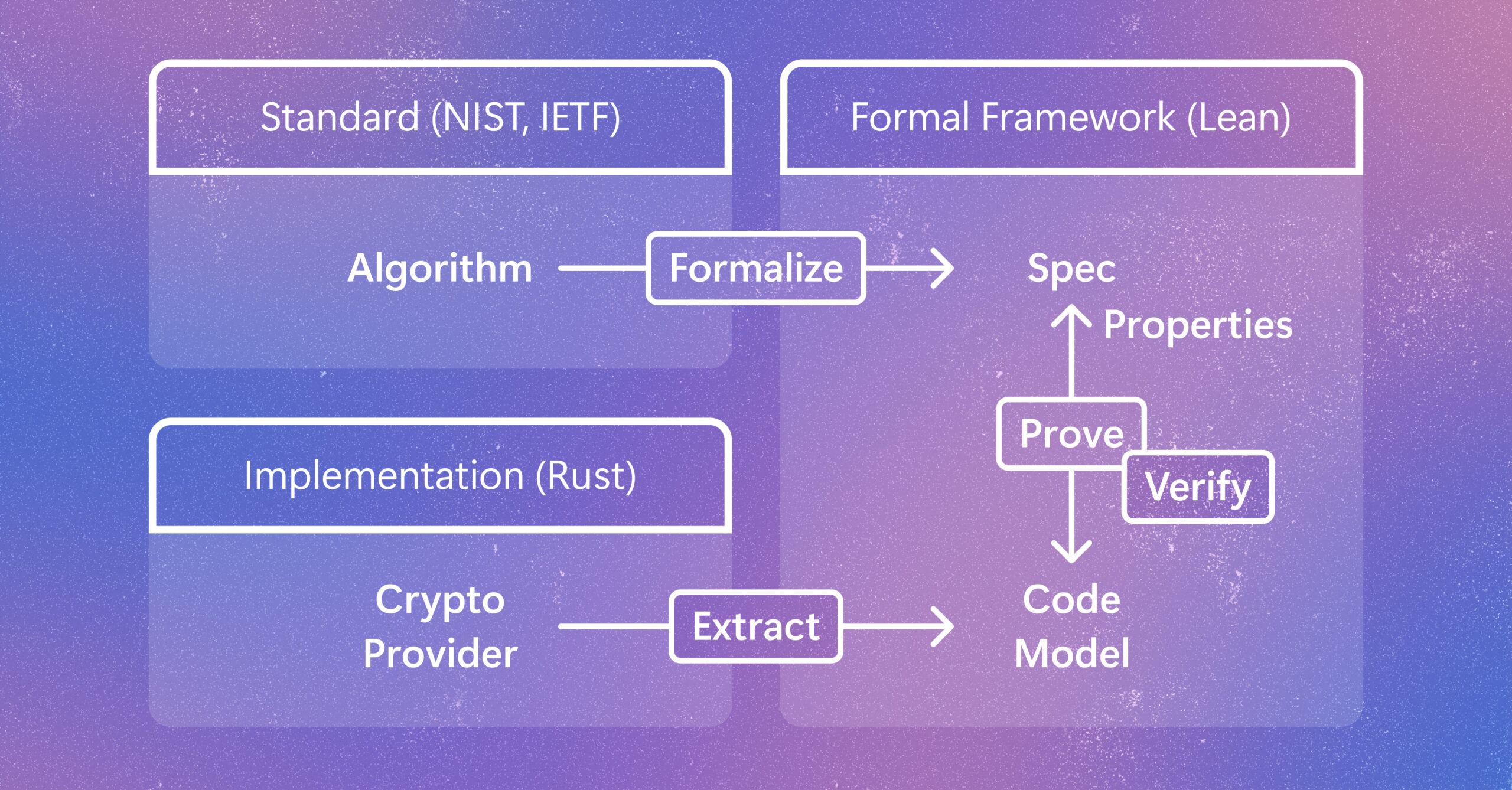
Cryptographic code supports vital protections in modern computing systems. Learn how a new method helps verify code as developers write it while preserving speed and adaptability as it gets implemented and evolves. The post Verifying Rust cryptography in SymCrypt, from standards to code appeared first on Microsoft Research.
MIT News · Artificial Intelligence· news.mit.eduJul 6, 2026
PhD student Rachel Sava, winner of the Envisioning the Future of Computing Prize, explores transformative improvements and dystopian risks of neural technology.