Skip to content

Does a Model Forget Differently When the Data Is Its Own? RL's Retention Advantage and Model Collapse Are Claims About the Same Loop, and No Study Has Measured Both

Sep 2026 · Zenodo (CERN European Organization for Nuclear Research)

Abstract

(c) 2026 Pranay Mahendrakar. Licensed under CC BY 4.0. Two literatures make claims about what happens when a language model trains on data that resembles its own distribution. One asks whether reinforcement learning forgets a model's prior capabilities less than supervised fine-tuning does, and answers yes: on-policy RL is implicitly biased toward solutions that stay close, in KL divergence, to the base policy, while supervised fine-tuning can converge to distributions arbitrarily far away (Shenfeld, Pari and Agrawal, 2025). The other asks whether a model trained recursively on its own generated outputs degrades across generations, and answers yes as well: absent a steady supply of fresh real data, the tails of the training distribution disappear, a failure named model collapse (Shumailov et al., 2023). A self-training loop -- reinforcement learning with verifiable rewards applied to a policy that generates its own training data and is scored by a verifier it does not otherwise consult -- is an instance of both objects at once, and no study surveyed here measures both retention and collapse on the same system. This paper lays out what each literature actually measures, its reference point (a held-out prior task versus the original data distribution) and its timescale (one fine-tuning run versus many training generations); argues these are not obviously the same failure mode despite a shared vocabulary of KL divergence, entropy and distributional narrowing; and assembles a small set of 2025-2026 results -- on correct-set turnover inside RLVR itself, on RLVR's failure to expand a model's pass-at-large-k ceiling beyond its own base model, and on verifier reliability degrading in exactly the low-resource regime where synthetic data accumulates fastest -- that make the reconciliation harder than either literature admits when read on its own. The paper does not resolve which failure mode dominates a given self-training loop. It specifies the joint measurement nobody has run, and states plainly why each literature's current instruments cannot answer the other literature's question. The literature search, drafting and citation verification for this paper were carried out with AI assistance under the author's direction. Every citation was machine-verified against its live arXiv Atom API record during drafting (title and author list checked against the record returned), and every quantitative claim in this paper is taken from the abstract or a directly quoted headline result of the source credited with it. No experiment was run and no number in this paper was measured or recomputed by its author; Table 1 re-presents numbers published by the cited papers, each named on its row, and Figure 1 plots four of those numbers directly with no transformation beyond unit labeling. Algorithm 1 is original conceptual synthesis by the author, not an empirical result and not reproduced from any single cited source; it is presented as such.

View source

Similar papers

#small language model Dataset Open access Oct 2026

Socratic guiding questions in synthetic arithmetic data: matched LoRA runs (revision v2)

Supporting data, adapters, predictions and code for the article *Low-Cost LoRA Fine-Tuning of Small Language Models for Multi-Step Arithmetic Reasoning* by Jake O'Grady, Asena Isik Gürhan, Chee Fong Ting and Effirul Ramlan (University of Galway). We generated 20,000 GSM8K-derived arithmetic problems with step-by-step s...

O'Grady, Jake, Gürhan, Asena Isik, Chee, Fong Ting et al. · 465 citations
#machine learning Review Open access Oct 2014

Software development in startup companies: A systematic mapping study

The results indicate that software engineering work practices are chosen opportunistically, adapted and configured to provide value under the constrains imposed by the startup context.

Nicolò Paternoster, Carmine Giardino, M. Unterkalmsteiner et al. · 394 citations · ⚡54
#computer vision Open access Jun 2016

Software Development in Startup Companies: The Greenfield Startup Model

The results are packaged in the Greenfield Startup Model (GSM), which explains the priority of startups to release the product as quickly as possible, and the need to shorten time-to-market, by speeding up the development through low-precision engineering activities.

Carmine Giardino, Nicolò Paternoster, M. Unterkalmsteiner et al. · 178 citations · ⚡14
#machine learning Review Open access Jun 2014

Why Early-Stage Software Startups Fail: A Behavioral Framework

This state-of-practice investigation was performed using a literature review followed by a multiple-case study approach and presents how inconsistency between managerial strategies and execution can lead to failure by means of a behavioral framework.

Carmine Giardino, Xiaofeng Wang, P. Abrahamsson · 175 citations · ⚡19
#computer vision Open access Oct 2016

Software Startups - A Research Agenda

Software startup companies develop innovative, software-intensive products within limited timeframes and with few resources, searching for sustainable and scalable business models.

M. Unterkalmsteiner, P. Abrahamsson, Xiaofeng Wang et al. · 157 citations · ⚡17
#machine learning Review Open access Oct 2016

“Failures” to be celebrated: an analysis of major pivots of software startups

This study conducts a case survey study based on the secondary data of the major pivots happened in 49 software startups, and demonstrates that customer need pivot is the most common among all pivot types.

Sohaib Shahid Bajwa, Xiaofeng Wang, Anh Nguyen-Duc et al. · 127 citations · ⚡15

Related blog posts

GPT-Lab Aug 28, 2026

We built an AI factory for HVAC control

What does it take to trust AI-driven HVAC optimization? Our AI Model Factory combines agents, machine learning, reinforcement learning and deterministic checks in a governed workflow designed for messy, real-world building data. The post We built an AI factory for HVAC control appeared first on GPT-Lab.

Microsoft Research Blog Jul 30, 2026

EvoLib: Turning experience into evolving knowledge

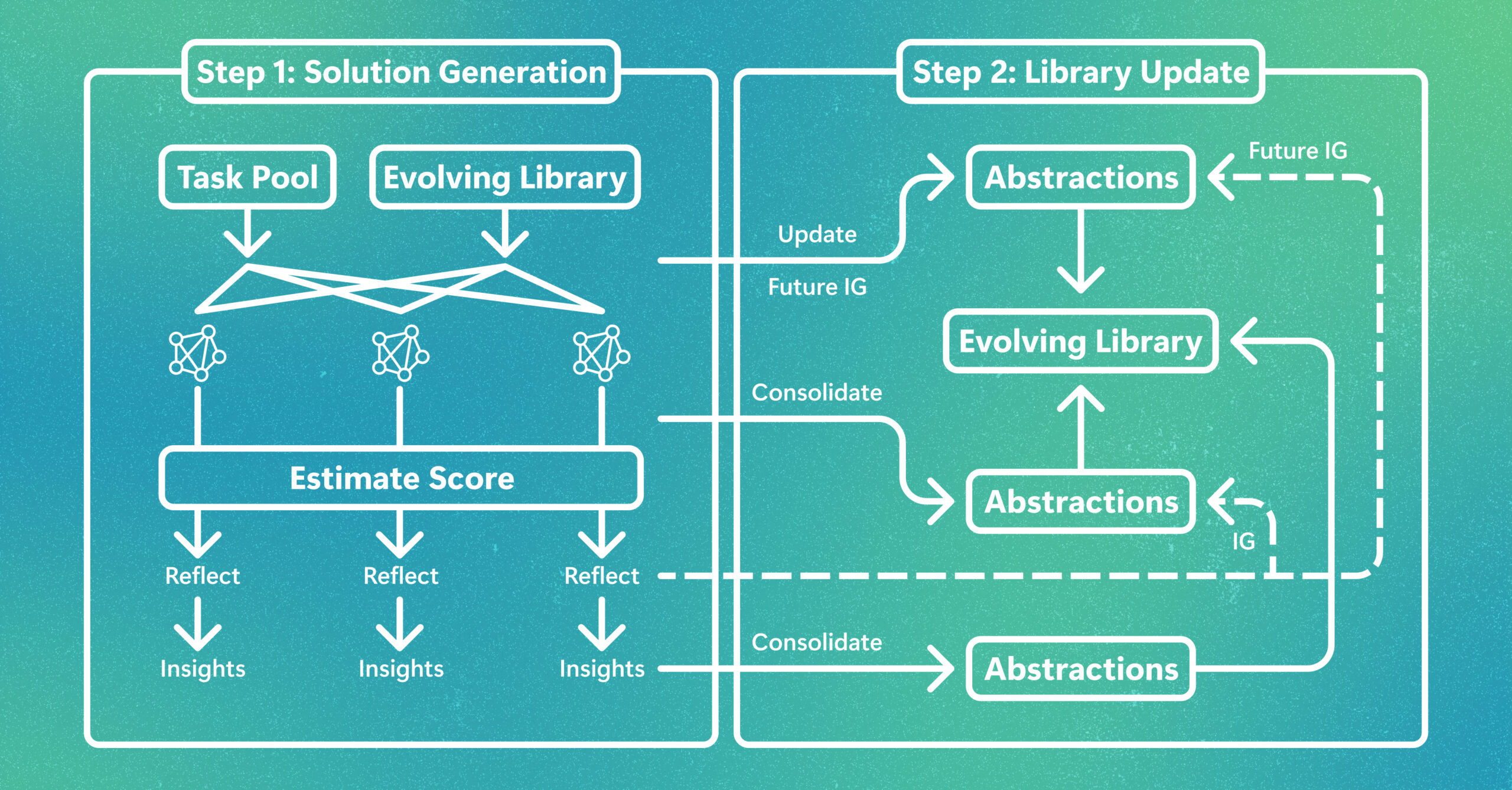
LLMs do not get smarter just by remembering more. EvoLib turns experience into evolving knowledge, taking reusable skills and insights that help models learn and adapt across tasks long after deployment. The post EvoLib: Turning experience into evolving knowledge appeared first on Microsoft Research.

We use cookies to run the site and, with your consent, for analytics and to show ads. See our Cookie Policy.