Skip to content

Integrating Artificial Intelligence and Environmental Metagenomics for Ecosystem Monitoring and Management

Sep 2026 · Archives of Current Research International

Abstract

Artificial Intelligence (AI) is driving a significant transformation in microbiology and environmental metagenomics, shifting the field from a descriptive framework towards a predictive and systems-level understanding. The advent of metagenomics has enabled direct analysis of microbial communities from environmental samples, overcoming limitations of culture-dependent approaches. However, rapid advances in high-throughput sequencing have generated unprecedented volumes of complex data, creating a critical need for advanced computational tools. In this context, AI has emerged as an essential approach for extracting meaningful biological insights. AI-based methods have enhanced microbial community analysis by enabling deeper understanding of community dynamics and functional interactions. Models such as cNODE predict community shifts based on initial species configurations, while Graph Neural Network approaches, including MicrobeGNN, estimate steady-state community structures using genomic relationships. Machine learning algorithms such as Random Forest are also widely applied to identify keystone species essential for ecosystem stability. In environmental DNA (eDNA) and metagenomic data analysis, machine learning improves tasks such as metagenome binning through tools like VAMB and SemiBin, while DeepMAsEd and ResMiCo detect assembly errors without reference genomes. Additionally, Natural Language Processing-based models such as DeepMicrobes and BERTax interpret DNA as structured language for accurate taxonomic classification. AI also contributes to predicting microbial functions, particularly in bioremediation, by identifying organisms capable of degrading pollutants using techniques such as Random Forest and Support Vector Machines. Reinforcement learning frameworks like SPAM-DFBA further model microbial metabolism as a decision-making system. In pathogen tracking, AI supports outbreak detection and source attribution, with applications including prediction of Salmonella enterica origins and real-time surveillance systems such as HealthMap. Future developments include microbial foundation models, tools like AlphaFold 3 and Evo, and digital twin systems, although challenges such as limited interpretability remain.
View source

Similar papers

#computer vision Conference Aug 2008

Scrum in a Multiproject Environment: An Ethnographically-Inspired Case Study on the Adoption Challenges

Agile methods continue to gain popularity. In particular, the Scrum method appears to be on the verge of becoming a de-facto standard in the industry, leading the so called Agile movement. While there are success stories and recommendations, there is little scientifically valid evidence of the challenges in the adoptio...

A. Marchenko, P. Abrahamsson · 59 citations · ⚡11
#computer vision Open access Sep 2012

Making the leap to a software platform strategy: Issues and challenges

A comprehensive taxonomy of the challenges faced when a medium-scale organization decided to adopt software platforms is provided, namely: business challenges, organizational challenges, technical challenges, and people challenges.

Yaser Ghanam, F. Maurer, P. Abrahamsson · 41 citations · ⚡3
#machine learning Open access Mar 2024

Integration of molecular coarse-grained model into geometric representation learning framework for protein-protein complex property prediction

MCGLPPI, a novel geometric representation learning framework that combines graph neural networks (GNNs) with the MARTINI molecular coarse-grained (CG) model to predict overall PPI properties accurately and efficiently, offers an effective and efficient solution for PPI overall property predictions.

Yang Yue, Shu Li, Yihua Cheng et al. · 15 citations

PepPCBench is a Comprehensive Benchmarking Framework for Protein-Peptide Complex Structure Prediction

PepPCBench enables a robust evaluation of PFNN-based methods and supports their continued development for peptide-protein structure prediction, and highlights the influence of peptide length, conformational flexibility, and training set similarity on prediction accuracy.

Si-Long Zhai, Huifeng Zhao, Ji-Ke Wang et al. · 13 citations · ⚡1
#machine learning Open access Sep 2025

Unified and explainable molecular representation learning for imperfectly annotated data from the hypergraph view

OmniMol is presented, a framework using hypergraphs to improve predictions of molecular properties, addressing challenges of imperfect data annotation and enhancing model explainability, and achieves state-of-the-art performance in properties prediction.

Bowen Wang, Junyou Li, Donghao Zhou et al. · 11 citations

Related blog posts

Microsoft Research Blog Jul 13, 2026

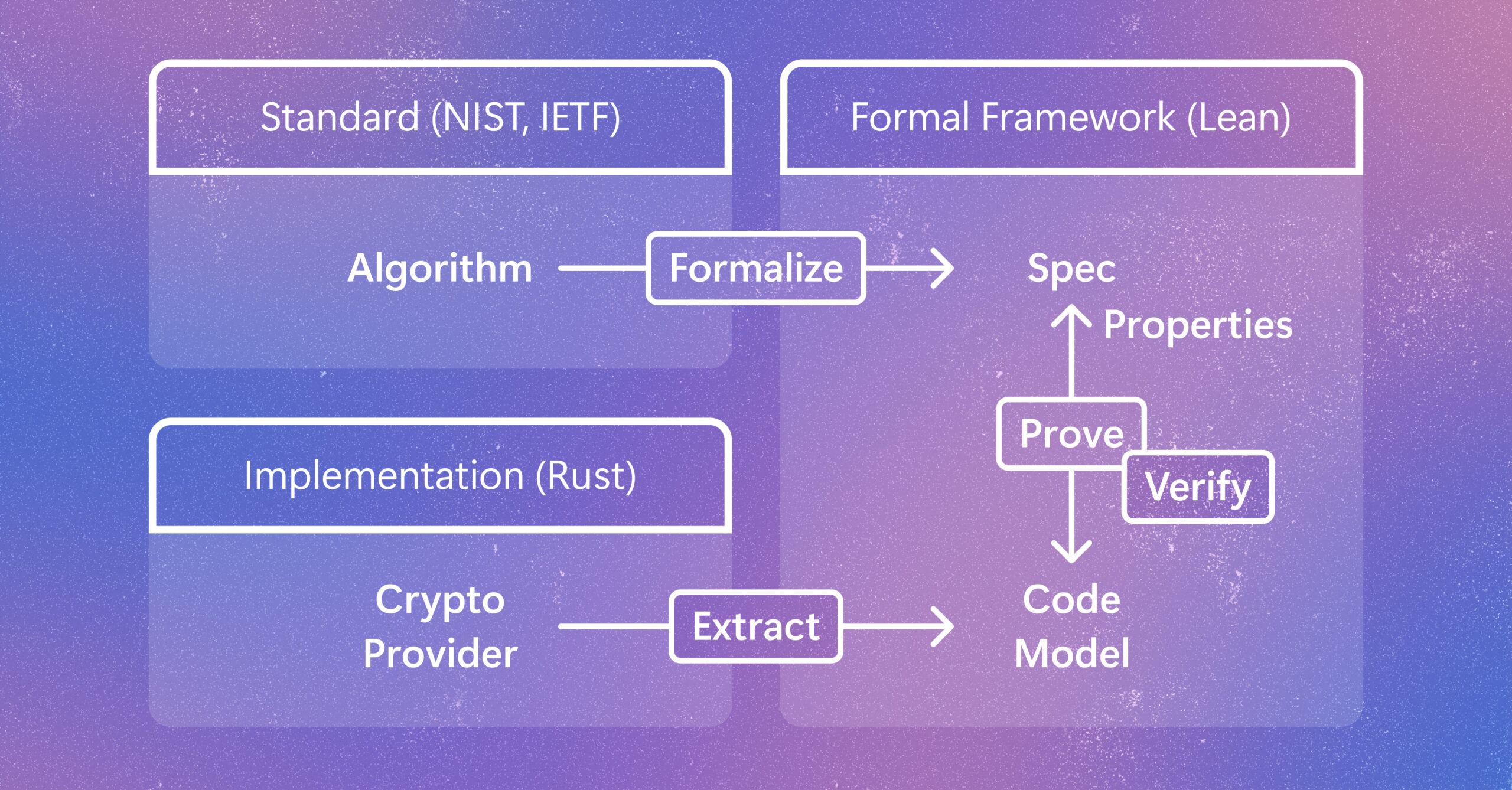
Verifying Rust cryptography in SymCrypt, from standards to code

Cryptographic code supports vital protections in modern computing systems. Learn how a new method helps verify code as developers write it while preserving speed and adaptability as it gets implemented and evolves. The post Verifying Rust cryptography in SymCrypt, from standards to code appeared first on Microsoft Research.

We use cookies to run the site and, with your consent, for analytics and to show ads. See our Cookie Policy.