Abstract Selecting among hydroxyl (HO•), sulfate (SO4•–), and carbonate (CO3•–) radical advanced oxidation processes requires reliable intrinsic second-order rate constants, yet the corresponding curated data sets contain 1250, 493, and 248 records, respectively. Reframing this imbalance as a cross-radical few-shot learning problem, we introduce maco, a radical-conditioned graph neural network that uses shared molecular representation learning, oxidant/pH cross-attention, residual adapters, and a two-stage curriculum to transfer structural knowledge from the data-rich HO• task to the lower-data SO4•– and CO3•– tasks. On similarity-stratified held-out tests, maco achieved R2 = 0.855 (95% CI 0.711–0.906) for SO4•– and 0.815 (0.269–0.944) for CO3•–; on the more stringent scaffold-disjoint Murcko tests, the corresponding values were 0.652 (0.447–0.779) and 0.715 (0.500–0.825). Temperature-conditioned sensitivity analyses showed no statistically discernible generalization gain under the highly asymmetric temperature coverage. Functional-group attention analysis identified radical- and pH-dependent reactive-site patterns, while applicability-domain assessment and ensemble uncertainty quantified prediction reliability for target-radical scaffold-novel contaminants. maco provides a reproducible screening input for prioritising radical–contaminant measurements and process-specific evaluation. A browser-accessible WebUI further provides single-compound predictions, uncertainty estimates, and applicability-domain flags without local installation.
Agile methods continue to gain popularity. In particular, the Scrum method appears to be on the verge of becoming a de-facto standard in the industry, leading the so called Agile movement. While there are success stories and recommendations, there is little scientifically valid evidence of the challenges in the adoptio...
A. Marchenko, P. Abrahamsson· Agile Conference· 59 citations· ⚡11
A comprehensive taxonomy of the challenges faced when a medium-scale organization decided to adopt software platforms is provided, namely: business challenges, organizational challenges, technical challenges, and people challenges.
Yaser Ghanam, F. Maurer, P. Abrahamsson· Information and Software Tec...· 41 citations· ⚡3
It is shown that high article processing charges are not sufficiently justified by the publishers, which often lack transparency and may prevent authors from adopting OA.
D. Graziotin, Xiaofeng Wang, P. Abrahamsson· Scientometrics· 21 citations· ⚡1
MCGLPPI, a novel geometric representation learning framework that combines graph neural networks (GNNs) with the MARTINI molecular coarse-grained (CG) model to predict overall PPI properties accurately and efficiently, offers an effective and efficient solution for PPI overall property predictions.
Yang Yue, Shu Li, Yihua Cheng et al.· bioRxiv· 15 citations
PepPCBench enables a robust evaluation of PFNN-based methods and supports their continued development for peptide-protein structure prediction, and highlights the influence of peptide length, conformational flexibility, and training set similarity on prediction accuracy.
Si-Long Zhai, Huifeng Zhao, Ji-Ke Wang et al.· Journal of Chemical Informat...· 13 citations· ⚡1
OmniMol is presented, a framework using hypergraphs to improve predictions of molecular properties, addressing challenges of imperfect data annotation and enhancing model explainability, and achieves state-of-the-art performance in properties prediction.
Assistant Professor Pat Pataranutaporn describes a new interface that lets everyday users glimpse inside an AI's neural network before their chatbot ever says a word.
Microsoft Research Blog· microsoft.comJul 13, 2026
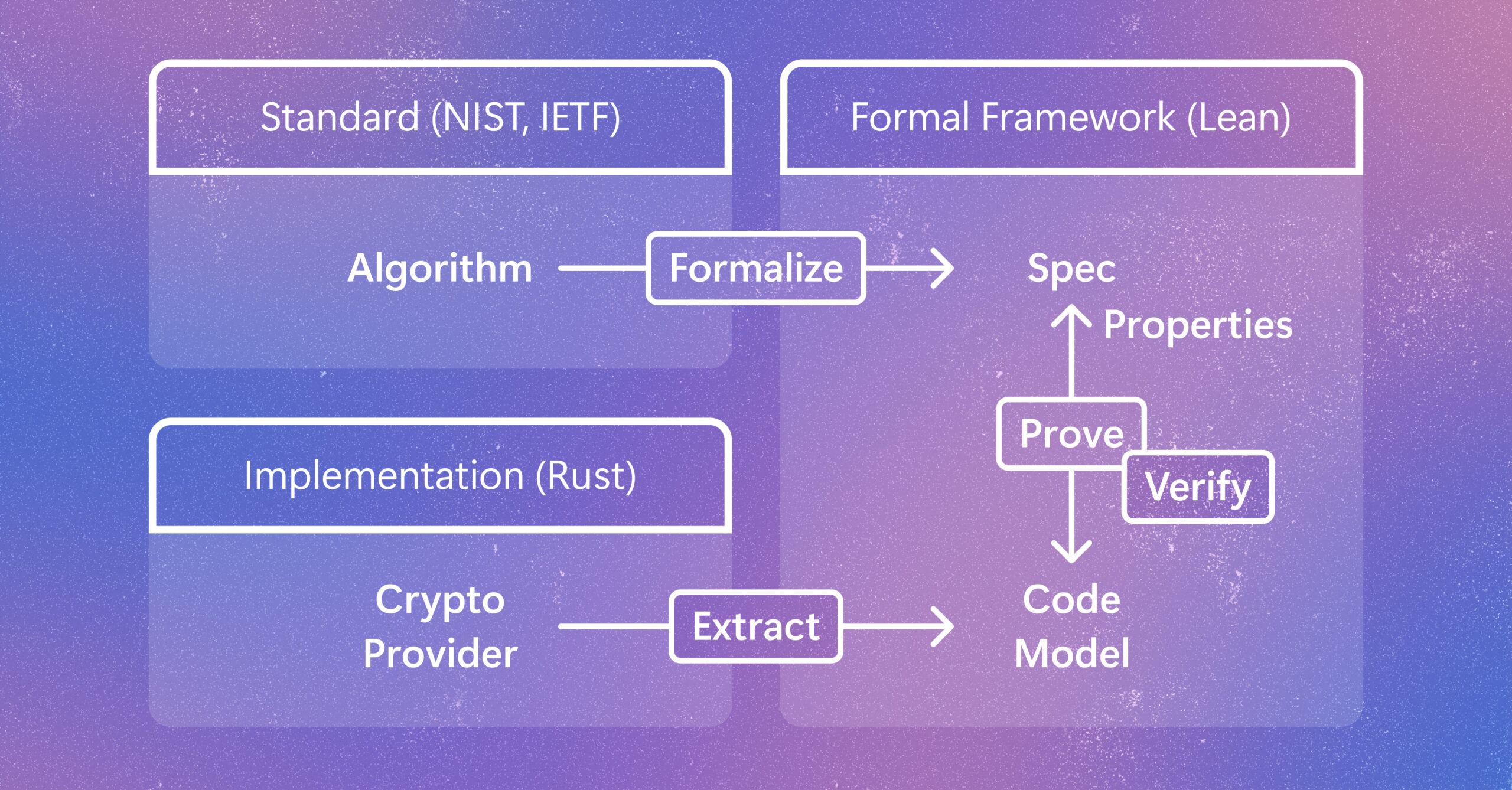
Cryptographic code supports vital protections in modern computing systems. Learn how a new method helps verify code as developers write it while preserving speed and adaptability as it gets implemented and evolves. The post Verifying Rust cryptography in SymCrypt, from standards to code appeared first on Microsoft Research.
MIT News · Artificial Intelligence· news.mit.eduJul 6, 2026
PhD student Rachel Sava, winner of the Envisioning the Future of Computing Prize, explores transformative improvements and dystopian risks of neural technology.