Machine-learning interatomic potentials of several functional forms now support large-scale atomistic simulation.Within this landscape, graph neural network (GNN) potentials such as M3GNet offer transferable message-passing models, but their application to very large systems remains limited by graph construction, message passing, and differentiable force-evaluation costs.In M3GNet, the explicit angular pathway is represented through line-graph triplets, whose construction can dominate inference cost.Here we examine the scalability of M3GNet molecular dynamics via inference-time triplet pruning.We first show that an apparent insensitivity to triplet removal in inspected MatGL implementations originates from an incorrect parent-bond index mapping; after correction, removing triplets substantially increases static energy, force, stress, and property-prediction errors.In short molecular-dynamics trajectories, however, the structural response is strongly system dependent, with some systems showing modest radial-distribution-function changes despite a threefold reduction in inference cost.We then implement and evaluate an owned-core/halo spatial chunking scheme that bounds activation memory during differentiable force evaluation and enables M3GNet simulations of million-atom alloy cells on GPU hardware.These results show that triplet pruning can provide useful acceleration when validated for the target observable, while spatial decomposition offers a more general route to extending GNN potentials to large atomistic systems.
Agile methods continue to gain popularity. In particular, the Scrum method appears to be on the verge of becoming a de-facto standard in the industry, leading the so called Agile movement. While there are success stories and recommendations, there is little scientifically valid evidence of the challenges in the adoptio...
A. Marchenko, P. Abrahamsson· Agile Conference· 59 citations· ⚡11
A comprehensive taxonomy of the challenges faced when a medium-scale organization decided to adopt software platforms is provided, namely: business challenges, organizational challenges, technical challenges, and people challenges.
Yaser Ghanam, F. Maurer, P. Abrahamsson· Information and Software Tec...· 41 citations· ⚡3
It is shown that high article processing charges are not sufficiently justified by the publishers, which often lack transparency and may prevent authors from adopting OA.
D. Graziotin, Xiaofeng Wang, P. Abrahamsson· Scientometrics· 21 citations· ⚡1
MCGLPPI, a novel geometric representation learning framework that combines graph neural networks (GNNs) with the MARTINI molecular coarse-grained (CG) model to predict overall PPI properties accurately and efficiently, offers an effective and efficient solution for PPI overall property predictions.
Yang Yue, Shu Li, Yihua Cheng et al.· bioRxiv· 15 citations
PepPCBench enables a robust evaluation of PFNN-based methods and supports their continued development for peptide-protein structure prediction, and highlights the influence of peptide length, conformational flexibility, and training set similarity on prediction accuracy.
Si-Long Zhai, Huifeng Zhao, Ji-Ke Wang et al.· Journal of Chemical Informat...· 13 citations· ⚡1
OmniMol is presented, a framework using hypergraphs to improve predictions of molecular properties, addressing challenges of imperfect data annotation and enhancing model explainability, and achieves state-of-the-art performance in properties prediction.
Assistant Professor Pat Pataranutaporn describes a new interface that lets everyday users glimpse inside an AI's neural network before their chatbot ever says a word.
Microsoft Research Blog· microsoft.comJul 13, 2026
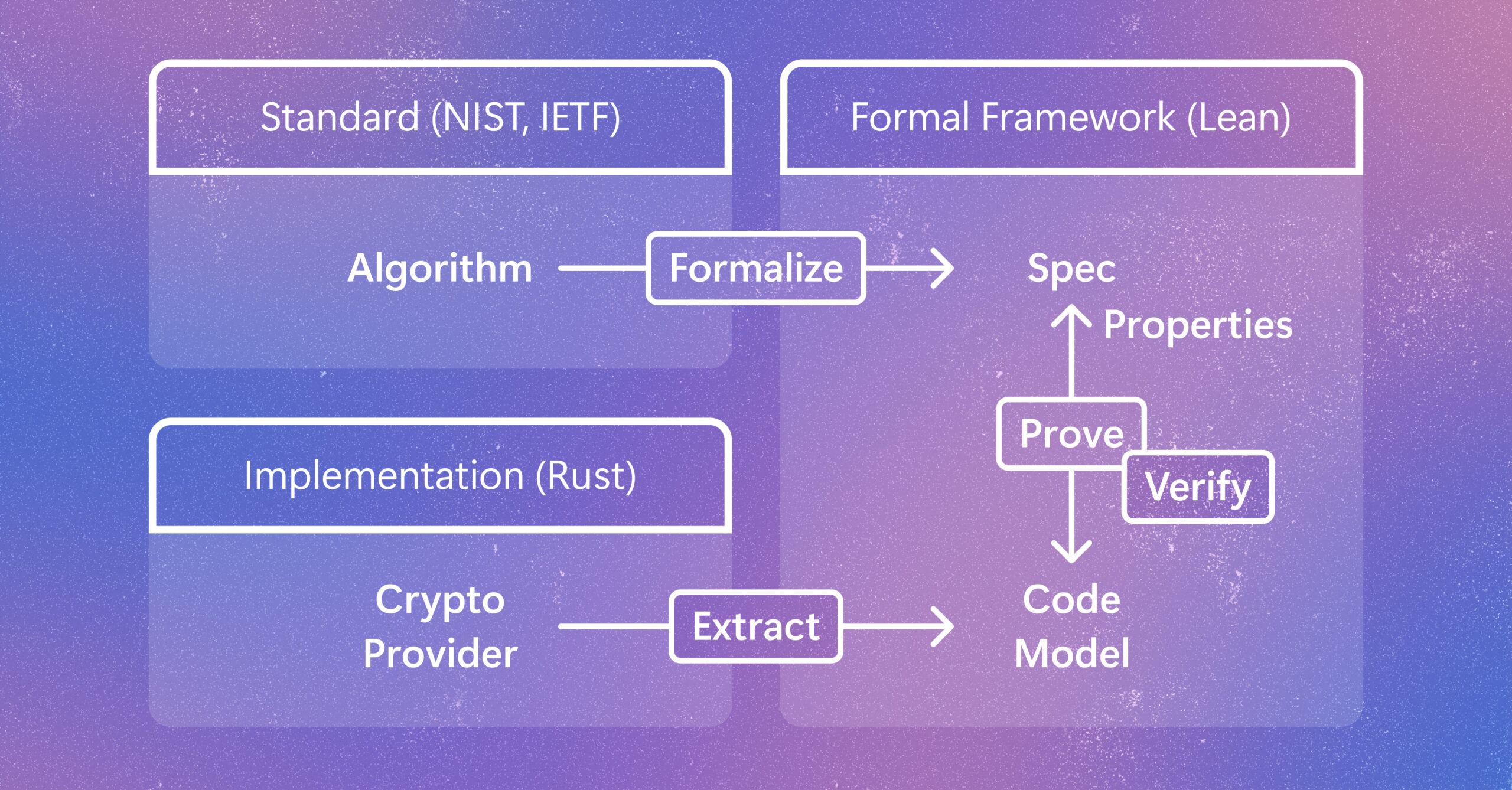
Cryptographic code supports vital protections in modern computing systems. Learn how a new method helps verify code as developers write it while preserving speed and adaptability as it gets implemented and evolves. The post Verifying Rust cryptography in SymCrypt, from standards to code appeared first on Microsoft Research.
MIT News · Artificial Intelligence· news.mit.eduJul 6, 2026
PhD student Rachel Sava, winner of the Envisioning the Future of Computing Prize, explores transformative improvements and dystopian risks of neural technology.