Skip to content

A hierarchical graph learning framework for VR-based motor imagery decoding driven by MVMD and feature optimization.

Sep 2026 · Journal of Neural Engineering · 0 citations
Medicine

TL;DR

VR-based AO+MI paradigm is found to enhance sensorimotor connectivity and promote large-scale network integration, indicating more coordinated neural dynamics during MI tasks, and a hierarchical graph learning framework tailored for VR-based MI decoding is proposed.

Abstract

Objective

While virtual reality (VR) combined with action observation (AO) provides enriched visual guidance for motor imagery (MI), the decoding stability of MI Brain-Computer Interface (BCI) remains a challenge due to the inherent non-stationarity and low signal-to-noise ratio of Electroencephalography (EEG) signals in dynamic environments. Enhancing decoding accuracy and understanding neural representations in VR-based AO+MI tasks remain important challenges in neural engineering. APPROACH This study proposes a hierarchical graph learning framework tailored for VR-based MI decoding, leveraging multivariate variational mode decomposition (MVMD) to decouple complex EEG signals into rhythmic components for enhanced multi-domain feature analysis, hybrid feature selection for compact representation, and functional brain network modeling based on phase locking value. Each EEG trial is represented as a sparsified graph, and a hierarchical graph convolutional network is designed to capture multi-scale spatial dependencies and high-order interactions for classification. MAIN

Results

Experimental evaluations on a lab-acquired VR-MI dataset demonstrate that the proposed framework achieves competitive three-class decoding accuracy. This performance surpasses baseline models such as EEGNet, as observed under VR-based motor imagery conditions. In addition to enhanced decoding performance, the study enables neurophysiological interpretation by characterizing VR-induced modulations in brain network organization.

Significance

VR-based AO+MI paradigm is found to enhance sensorimotor connectivity and promote large-scale network integration, indicating more coordinated neural dynamics during MI tasks. These findings suggest that the proposed framework effectively improves VR-based AO+MI decoding while providing interpretable insights into neural mechanisms, supporting its potential for advanced BCI applications.
Read PDF

Similar papers

Open access Aug 2026

A balanced multimodal decoding framework of EEG and fNIRS for motor imagery

A dynamic re-initialization framework for EEG–fNIRS multimodal decoding achieves cross-modal balanced learning through a diagnosis–adjustment–re-initialization mechanism, which achieves cross-modal balanced learning through a diagnosis–adjustment–re-initialization mechanism.

Jia-Ru Dai, Li Zhu, Fabio Babiloni et al. · 0 citations
Review Open access Sep 2026

Cross-variability decoding for motor imagery EEG signals: a comprehensive review

A comprehensive taxonomy of MI EEG cross-variability decoding studies from 2020 to 2025 is presented, systematically organizing advances in deep learning and transfer learning and critically evaluate core algorithmic approaches, including Convolutional Neural Networks, transformers, feature alignment, domain adaptation...

Li-Jun Wang, Yue-Ying Zhou, Peng-Pai Wang et al. · 0 citations
Open access Sep 2026

Subject-Specific Deep Learning Model for Motor Imagery Direction Decoding

A novel deep learning framework for online decoding of binary directional MI signals from the dominant hand of 20 healthy subjects using EEGNet-based convolutional filters to extract temporal and spatial features and is outperforming the existing deep learning models.

Praveen K. Parashiva, Sagila Gangadharan Kutteri, A. P. Vinod · 0 citations
Open access Sep 2026

A dynamic multi-branch EEG decoding network for motor imagery classification with preliminary clinical validation

Motor imagery electroencephalography (MI-EEG) decoding remains challenging because of the low signal-to-noise ratio, non-stationarity, and inter-subject variability of EEG signals. This study proposes a dynamic multi-branch EEG decoding network (DMB-EDN) that jointly models temporal dynamics, learnable time-frequency p...

Jing-Xin Cai, Meng-Yao Gao, Guang-Yu Li et al. · 0 citations
2026

SimNeXt-EEG: Compact Motor Imagery EEG Decoding via Parameter-Free Temporal Attention and Separable Refinement

Deployment-oriented motor imagery (MI) decoding with non-invasive electroencephalography (EEG) requires compact brain-computer interface (BCI) models that preserve low-SNR, non-stationary, and session-/subject-variable sensorimotor rhythms without heavy spatio-temporal parameterization or learnable attention. To addres...

Dae Hyeon Kim, Young-Seok Choi · 0 citations
Open access 2026

SAST-KAN: A Spectral Adaptive Spatio-Temporal Kolmogorov–Arnold Network for Motor Imagery EEG Decoding

Motor imagery–based brain–computer interface (MI-BCI) provides an effective pathway for post-stroke motor rehabilitation by decoding motor intentions from EEG signals. However, altered sensorimotor rhythms, nonlinear spatio-temporal dynamics, and limited clinical data make robust and generalizable post-stroke EEG decod...

Yan-Ke Cheng, Jian-Xu Zheng, Jia-xi Xu et al. · 0 citations

Related blog posts

Microsoft Research Blog Jul 13, 2026

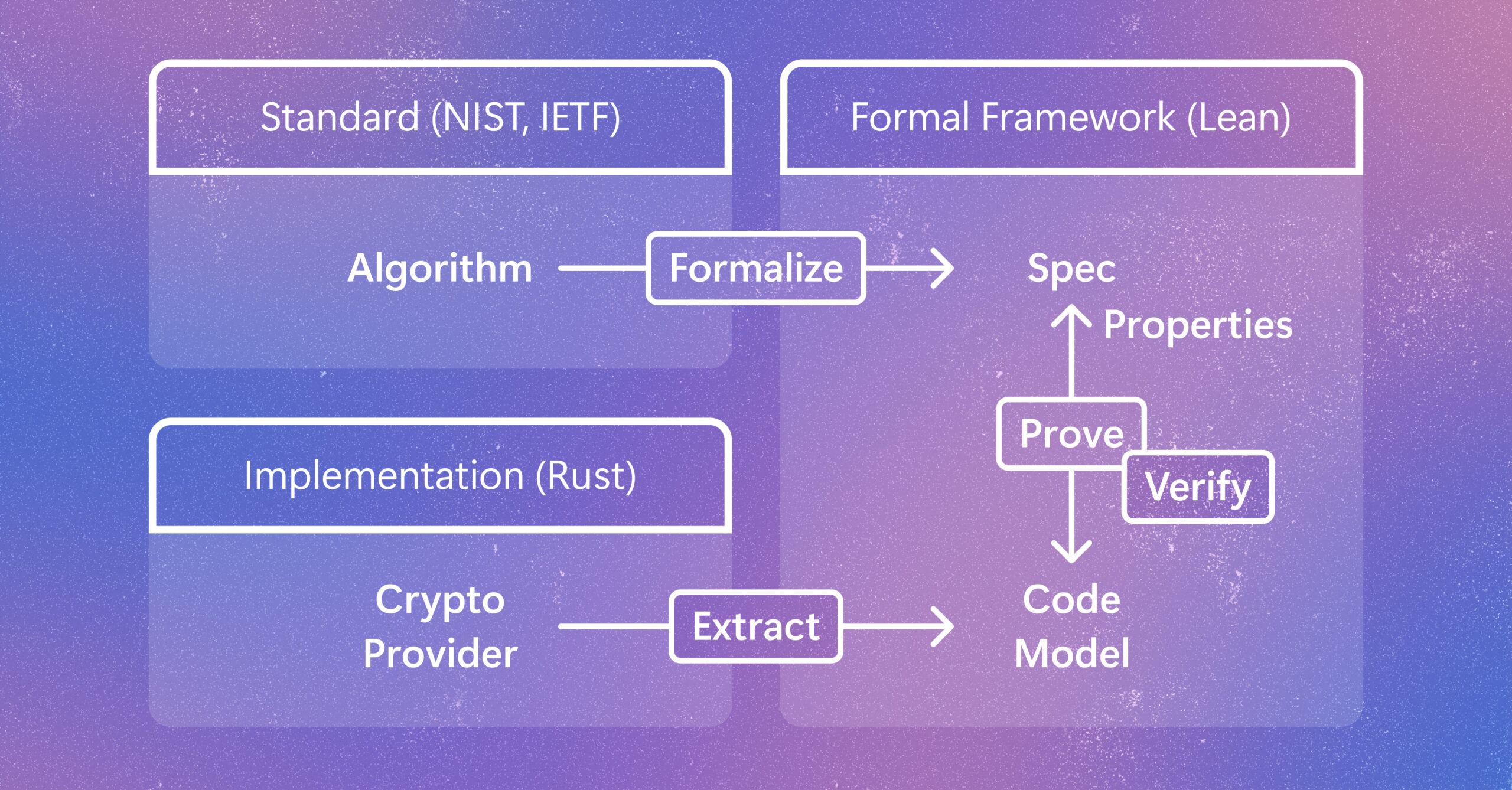
Verifying Rust cryptography in SymCrypt, from standards to code

Cryptographic code supports vital protections in modern computing systems. Learn how a new method helps verify code as developers write it while preserving speed and adaptability as it gets implemented and evolves. The post Verifying Rust cryptography in SymCrypt, from standards to code appeared first on Microsoft Research.

We use cookies to run the site and, with your consent, for analytics and to show ads. See our Cookie Policy.