Distributed snow-cover models such as Alpine3D and SNOWPACK provide spatially detailed information on snowpack evolution, surface energy balance, and terrain-driven variability that is relevant to avalanche operations.The drawback is the computational cost of high-resolution, multiseason simulations, which limits repeated scenario testing, ensemble analysis, and rapid visualization.This paper presents a physics-supervised graph neural network surrogate for selected gridded Alpine3D/SNOWPACK outputs over a Kananaskis Country case-study domain in the Canadian Rockies.The foundation model was trained on multiple winter seasons and evaluated on a fully held-out season.The model represents the distributed domain as a graph and uses terrain, previous snow state, meteorological forcing, and time to predict selected snow-state and process variables.The first evaluation compared absolute snow height (HS) and snow water equivalent (SWE) predictions with a copy-previous-hour persistence baseline.Although the model achieved R² values of 0.99886 for HS and 0.99939 for SWE, persistence performed better, with R² values of 0.99992 and 0.99998.For this reason, hourly changes were reconstructed from predicted process variables.The reconstructed changes achieved positive skill against persistence of 0.373 for ΔHS and 0.795 for ΔSWE, with the strongest performance during melt and runoff.A separate frozen-checkpoint test on 290 corrected-2022 timesteps and approximately 312 million valid cell observations retained positive flux-reconstructed skill of 0.479 for ΔHS and 0.461 for ΔSWE.This provides evidence of robustness to the corrected forcing lineage within the same domain.End-to-end inference required 23.8 s per predicted hour on the 1.12-million-cell domain, compared with 432 s per simulated hour for the measured Alpine3D workflow.This represents an approximately 18× system-level wall-clock speedup across different GPU and CPU hardware.The foundation teacher uses simple radiation and does not include wind-driven snow transport.Higher-fidelity physics extensions are being evaluated, but they remain preliminary and are not reported as validated results.The objective is not to replace Alpine3D, SNOWPACK, or field observations.The objective is to determine which teacher-model processes can be reproduced by a graph surrogate, how that reproduction should be evaluated, and what validation is required before operational use.
Agile methods continue to gain popularity. In particular, the Scrum method appears to be on the verge of becoming a de-facto standard in the industry, leading the so called Agile movement. While there are success stories and recommendations, there is little scientifically valid evidence of the challenges in the adoptio...
A. Marchenko, P. Abrahamsson· Agile Conference· 59 citations· ⚡11
A comprehensive taxonomy of the challenges faced when a medium-scale organization decided to adopt software platforms is provided, namely: business challenges, organizational challenges, technical challenges, and people challenges.
Yaser Ghanam, F. Maurer, P. Abrahamsson· Information and Software Tec...· 41 citations· ⚡3
It is shown that high article processing charges are not sufficiently justified by the publishers, which often lack transparency and may prevent authors from adopting OA.
D. Graziotin, Xiaofeng Wang, P. Abrahamsson· Scientometrics· 21 citations· ⚡1
MCGLPPI, a novel geometric representation learning framework that combines graph neural networks (GNNs) with the MARTINI molecular coarse-grained (CG) model to predict overall PPI properties accurately and efficiently, offers an effective and efficient solution for PPI overall property predictions.
Yang Yue, Shu Li, Yihua Cheng et al.· bioRxiv· 15 citations
PepPCBench enables a robust evaluation of PFNN-based methods and supports their continued development for peptide-protein structure prediction, and highlights the influence of peptide length, conformational flexibility, and training set similarity on prediction accuracy.
Si-Long Zhai, Huifeng Zhao, Ji-Ke Wang et al.· Journal of Chemical Informat...· 13 citations· ⚡1
OmniMol is presented, a framework using hypergraphs to improve predictions of molecular properties, addressing challenges of imperfect data annotation and enhancing model explainability, and achieves state-of-the-art performance in properties prediction.
Assistant Professor Pat Pataranutaporn describes a new interface that lets everyday users glimpse inside an AI's neural network before their chatbot ever says a word.
Microsoft Research Blog· microsoft.comJul 13, 2026
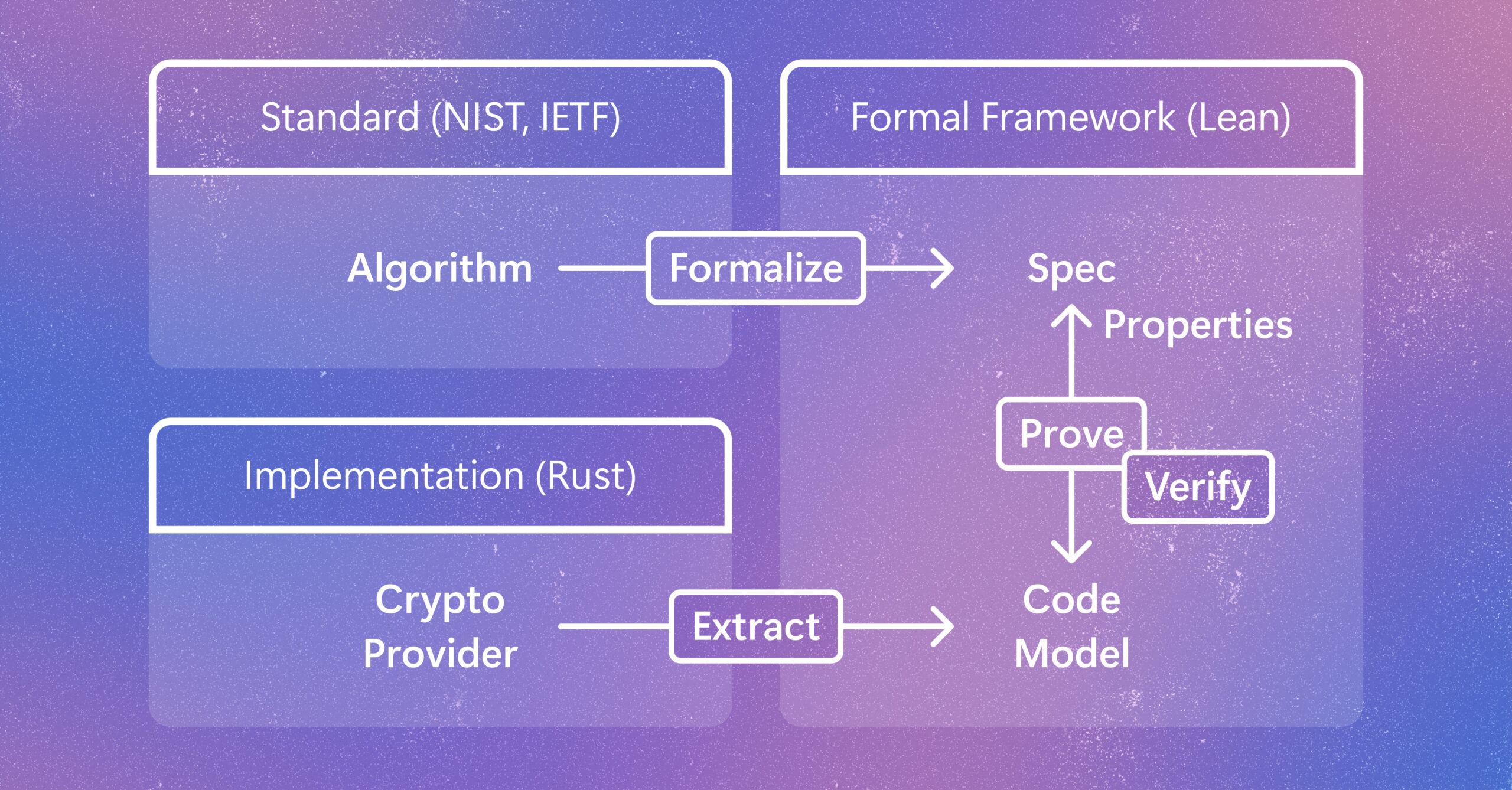
Cryptographic code supports vital protections in modern computing systems. Learn how a new method helps verify code as developers write it while preserving speed and adaptability as it gets implemented and evolves. The post Verifying Rust cryptography in SymCrypt, from standards to code appeared first on Microsoft Research.
MIT News · Artificial Intelligence· news.mit.eduJul 6, 2026
PhD student Rachel Sava, winner of the Envisioning the Future of Computing Prize, explores transformative improvements and dystopian risks of neural technology.