Skip to content

SPECTRA: predicting cellular perturbation responses with Graph Learning over Gene Regulatory Networks

Sep 2026 · bioRxiv · 0 citations · 43 references
Biology

TL;DR

The results show that graph-based signal propagation is a biologically grounded alternative to latent-shift perturbation modeling and can improve the recovery of sparse perturbation-induced transcriptional effects.
Abstract

Predicting the transcriptomic consequences of cellular perturbations is challenging due to the sparsity of single-cell transcriptional responses, heterogeneous perturbation efficiency, and the difficulty of identifying the small subset of genes that are truly differentially expressed after perturbation. Current approaches typically encode interventions as latent shifts from unperturbed to perturbed cellular state, making the models hard to interpret. Here we introduce SPEC-TRA — SPEctral CRISPR Transcriptome Regulatory Autoencoder — a graph-based model that treats CRISPR perturbations as interpretable, localized signals injected into a Gene Regulatory Network and propagated through directed graph neural networks. SPECTRA combines a variational control-cell encoder and a directed heterophilic graph decoder, integrating single-cell expression, pretrained transcriptomic context, and prior regulatory topology into a single node-level representation. We evaluate SPECTRA on a large-scale single-cell CRISPRi benchmark, measuring differentially expressed gene recovery through precision, F1 score, and AUPRC-based DEG classification. Since perturbations in SPECTRA are interpretable, we tested the predictions of the model against known biology, in cases where the effects of a gene knock out have been repeatedly demonstrated with orthogonal experiments. Our results show that graph-based signal propagation is a biologically grounded alternative to latent-shift perturbation modeling and can improve the recovery of sparse perturbation-induced transcriptional effects.

Read PDF

Similar papers

Conference Open access Sep 2026

Predicting Context-Aware Transcriptional Responses to Unseen Genetic Perturbation Subject to Interactome Distance Constraints

Predicting responses to genetic perturbation is pivotal for elucidating gene regulatory machinery. However, existing methods often rely on statistical perspectives to model differential expression, overlooking the constraints of the underlying molecular interactome, which renders predictions susceptible to spurious cor...

Fei-Yu Ma, Yun-Fei Zhang, Hau-San Wong et al. · 0 citations
Preprint Oct 2026

Beyond the Transcriptome: Chromatin-Informed Prediction of Cell-State-Dependent Perturbation Responses

Predicting transcriptional responses to genetic perturbations is central to understanding gene function. Existing predictors primarily rely on transcriptomic measurements, although chromatin accessibility provides complementary information about the cellular context in which perturbations act. Using this information re...

Jia-Fa Ruan, Chen-Yan He, Rui-Jie Quan et al. · 0 citations
Open access Sep 2026

Joint inference of paired dynamical gene regulatory networks reveals distinct cell-state landscapes of neutrophil reprogramming

Disease reprograms cells through changes in gene regulation, yet identifying these changes remains a major challenge. We introduce NetDes-Duo, a computational method that jointly infers transcription factor regulatory network models for two related conditions using scRNA-seq data. The networks are optimized to have min...

Alex Ren, Yu-Kai You, Ming-Yang Lu · 0 citations
Conference Open access Sep 2026

URFPert: Unrolled Regulatory Flow Networks for Out-of-Distribution Single-Cell Perturbation Prediction

Comprehensive evaluations on five single-cell perturbation datasets demonstrate that URFPert outperforms state-of-the-art methods in unseen perturbation regimes, providing a powerful tool for interpreting regulatory mechanisms.

Xiao-Qi Sheng, Jia-Wen Liu, Yu-Tong Li et al. · 0 citations
Open access Aug 2026

Predicting cellular responses to perturbation across diverse contexts with State.

The performance and flexibility of State set the stage for scaling the development of AI models of cell state, a machine learning model that predicts perturbation effects while accounting for cellular heterogeneity within and across experiments.

Abhinav K. Adduri, Dhruv Gautam, Beatrice Bevilacqua et al. · 4 citations

Related blog posts

Microsoft Research Blog Jul 13, 2026

Verifying Rust cryptography in SymCrypt, from standards to code

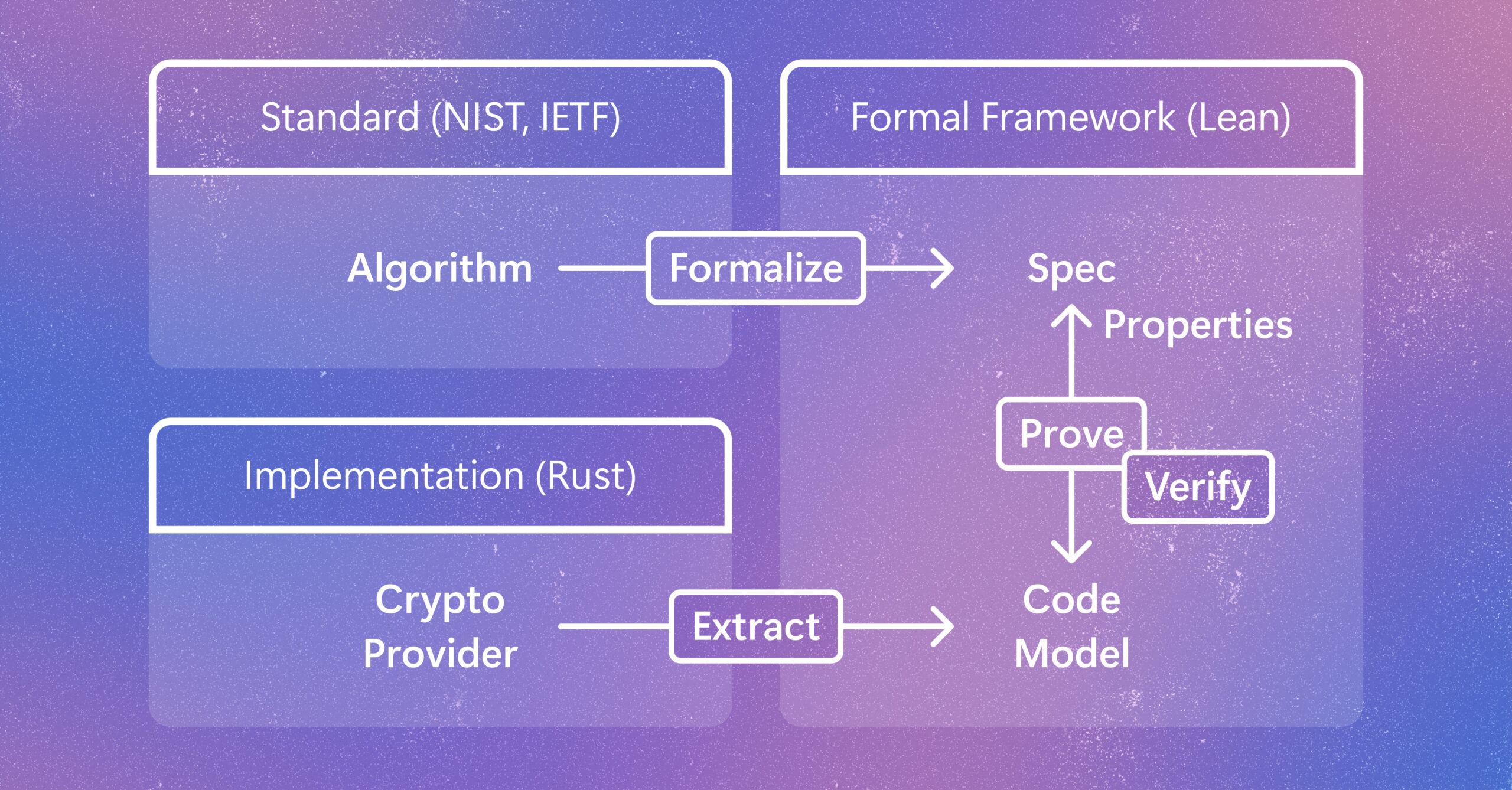
Cryptographic code supports vital protections in modern computing systems. Learn how a new method helps verify code as developers write it while preserving speed and adaptability as it gets implemented and evolves. The post Verifying Rust cryptography in SymCrypt, from standards to code appeared first on Microsoft Research.

We use cookies to run the site and, with your consent, for analytics and to show ads. See our Cookie Policy.