Skip to content

Hierarchical graph networks for breast cancer subtype classification

Sep 2026 · Data mining and knowledge discovery · Vol 40 · 0 citations · 38 references
AI in cancer detection

TL;DR

A hierarchical Graph Neural Network (GNN) framework for ROI-level breast cancer subtype classification that represents nuclei and tissue regions as linked graph structures is presented and shows that sequential hierarchical fusion is the most effective configuration in this setting.

Abstract

Breast cancer histopathological diagnosis relies on the expert assessment of Hematoxylin and Eosin (H&E) stained slides. This process is both time-consuming and prone to inter-observer variability. Deep learning methods have shown great potential for automating cellular analysis; however, conventional patch-based approaches do not explicitly model relational spatial dependencies between biological entities, potentially limiting structural interpretability. We present a hierarchical Graph Neural Network (GNN) framework for ROI-level breast cancer subtype classification that represents nuclei and tissue regions as linked graph structures. The study provides a validation-driven design-space analysis of graph topology, node features, spatial pooling, and fusion of cell and tissue information within this hierarchical pipeline. The proposed approach was evaluated on the BRACS dataset, which comprises 547 whole-slide images and over 4500 annotated regions spanning seven histopathological classes. Results show that sequential hierarchical fusion is the most effective configuration in this setting, outperforming alternative strategies for integrating cell and tissue information and yielding particularly consistent improvements for Atypical Ductal Hyperplasia, Flat Epithelial Atypia, and Ductal Carcinoma in situ.
Read PDF

Similar papers

Open access Aug 2026

Explainable AI-Derived Spatial Pathological Features of Tumor, Necrosis, and Lymphocytes Identify Key Histological Signatures for Residual Cancer Burden Assessment in Breast Cancer

Background: Conventional histopathological assessment of residual cancer burden (RCB) following neoadjuvant therapy for breast cancer relies on manual visual evaluation, lacking objective quantification of spatial interactions among tumor, necrosis, and lymphocyte compartments. This limits prognostic accuracy and imped...

Xin Shu, Fan Wang, Tian-Cheng Zhao et al. · 0 citations
Open access Aug 2026

A Breast Cancer Histology and Immunohistochemistry Image Dataset with Linked Clinicopathological Metadata

Digital pathology and computational analysis of breast cancer require datasets that connect microscopic images with clinically meaningful diagnostic, morphological and immunohistochemical information. But images are often provided separately from pathomorphological reports, tumour profiles, biomarker assessments and se...

O. Berezsky, G. Melnyk, P. Selskyy et al. · 0 citations
Open access Sep 2026

Graph Contrastive Learning for Deciphering Spatial Heterogeneity in Breast Cancer

Breast cancer exhibits significant spatial and molecular heterogeneity. Traditional bulk and single-cell transcriptomic analyses struggle to fully reveal the molecular states and microenvironmental differences across distinct tumor regions due to their inability to preserve spatial tissue information. This study propos...

Ying-Sa Qiao · 0 citations
Preprint Aug 2026

Comprehensive Benchmarking of Deep Learning Architectures for Lung Cancer Histopathology

This study presents a two-stage deep learning framework for multi-class tissue classification and pixel-level histopathological region segmentation, accompanied by a systematic comparison of state-of-the-art architectures at each stage.

Hadi Hasan, Safaa Salman, Lama Sleem et al. · 0 citations
Open access Jul 2026

Toward comprehensive cellular characterization of H&E slides

Cell detection, segmentation, and classification are essential for analyzing tumor microenvironments (TME) on hematoxylin and eosin (H&E) slides. Existing methods suffer from poor performance on understudied cell types (rare or not present in public datasets) and limited cross-domain generalization. To address these sh...

Benjamin Adjadj, Pierre-Antoine Bannier, Guillaume Horent et al. · 14 citations
Open access Sep 2026

Molecular subtyping of breast cancer from routine Hematoxylin & Eosin-stained histology images using deep learning.

INTRODUCTION Breast cancer is a heterogeneous malignancy comprising distinct molecular subtypes, each with varying therapeutic strategies and prognoses. Conventional molecular subtyping relies on immunohistochemistry and in situ hybridization studies, which may not be universally accessible due to financial and technic...

Mehdi Zarei, Masoud Arabfard, Mehdi Raei et al. · 0 citations

Related blog posts

Microsoft Research Blog Jul 13, 2026

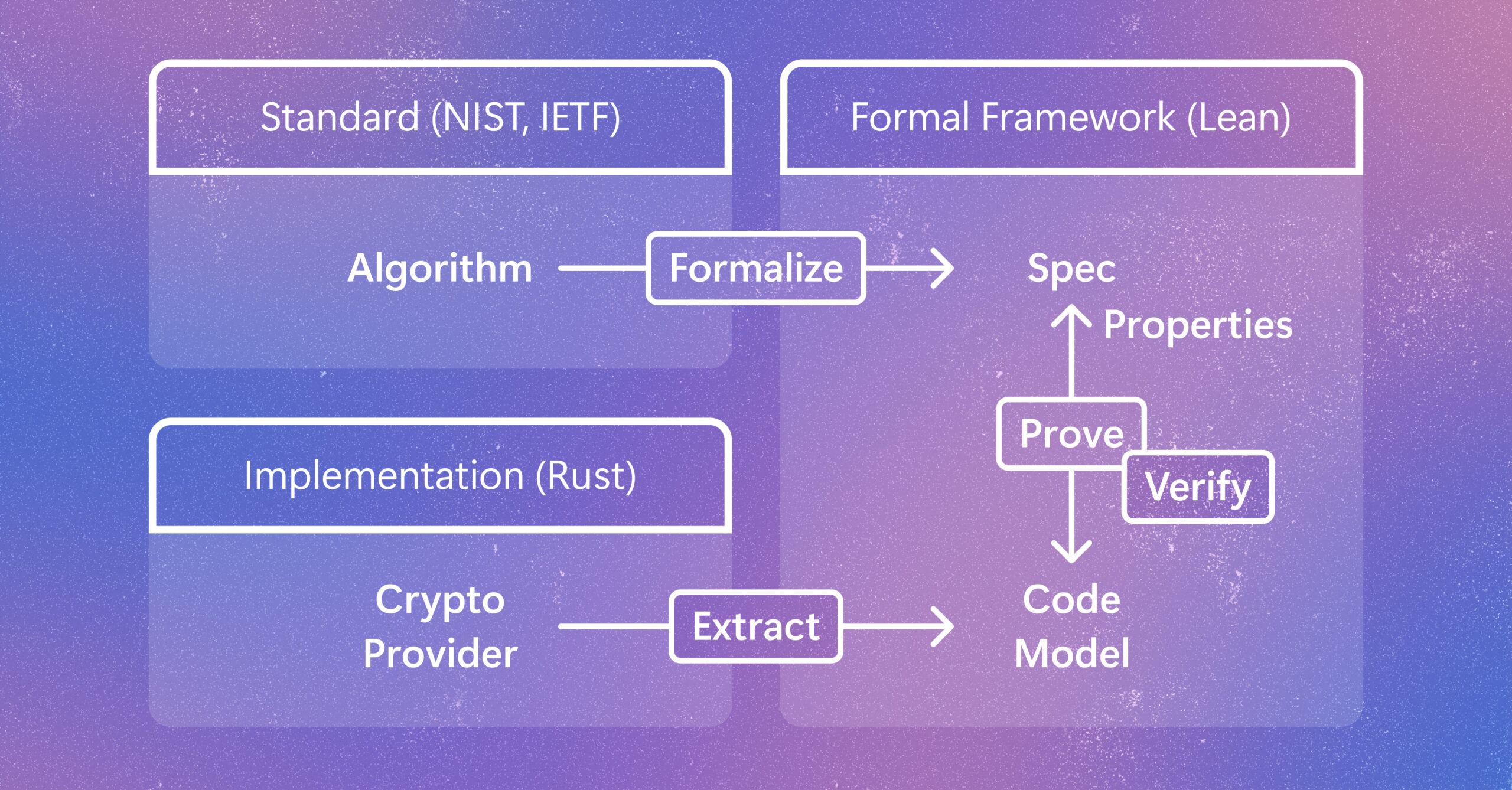
Verifying Rust cryptography in SymCrypt, from standards to code

Cryptographic code supports vital protections in modern computing systems. Learn how a new method helps verify code as developers write it while preserving speed and adaptability as it gets implemented and evolves. The post Verifying Rust cryptography in SymCrypt, from standards to code appeared first on Microsoft Research.

We use cookies to run the site and, with your consent, for analytics and to show ads. See our Cookie Policy.