Skip to content

A dynamic graph neural network classification method incorporating machine vision features

Sep 2026 · International Conference on Photonic Computing, Algorithms, and Machine Vision · Vol 14320, pp. 143200Q - 143200Q-9 · 0 citations · 22 references
Engineering

TL;DR

A dynamic graph neural network classification method integrating machine vision mapping and spatiotemporal evolution that effectively improves the generalization accuracy and anti-interference capability of heterogeneous network entity classification models.
Abstract

This paper addresses the limitations of node classification feature dimensionality and insufficient robustness of models in extreme scenarios within complex heterogeneous interactive networks. A dynamic graph neural network classification method integrating machine vision mapping and spatiotemporal evolution is proposed. This method introduces a multilayer self-attention-based visual feature extraction module, converting discrete high-frequency time series into a two-dimensional grid to extract morphological representations. Gated graph convolutional units are used to achieve cross-modal aggregation of local features and dynamic topology. The system incorporates a nulled neural network continuous evolver to optimize the convergence trajectory of the classification loss function under distributional bias. Quantitative testing shows that, under a distributed GPU computing architecture, the model achieves a comprehensive classification accuracy of 94.2% across all categories, with a single-batch inference latency controlled within 12.5ms, and a resilience index of 95.1 in structural perturbation environments. This research effectively improves the generalization accuracy and anti-interference capability of heterogeneous network entity classification models.

View source

Similar papers

#graph neural networks Open access Aug 2026

Topology-Aware Graph Neural Network with Spatiotemporal Encoding and Contrastive Learning for Scalable Dynamic Network Representation

The implications of the proposed TAGNN framework on such applications as anomaly detection, social media analytics, and traffic forecasting are that the proposed framework provides an end-to-end solution that promotes accuracy, efficiency, and temporal consistency in dynamic graph learning.

Wassan Hayale, R. S. Ali, Raghda Abd Ul Rab Abd Ul Hasan et al. · 0 citations
Open access 2026

A Hybrid Deep Learning Approach for Influential Nodes Identification in Complex Networks

The influential nodes in complex network are the key of high effective information spreading. Several techniques have been developed for the discovery of such nodes, including centrality-based approaches, machine learning-based approaches, and deep learning-based approaches. This paper proposes CNNG, a novel hybrid dee...

M. A. Ramadhan, A. O. Mohammed · 0 citations
Open access Aug 2026

Broad graph convolutional network: a novel graph convolutional network paradigm without hidden layer

A novel broad graph convolutional network (BGCN) paradigm is proposed, which completely eliminates hidden layers and instead expands the receptive field through network width, effectively circumventing the inherent limitations of over-smoothing and overfitting in existing deep and high-order GCN models.

Alex Hay-Man Ng, Xun Liu, Fang-Yuan Lei et al. · 0 citations
#graph neural networks Open access Sep 2026

Global trade network prediction based on spatiotemporal graph neural network and gradient boosting model

This paper addresses the challenges of nonlinearity, spatiotemporal dependence, and coupling with external factors in global trade network forecasting. A hybrid model (ST-GBDT) integrating spatiotemporal graph neural networks and gradient boosting decision trees is proposed. This model constructs a multi-channel spat...

Tian-Wen Zhao, Guo-Qing Chen, Li-Li Zhang et al. · 0 citations
Preprint Aug 2026

Two-level domain-decomposition AdaGrad method for scalable training of graph neural networks

The proposed DD-AG2m alternates between AG2m optimization on the original (global) graph and AG2m optimization on the partitioned graphs, and introduces a two-level variant that performs global optimization steps on a coarse graph obtained by randomly subsampling nodes within each subdomain.

Laurynas Varnas, Julien Herrmann, Alexander Heinlein et al. · 0 citations
Open access Aug 2026

A Unified Framework for Subspace Clustering: Unification of Graph Neural Networks, Attention, and Coding Rate Reduction

Subspace clustering refers to the task of segmenting data points that lie on a union of subspaces. Current state-of-the-art methods for this task leverage the self-expressive property of subspaces, where each data point is represented as a linear combination of other points within the same subspace. Recent efforts have...

Behnam Roshanfekr, Mohammad Rahmati, Maryam Amirmazlaghani et al. · 0 citations

Related blog posts

Microsoft Research Blog Jul 13, 2026

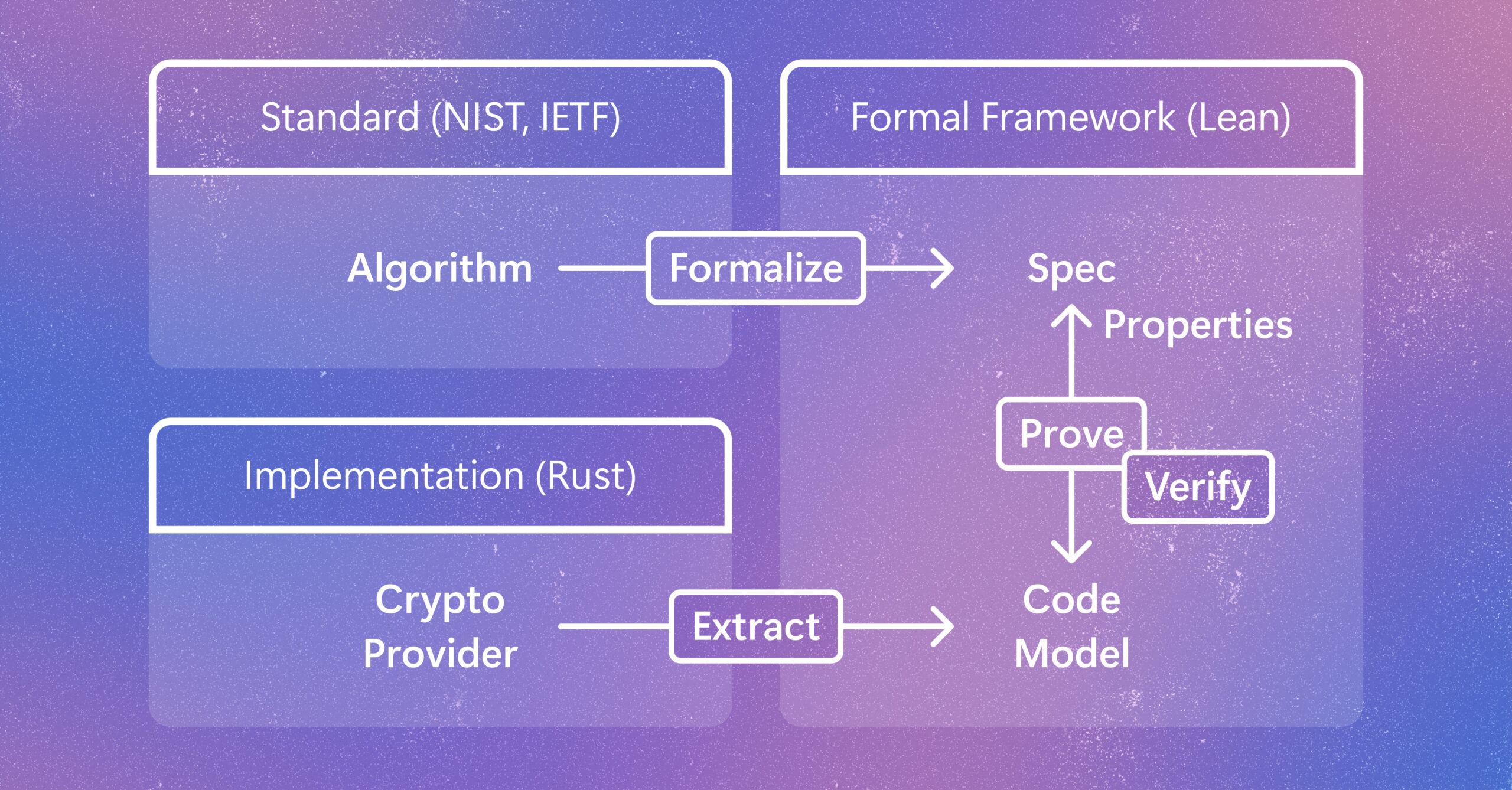
Verifying Rust cryptography in SymCrypt, from standards to code

Cryptographic code supports vital protections in modern computing systems. Learn how a new method helps verify code as developers write it while preserving speed and adaptability as it gets implemented and evolves. The post Verifying Rust cryptography in SymCrypt, from standards to code appeared first on Microsoft Research.

We use cookies to run the site and, with your consent, for analytics and to show ads. See our Cookie Policy.