Sep 2026· Zenodo (CERN European Organization for Nuclear Research)
Abstract
This record provides supporting experimental data, source code, selected trained model weights, and reproducibility documentation for the manuscript “RART: A Resource-Aware Recursive Transformer for Stochastic Resource-Constrained Project Scheduling” by Cem Savas Aydin. The study evaluates RART on stochastic resource-constrained project scheduling problems using instances from the Project Scheduling Problem Library (PSPLIB). The primary comparison involves 101 J60 projects, three training seeds per method, and 1,000 common duration scenarios per project. Seven J30 projects provide secondary comparisons. The comparator is an independently trained Wheatley-based graph neural network policy. The uploaded files comprise: ESM_1.pdf: Supplementary methodological documentation, including model features, random streams, evaluation procedures, statistical reconstruction, and provenance. ESM_2.zip: Archived source code, six selected inference checkpoints, project definitions and splits, training records, scenario-level scheduling outcomes, and scripts for reconstructing the reported statistics and figures. Recorded outcomes include mean makespan, upper-tail makespan measured by CVaR90, results before and after schedule repair, and computation times. The README.md file within ESM_2.zip provides instructions for reconstructing the statistical results from the saved simulation outputs without retraining the models.
Agile methods continue to gain popularity. In particular, the Scrum method appears to be on the verge of becoming a de-facto standard in the industry, leading the so called Agile movement. While there are success stories and recommendations, there is little scientifically valid evidence of the challenges in the adoptio...
A. Marchenko, P. Abrahamsson· Agile Conference· 59 citations· ⚡11
A comprehensive taxonomy of the challenges faced when a medium-scale organization decided to adopt software platforms is provided, namely: business challenges, organizational challenges, technical challenges, and people challenges.
Yaser Ghanam, F. Maurer, P. Abrahamsson· Information and Software Tec...· 41 citations· ⚡3
It is shown that high article processing charges are not sufficiently justified by the publishers, which often lack transparency and may prevent authors from adopting OA.
D. Graziotin, Xiaofeng Wang, P. Abrahamsson· Scientometrics· 21 citations· ⚡1
MCGLPPI, a novel geometric representation learning framework that combines graph neural networks (GNNs) with the MARTINI molecular coarse-grained (CG) model to predict overall PPI properties accurately and efficiently, offers an effective and efficient solution for PPI overall property predictions.
Yang Yue, Shu Li, Yihua Cheng et al.· bioRxiv· 15 citations
PepPCBench enables a robust evaluation of PFNN-based methods and supports their continued development for peptide-protein structure prediction, and highlights the influence of peptide length, conformational flexibility, and training set similarity on prediction accuracy.
Si-Long Zhai, Huifeng Zhao, Ji-Ke Wang et al.· Journal of Chemical Informat...· 13 citations· ⚡1
OmniMol is presented, a framework using hypergraphs to improve predictions of molecular properties, addressing challenges of imperfect data annotation and enhancing model explainability, and achieves state-of-the-art performance in properties prediction.
Assistant Professor Pat Pataranutaporn describes a new interface that lets everyday users glimpse inside an AI's neural network before their chatbot ever says a word.
Microsoft Research Blog· microsoft.comJul 13, 2026
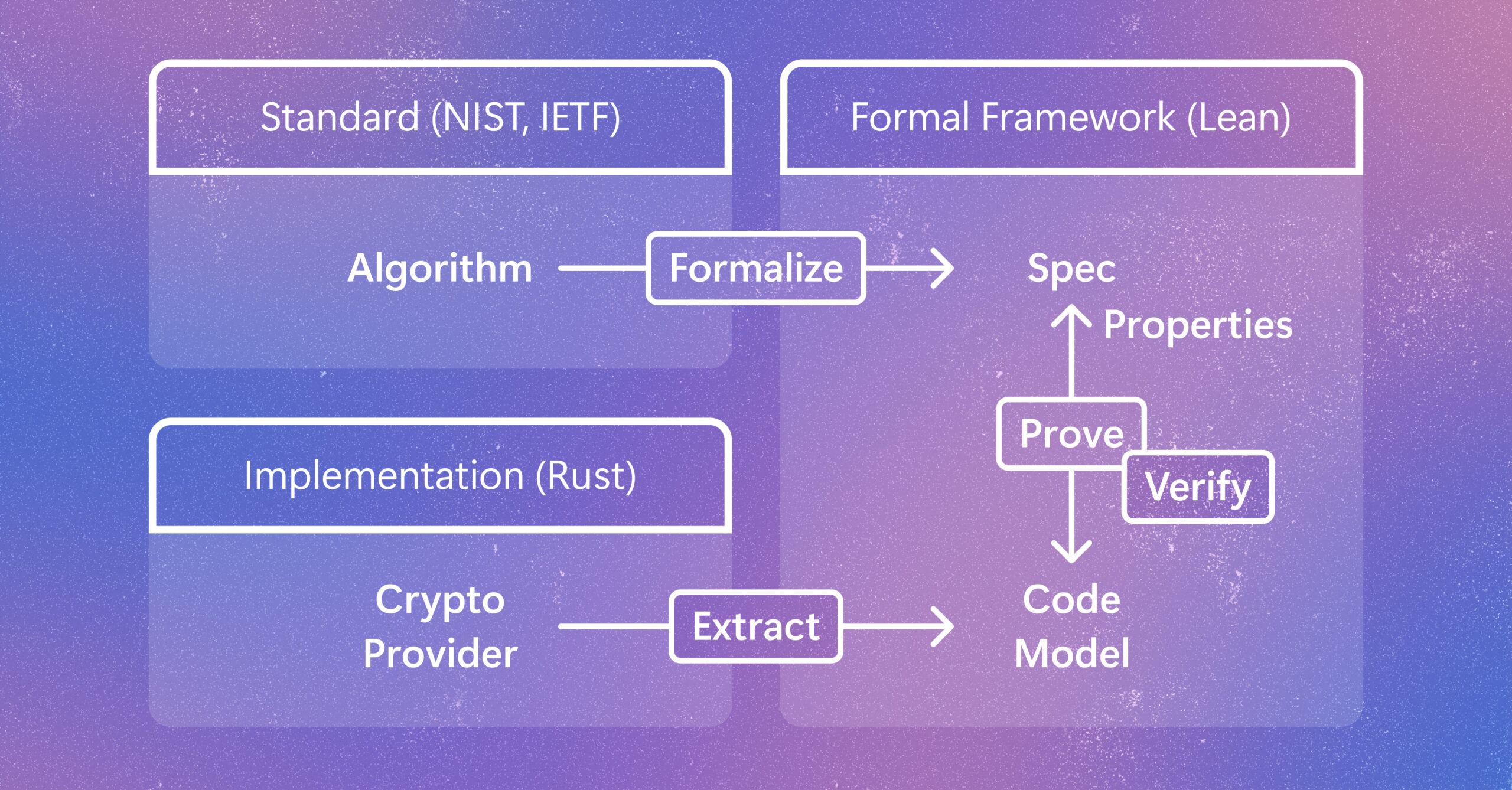
Cryptographic code supports vital protections in modern computing systems. Learn how a new method helps verify code as developers write it while preserving speed and adaptability as it gets implemented and evolves. The post Verifying Rust cryptography in SymCrypt, from standards to code appeared first on Microsoft Research.
MIT News · Artificial Intelligence· news.mit.eduJul 6, 2026
PhD student Rachel Sava, winner of the Envisioning the Future of Computing Prize, explores transformative improvements and dystopian risks of neural technology.