Skip to content

Artificial Intelligence-Assisted Herbal Formulation Development: From Phytochemical Intelligence to Predictive Nanodelivery and Precision Phytotherapy

Sep 2026 · Zenodo (CERN European Organization for Nuclear Research)

Abstract

Herbal medicines constitute a chemically diverse source of bioactive molecules and remain important components of traditional and complementary healthcare systems. However, the development of reproducible pharmaceutical formulations from herbal materials is complicated by variability in botanical identity, geographical origin, cultivation, harvesting, processing, extraction, phytochemical composition, and storage, all of which contribute to batch-to-batch variation in biological activity and formulation performance. The presence of multiple co-occurring constituents further complicates the prediction of pharmacological activity, stability, bioavailability, and therapeutic response, while conventional herbal formulation development remains largely dependent on empirical, trial-and-error experimentation that becomes inefficient as the number of interacting formulation and process variables increases.Artificial intelligence (AI) — encompassing machine learning, deep learning, artificial neural networks, computer vision, natural language processing, quantitative structure–activity/property relationship modelling, graph neural networks, and generative approaches — offers an emerging, data-driven framework for addressing these limitations. This review critically examines AI applications spanning the herbal formulation-development continuum, including medicinal-plant authentication, phytochemical fingerprint interpretation, bioactive-compound prioritisation, herb–compound–target and network pharmacology analysis, polyherbal synergy prediction, nanocarrier selection and optimisation, Quality-by-Design and critical-quality-attribute prediction, dissolution and release modelling, stability prediction, quality control and adulteration detection, ADME and toxicity screening, and personalised phytopharmaceutical development. Particular attention is given to the convergence of AI with nanotechnology, given the poor aqueous solubility, limited permeability, and instability characteristic of many phytoconstituents. Despite this progress, translation into routine practice remains constrained by small and heterogeneous datasets, herbal batch variability, inconsistent metadata reporting, limited external validation, domain shift, model interpretability, and evolving regulatory frameworks. Future progress will depend on standardised datasets, explainable and physics-informed AI, automated closed-loop experimentation, multimodal data integration, digital twins, and prospective experimental validation. AI should therefore be regarded as a decision-support technology that complements, rather than replaces, pharmaceutical experimentation in herbal formulation science

View source

Similar papers

#small language model Dataset Open access Oct 2026

Socratic guiding questions in synthetic arithmetic data: matched LoRA runs (revision v2)

Supporting data, adapters, predictions and code for the article *Low-Cost LoRA Fine-Tuning of Small Language Models for Multi-Step Arithmetic Reasoning* by Jake O'Grady, Asena Isik Gürhan, Chee Fong Ting and Effirul Ramlan (University of Galway). We generated 20,000 GSM8K-derived arithmetic problems with step-by-step s...

O'Grady, Jake, Gürhan, Asena Isik, Chee, Fong Ting et al. · 465 citations
#computer vision Open access Jun 2016

Software Development in Startup Companies: The Greenfield Startup Model

The results are packaged in the Greenfield Startup Model (GSM), which explains the priority of startups to release the product as quickly as possible, and the need to shorten time-to-market, by speeding up the development through low-precision engineering activities.

Carmine Giardino, Nicolò Paternoster, M. Unterkalmsteiner et al. · 178 citations · ⚡14
#computer vision Open access Oct 2016

Software Startups - A Research Agenda

Software startup companies develop innovative, software-intensive products within limited timeframes and with few resources, searching for sustainable and scalable business models.

M. Unterkalmsteiner, P. Abrahamsson, Xiaofeng Wang et al. · 157 citations · ⚡17
#machine learning Review Open access Oct 2016

“Failures” to be celebrated: an analysis of major pivots of software startups

This study conducts a case survey study based on the secondary data of the major pivots happened in 49 software startups, and demonstrates that customer need pivot is the most common among all pivot types.

Sohaib Shahid Bajwa, Xiaofeng Wang, Anh Nguyen-Duc et al. · 127 citations · ⚡15
#computer vision Review Open access May 2015

A survey study on major technical barriers affecting the decision to adopt cloud services

The comparison of adopter and non-adopter sample reveals three potential adoption inhibitor, security, data privacy, and portability, which underlines the importance of the technical and security perspectives for research investigating the adoption of technology.

Nattakarn Phaphoom, Xiaofeng Wang, S. Samuel et al. · 111 citations · ⚡8
#computer vision Open access Feb 2018

Lean Internal Startups for Software Product Innovation in Large Companies: Enablers and Inhibitors

This study investigates how Lean internal startup facilitates software product innovation in large companies and identifies its enablers and inhibitors, and shows the potential of the method-in-action framework to investigate the Lean startup approach in non-startup context.

Henry Edison, Nina M. Smørsgård, Xiaofeng Wang et al. · 78 citations · ⚡6

Related blog posts

MIT News · Artificial Intelligence Sep 30, 2026

This game-playing AI is the new champ at Stratego

Able to defeat top-ranked human players and more efficient than other models, the new system could help decision-makers in military maneuvers or business negotiations.

Microsoft Research Blog Sep 29, 2026

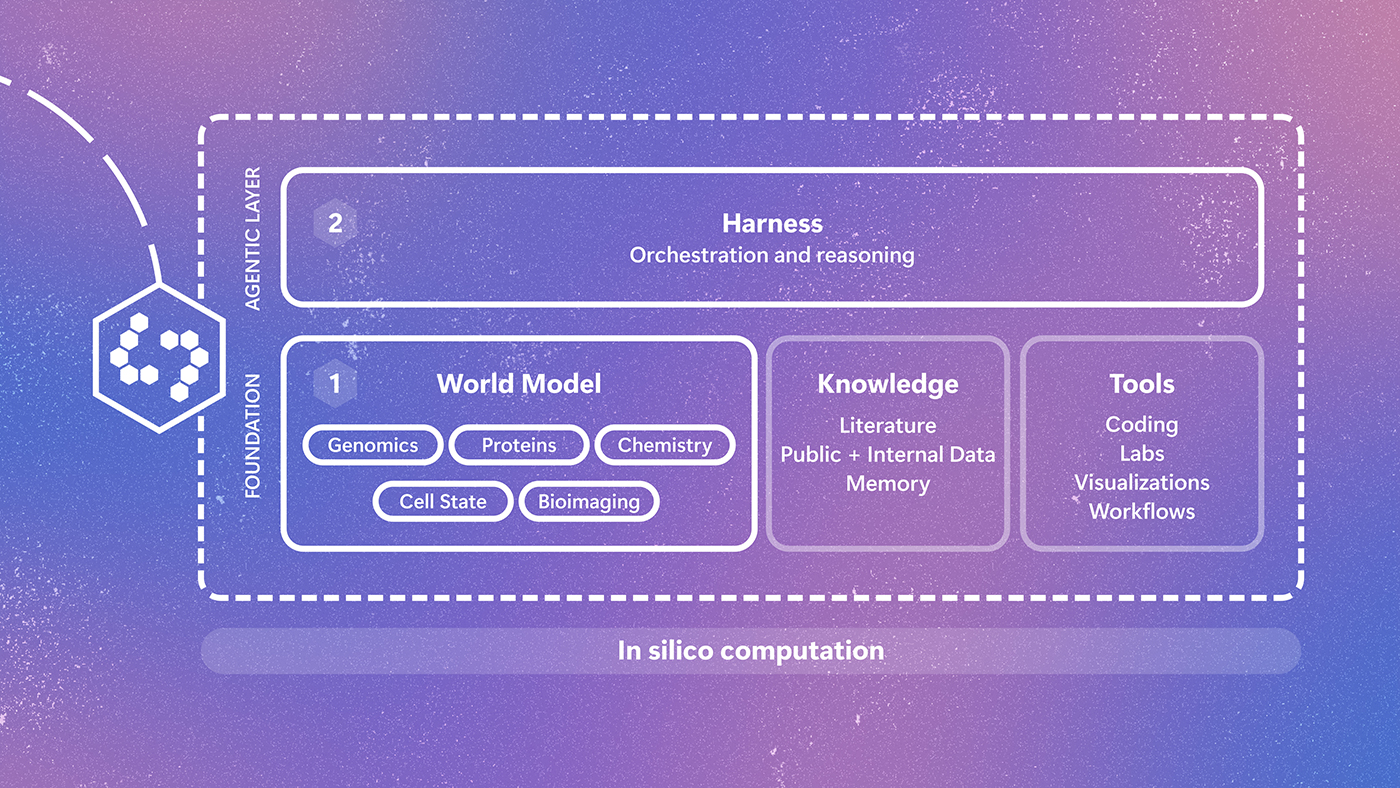
Introducing Quine: An AI research system designed for the complexity of biology

Biology doesn't operate in silos, and neither should the AI representation of it. Quine is an early-stage research effort to create a multimodal world model of biology. By connecting insights across biological scales and modalities, Quine helps scientists computationally search a space far larger than intuition allows and prioritize hypotheses before they reach the lab. Experimental results provide important feedback, helping researchers sharpen future research directions. The post Introducing Q…

We use cookies to run the site and, with your consent, for analytics and to show ads. See our Cookie Policy.