Skip to content

Partial differential equations in the age of machine learning: a critical synthesis of classical, machine learning, and hybrid methods

Sep 2026 · Artificial Intelligence Review · 1 citation
Model Reduction and Neural Networks

Abstract

Abstract Partial differential equations (PDEs) govern physical phenomena across the full range of scientific scales, yet their computational solution remains one of the defining challenges of modern science. This critical review examines two mature but epistemologically distinct paradigms for PDE solution, classical numerical methods and machine learning approaches, through a unified evaluative framework structured around six fundamental computational challenges: high dimensionality, nonlinearity, geometric complexity, discontinuities, multiscale phenomena, and multiphysics coupling. Classical methods, including finite difference, finite element, finite volume, and spectral discretizations, are assessed for their structure-preserving properties, rigorous convergence theory, and scalable solver design; their persistent limitations in high-dimensional and geometrically complex settings are characterized in detail. Machine learning approaches, including physics-informed neural networks, neural operators, graph architectures, transformers, generative models, and hybrid frameworks, are evaluated under a taxonomy organized by the degree to which physical knowledge is incorporated, and subjected to the same critical assessment applied to classical methods. The central finding is that classical methods are deductive: errors are bounded by quantities derivable from PDE structure and discretization parameters. Machine learning methods are inductive: accuracy depends on statistical proximity to the training distribution. This distinction determines not which paradigm is superior, but what each can certify, and therefore where each should be deployed. Epistemological character, rather than computational speed, is the primary criterion governing responsible method selection. We identify three genuine complementarities between the paradigms and develop principles for hybrid design, including a framework for the structure inheritance problem and an error budget decomposition that separates discretization, neural approximation, and coupling contributions. We further assess emerging frontiers, including foundation models for scientific computing, differentiable programming for inverse design, quantum algorithms, and exascale co-design, evaluating each against the structural constraints that determine whether current barriers are fundamental or contingent on engineering progress. The conclusion is not that one paradigm supersedes the other, but that their principled integration, grounded in the complementary strengths each provides, offers the most credible path toward computationally tractable solutions to the most consequential open problems that neither can address alone.
View source

Similar papers

#computer vision Conference Aug 2008

Scrum in a Multiproject Environment: An Ethnographically-Inspired Case Study on the Adoption Challenges

Agile methods continue to gain popularity. In particular, the Scrum method appears to be on the verge of becoming a de-facto standard in the industry, leading the so called Agile movement. While there are success stories and recommendations, there is little scientifically valid evidence of the challenges in the adoptio...

A. Marchenko, P. Abrahamsson · 59 citations · ⚡11
#computer vision Open access Sep 2012

Making the leap to a software platform strategy: Issues and challenges

A comprehensive taxonomy of the challenges faced when a medium-scale organization decided to adopt software platforms is provided, namely: business challenges, organizational challenges, technical challenges, and people challenges.

Yaser Ghanam, F. Maurer, P. Abrahamsson · 41 citations · ⚡3
#machine learning Open access Mar 2024

Integration of molecular coarse-grained model into geometric representation learning framework for protein-protein complex property prediction

MCGLPPI, a novel geometric representation learning framework that combines graph neural networks (GNNs) with the MARTINI molecular coarse-grained (CG) model to predict overall PPI properties accurately and efficiently, offers an effective and efficient solution for PPI overall property predictions.

Yang Yue, Shu Li, Yihua Cheng et al. · 15 citations

PepPCBench is a Comprehensive Benchmarking Framework for Protein-Peptide Complex Structure Prediction

PepPCBench enables a robust evaluation of PFNN-based methods and supports their continued development for peptide-protein structure prediction, and highlights the influence of peptide length, conformational flexibility, and training set similarity on prediction accuracy.

Si-Long Zhai, Huifeng Zhao, Ji-Ke Wang et al. · 13 citations · ⚡1
#machine learning Open access Sep 2025

Unified and explainable molecular representation learning for imperfectly annotated data from the hypergraph view

OmniMol is presented, a framework using hypergraphs to improve predictions of molecular properties, addressing challenges of imperfect data annotation and enhancing model explainability, and achieves state-of-the-art performance in properties prediction.

Bowen Wang, Junyou Li, Donghao Zhou et al. · 11 citations

Related blog posts

Microsoft Research Blog Jul 13, 2026

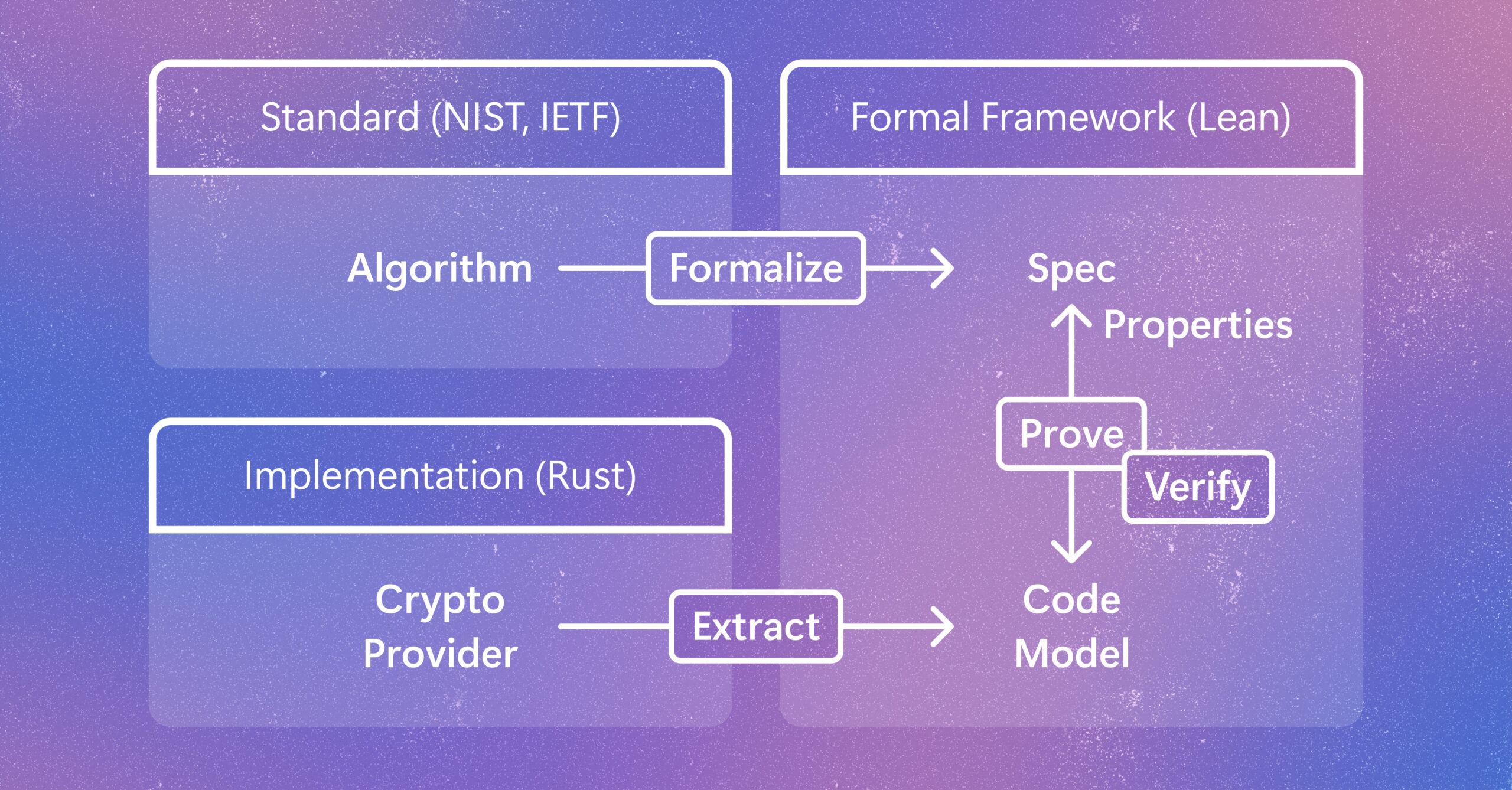
Verifying Rust cryptography in SymCrypt, from standards to code

Cryptographic code supports vital protections in modern computing systems. Learn how a new method helps verify code as developers write it while preserving speed and adaptability as it gets implemented and evolves. The post Verifying Rust cryptography in SymCrypt, from standards to code appeared first on Microsoft Research.

We use cookies to run the site and, with your consent, for analytics and to show ads. See our Cookie Policy.