Sep 2026· Journal of Chemical Information and Modeling· 0 citations· 49 references
Chemical Synthesis and Analysis
TL;DR
The REceptor-Aware Peptide Sequence Designer (REAPS), a geometric graph neural network that reframes sequence design for peptide binders by treating the receptor as a fully observable all-atom context, is introduced.
Abstract
Peptide therapeutics occupy a critical niche between small molecules and biologics, yet the sequence design of peptide binders remains challenging because their bioactive conformations and interfacial fitness are dictated by the receptor microenvironment. Current computational approaches largely treat this as a generic inverse folding problem that relies on backbone geometry alone, overlooking the detailed physicochemical constraints of the receptor pocket. To bridge this gap, we introduce the REceptor-Aware Peptide Sequence Designer (REAPS), a geometric graph neural network that reframes sequence design for peptide binders by treating the receptor as a fully observable all-atom context. Multidimensional evaluations show that REAPS outperforms the widely used inverse folding model ProteinMPNN in sequence recovery, structural fidelity, and interface-level biophysical metrics across both linear and macrocyclic peptide binders. We further integrate REAPS with structural hallucination in a closed-loop de novo discovery pipeline, yielding peptide candidates with experimentally verified functional activity at the neurokinin-3 receptor (NK3R). The source code, model checkpoints, processed data sets, preprocessing scripts, and an example design workflow are publicly available at https://github.com/Mistletoe-git/REAPS.
Fixed-backbone sequence discovery, or inverse folding, is a critical recurring task in the development of new polypeptide therapeutics. Once promising backbones are established for a target pocket, computational inverse folding methods greatly help accelerate generation of candidate sequences. Such methods are mature f...
A. Kitaygorodsky, D. E. Hostallero, Aron Broom et al.· bioRxiv· 0 citations
All-atom structure predictors model diverse molecular interactions, but using their learned structural priors for binder design remains challenging. Here we present TorchCraft, a unified binder-design framework that optimizes sequence logits through a frozen all-atom predictor. Implemented in TorchFold, TorchCraft comb...
TorchCraft Team Yu Liu, Zhouhanyu Shen, Zheng-Yi Li et al.· 0 citations
LGBind is introduced, a structure-guided deep learning framework for generalized, ligand-conditioned binding site identification and demonstrates profound robustness and generalization in predicting novel ligand-target interactions, and demonstrates remarkable versatility.
Yun-Feng Li, Xing-Yu Liu, Yi-Jia Liu et al.· European journal of medicina...· 0 citations
Abstract While AlphaFold3 has revolutionized protein structure prediction and supports noncanonical amino acids, its architecture always fails to reliably generate the closed-ring topologies characteristic of cyclic peptides. Existing adaptations, such as imposing distance constraints via an offset matrix, enforce ring...
Cheng-Yun Zhang, Wentong Wang, Ren-Jie Zhu et al.· Briefings in Bioinformatics· 0 citations
Generative AI has driven remarkable breakthroughs in protein design, enabling the rapid, computationally guided creation of high-affinity binders against diverse targets. While remarkable experimental success has been demonstrated, the confidence metrics used to filter and evaluate designs remain optimized for static p...
Jakob R. Riccabona, Katharina T. Stonig, J. Meiler et al.· FEBS Letters· 0 citations
Related blog posts
MIT News · Artificial Intelligence· news.mit.eduJul 15, 2026
Assistant Professor Pat Pataranutaporn describes a new interface that lets everyday users glimpse inside an AI's neural network before their chatbot ever says a word.
Microsoft Research Blog· microsoft.comJul 13, 2026
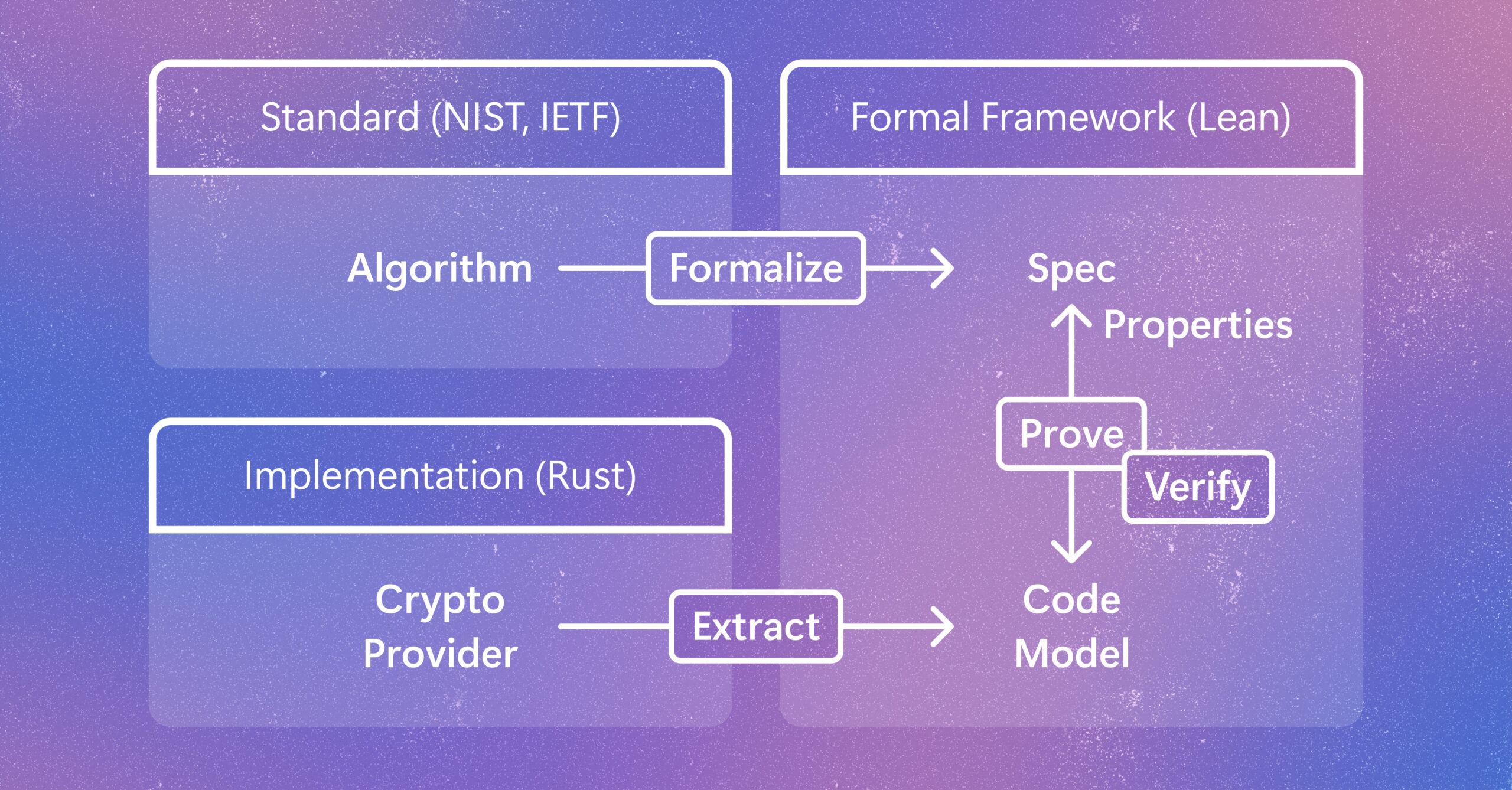
Cryptographic code supports vital protections in modern computing systems. Learn how a new method helps verify code as developers write it while preserving speed and adaptability as it gets implemented and evolves. The post Verifying Rust cryptography in SymCrypt, from standards to code appeared first on Microsoft Research.
MIT News · Artificial Intelligence· news.mit.eduJul 6, 2026
PhD student Rachel Sava, winner of the Envisioning the Future of Computing Prize, explores transformative improvements and dystopian risks of neural technology.