Sep 2026· Journal of Advanced Computational Intelligence and Intelligent Informatics· 20 references
Abstract
The performance of an LLM application is highly dependent on how the user commands the application through prompts. Previous researchers invented role-play prompting techniques to overcome these problems. Including roles relevant to the task can improve the accuracy of the responses generated by LLMs. Nevertheless, the assignment of roles in this study remained a human-driven process. This study addresses the research gap in previous studies by developing deep learning models to effectively predict relevant roles based on tasks. In addition, the impact of the ontology data as an enrichment of the training data on the model performance in two scenarios (with and without ontology) was examined. In the with-ontology setup, enrichment data are extracted from an occupational ontology that includes roles, skills, and abilities along with their corresponding definitions. Data that were restricted to four predefined occupations were incorporated into the benchmark datasets. The benchmark datasets consisted of questions used to assess the LLM performance aligned with predetermined occupations. In without-ontology settings, the models were trained using only the benchmark datasets. An experiment on three variants of recurrent-based and a graph-based model in both scenarios showed that these models exhibited stable convergence and performed best on ontology-enriched data. Notably, the recurrent neural network (RNN) exhibited significant performance gains, achieving improvements of 34% and 1.86% in the F1 score and receiver operating characteristic-area under the curve (ROC–AUC), respectively. Despite its great performance—92% F1 score and 97% ROC–AUC, the gated recurrent unit is computationally the most expensive model compared to long short-term memory, RNN, and graph convolutional network. Further research is required to explore alternative model architectures and expand the scope of their predictable roles.
Agile methods continue to gain popularity. In particular, the Scrum method appears to be on the verge of becoming a de-facto standard in the industry, leading the so called Agile movement. While there are success stories and recommendations, there is little scientifically valid evidence of the challenges in the adoptio...
A. Marchenko, P. Abrahamsson· Agile Conference· 59 citations· ⚡11
A comprehensive taxonomy of the challenges faced when a medium-scale organization decided to adopt software platforms is provided, namely: business challenges, organizational challenges, technical challenges, and people challenges.
Yaser Ghanam, F. Maurer, P. Abrahamsson· Information and Software Tec...· 41 citations· ⚡3
It is shown that high article processing charges are not sufficiently justified by the publishers, which often lack transparency and may prevent authors from adopting OA.
D. Graziotin, Xiaofeng Wang, P. Abrahamsson· Scientometrics· 21 citations· ⚡1
MCGLPPI, a novel geometric representation learning framework that combines graph neural networks (GNNs) with the MARTINI molecular coarse-grained (CG) model to predict overall PPI properties accurately and efficiently, offers an effective and efficient solution for PPI overall property predictions.
Yang Yue, Shu Li, Yihua Cheng et al.· bioRxiv· 15 citations
PepPCBench enables a robust evaluation of PFNN-based methods and supports their continued development for peptide-protein structure prediction, and highlights the influence of peptide length, conformational flexibility, and training set similarity on prediction accuracy.
Si-Long Zhai, Huifeng Zhao, Ji-Ke Wang et al.· Journal of Chemical Informat...· 13 citations· ⚡1
OmniMol is presented, a framework using hypergraphs to improve predictions of molecular properties, addressing challenges of imperfect data annotation and enhancing model explainability, and achieves state-of-the-art performance in properties prediction.
Assistant Professor Pat Pataranutaporn describes a new interface that lets everyday users glimpse inside an AI's neural network before their chatbot ever says a word.
Microsoft Research Blog· microsoft.comJul 13, 2026
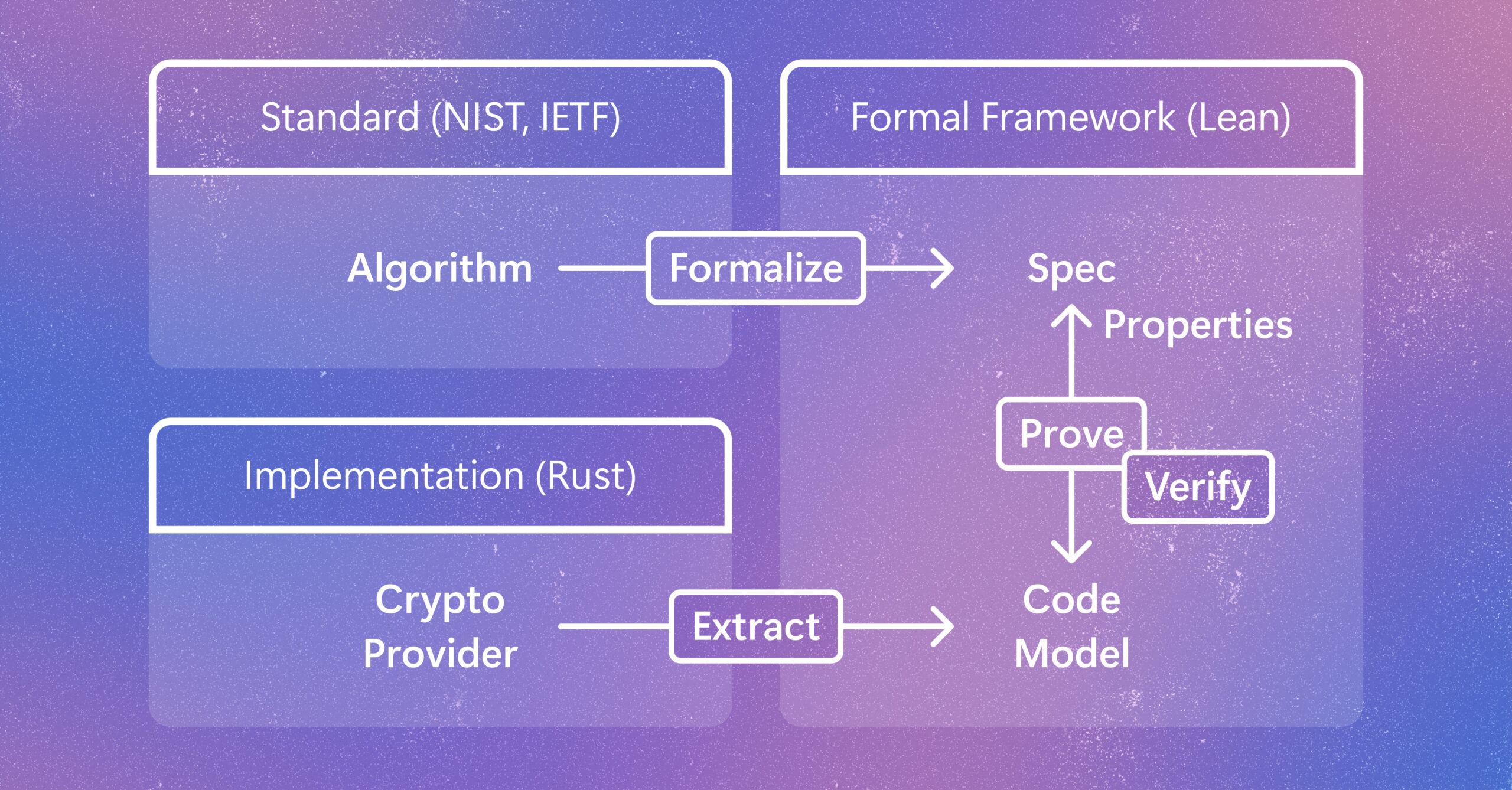
Cryptographic code supports vital protections in modern computing systems. Learn how a new method helps verify code as developers write it while preserving speed and adaptability as it gets implemented and evolves. The post Verifying Rust cryptography in SymCrypt, from standards to code appeared first on Microsoft Research.
MIT News · Artificial Intelligence· news.mit.eduJul 6, 2026
PhD student Rachel Sava, winner of the Envisioning the Future of Computing Prize, explores transformative improvements and dystopian risks of neural technology.