Skip to content

Structural characteristics of local cortical networks wired by distance dependent connectivity rules

Sep 2026 · BMC Neuroscience · Vol 27 · 35 references
Functional Brain Connectivity Studies

Abstract

Abstract Background The function of the cerebral cortex is shaped by its anatomical connectivity, yet experimental findings on connection probabilities in local cortical networks remain inconsistent. This study explores structural characteristics of local cortical networks based on distance dependent, Gaussian connectivity profiles. Monolayers of 101 × 101 pyramidal neurons were examined. Their connectivity was based on experimental anatomical or electrophysiological data. In the anatomical setting the connection probability between neighboring neurons was 0.8. In the electrophysiological scenario connection probabilities for adjacent neurons ranged between 0.08 and 0.23. All distance dependent networks were compared to the configuration model which generates degree-preserving but otherwise randomly rewired networks. The networks thus constructed were analyzed applying tools of network science, i.e. average degrees, degree distributions, local clustering coefficients and graph distances. Moreover, the numbers, sizes and spatial dimensions of cliques were investigated as well as the cost of connectivity. Results Distance-dependent networks differed fundamentally from configuration-model networks across all structural measures. They showed substantially higher local clustering, formed more numerous and more spatially compact groups of strongly connected neurons, and required lower wiring cost. Importantly, the structure of distance-dependent networks was highly sensitive to near-neighbor connectivity: when neurons had a high probability of connecting locally, the network reliably developed tightly wired, spatially localized neuronal clusters. Conclusions Distance-dependent connectivity gives rise to structural network features that may facilitate the emergence of functional neuronal assemblies. Based on the findings of this study, a general probabilistic rule for local cortical connectivity is proposed that can be used to design artificial neural networks with biologically inspired wiring principles.
Read PDF

Similar papers

#computer vision Conference Aug 2008

Scrum in a Multiproject Environment: An Ethnographically-Inspired Case Study on the Adoption Challenges

Agile methods continue to gain popularity. In particular, the Scrum method appears to be on the verge of becoming a de-facto standard in the industry, leading the so called Agile movement. While there are success stories and recommendations, there is little scientifically valid evidence of the challenges in the adoptio...

A. Marchenko, P. Abrahamsson · 59 citations · ⚡11
#computer vision Open access Sep 2012

Making the leap to a software platform strategy: Issues and challenges

A comprehensive taxonomy of the challenges faced when a medium-scale organization decided to adopt software platforms is provided, namely: business challenges, organizational challenges, technical challenges, and people challenges.

Yaser Ghanam, F. Maurer, P. Abrahamsson · 41 citations · ⚡3
#machine learning Open access Mar 2024

Integration of molecular coarse-grained model into geometric representation learning framework for protein-protein complex property prediction

MCGLPPI, a novel geometric representation learning framework that combines graph neural networks (GNNs) with the MARTINI molecular coarse-grained (CG) model to predict overall PPI properties accurately and efficiently, offers an effective and efficient solution for PPI overall property predictions.

Yang Yue, Shu Li, Yihua Cheng et al. · 15 citations

PepPCBench is a Comprehensive Benchmarking Framework for Protein-Peptide Complex Structure Prediction

PepPCBench enables a robust evaluation of PFNN-based methods and supports their continued development for peptide-protein structure prediction, and highlights the influence of peptide length, conformational flexibility, and training set similarity on prediction accuracy.

Si-Long Zhai, Huifeng Zhao, Ji-Ke Wang et al. · 13 citations · ⚡1
#machine learning Open access Sep 2025

Unified and explainable molecular representation learning for imperfectly annotated data from the hypergraph view

OmniMol is presented, a framework using hypergraphs to improve predictions of molecular properties, addressing challenges of imperfect data annotation and enhancing model explainability, and achieves state-of-the-art performance in properties prediction.

Bowen Wang, Junyou Li, Donghao Zhou et al. · 11 citations

Related blog posts

Microsoft Research Blog Jul 13, 2026

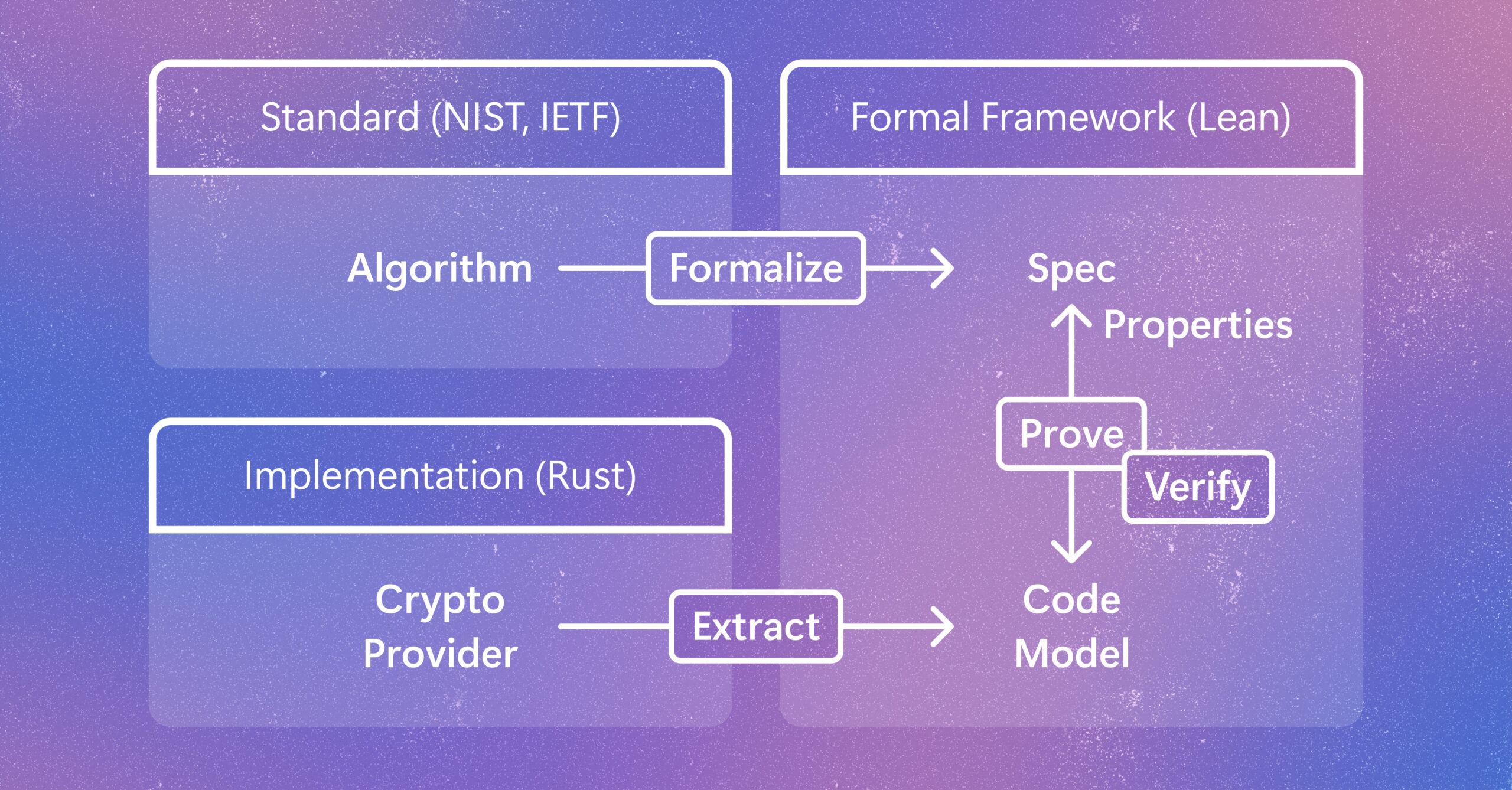
Verifying Rust cryptography in SymCrypt, from standards to code

Cryptographic code supports vital protections in modern computing systems. Learn how a new method helps verify code as developers write it while preserving speed and adaptability as it gets implemented and evolves. The post Verifying Rust cryptography in SymCrypt, from standards to code appeared first on Microsoft Research.

We use cookies to run the site and, with your consent, for analytics and to show ads. See our Cookie Policy.