Sep 2026· Zenodo (CERN European Organization for Nuclear Research)
Abstract
This educational module presents a comprehensive academic introduction to Swarm and Multi-Agent Robotics within the Prep4Uni Robotics and AI curriculum. Core Theoretical and Engineering Foundations: Network Representation & Algebraic Graph Theory: Modeling multi-agent systems via time-varying graphs G = (V, E), topological neighborhoods, degree matrices, and adjacency matrices. Dynamic Consensus Protocols: Discrete and continuous consensus update laws, row-stochastic and doubly stochastic coupling weights, and asymptotic convergence to average consensus states. Graph Laplacian Spectra & Network Stability: Formulation of the Laplacian matrix L = D - A, stability analysis of continuous dynamics x_dot = -L x, and the physical role of the Fiedler eigenvalue (algebraic connectivity lambda_2) in governing convergence rates and link failure resilience. Formation Control & Leader-Follower Architectures: Relative displacement consensus laws, pinning control gains for trajectory-following swarms, and artificial potential field repulsive vectors for decentralized collision avoidance. Distributed Convex Optimization: Collaborative parameter estimation via the Distributed Subgradient Method (DSM), minimizing aggregate network cost functions without central coordinators. Contemporary 2026 AI-Era Computational Paradigms: Multi-Agent Reinforcement Learning (MARL) via Centralized Training with Decentralized Execution (CTDE / MAPPO / QMIX), and Decentralized Physics-Informed Neural Networks (Dec-PINNs) with consensus regularization for mapping continuous environmental spatiotemporal fields. Pedagogical components include 10 conceptual review questions, 12 thought-provoking analytical problems, and 12 fully worked step-by-step numerical engineering derivations.
The results indicate that software engineering work practices are chosen opportunistically, adapted and configured to provide value under the constrains imposed by the startup context.
Nicolò Paternoster, Carmine Giardino, M. Unterkalmsteiner et al.· Information and Software Tec...· 394 citations· ⚡54
This state-of-practice investigation was performed using a literature review followed by a multiple-case study approach and presents how inconsistency between managerial strategies and execution can lead to failure by means of a behavioral framework.
Carmine Giardino, Xiaofeng Wang, P. Abrahamsson· International Conference on...· 175 citations· ⚡19
This study conducts a case survey study based on the secondary data of the major pivots happened in 49 software startups, and demonstrates that customer need pivot is the most common among all pivot types.
Sohaib Shahid Bajwa, Xiaofeng Wang, Anh Nguyen-Duc et al.· Empirical Software Engineeri...· 127 citations· ⚡15
It is found that roles of MVPs in startups were not fully aware by entrepreneurs, and entrepreneurs should consider a systematic approach to fully explore the value of MVP, as a multiple facet product (MFP).
Anh Nguyen-Duc, P. Abrahamsson· International Conference on...· 93 citations· ⚡9
It is found that what perceived as biggest challenges by software startups do vary across different life cycle stages, even though its significance decreases when the learning focuses of the startups move from problem to solution and their products mature.
Xiaofeng Wang, Henry Edison, Sohaib Shahid Bajwa et al.· International Conference on...· 62 citations· ⚡6
Agile methods continue to gain popularity. In particular, the Scrum method appears to be on the verge of becoming a de-facto standard in the industry, leading the so called Agile movement. While there are success stories and recommendations, there is little scientifically valid evidence of the challenges in the adoptio...
A. Marchenko, P. Abrahamsson· Agile Conference· 59 citations· ⚡11
Related blog posts
Microsoft Research Blog· microsoft.comJul 13, 2026
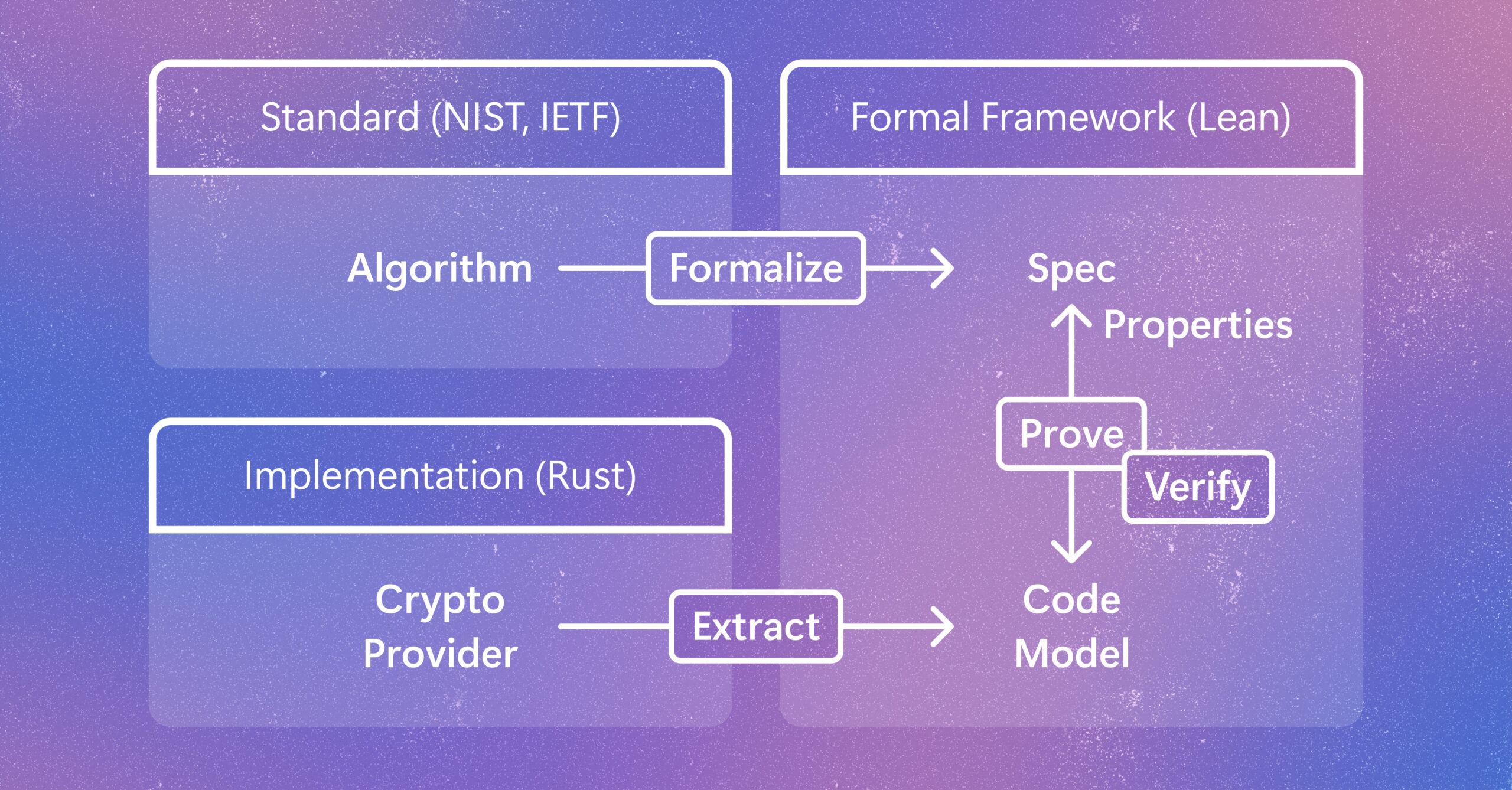
Cryptographic code supports vital protections in modern computing systems. Learn how a new method helps verify code as developers write it while preserving speed and adaptability as it gets implemented and evolves. The post Verifying Rust cryptography in SymCrypt, from standards to code appeared first on Microsoft Research.
Students in MIT’s Concourse program delve deeply into the human condition, debate challenging questions, and learn to develop judgment about issues that can’t be quantified.
Training AI agents with reinforcement learning can be challenging because their tools, context, and decision-making are managed by complex frameworks. Agent Lightning connects existing agents to RL training, making it easier to improve them without rebuilding them. The post Agent Lightning v1.0: A 3,500-Line Lightweight Agentic RL Framework for Training Agents with Real Harnesses appeared first on Microsoft Research.
We use cookies to run the site and, with your consent, for analytics and to show ads.
See our Cookie Policy.