Aug 2026· Zenodo (CERN European Organization for Nuclear Research)
Advanced Graph Neural Networks
Abstract
This paper introduces a novel approach to graph embedding that explicitly models the temporal dynamics of relationships within a graph. Current graph embedding techniques often treat graphs as static structures, neglecting the crucial aspect of how connections evolve over time. This work addresses this limitation by leveraging recurrent neural networks (RNNs) to process sequences of graph snapshots, learning embeddings that capture the directional, strength, and frequency changes in relationships. The core idea is to represent not just the current state of the graph, but the *process* of its evolution. We propose using weighted temporal convolution to capture nuanced changes in the graph's relational dynamics. The resulting embeddings are expected to be more informative and robust for downstream graph-based tasks compared to static embeddings.
Agile methods continue to gain popularity. In particular, the Scrum method appears to be on the verge of becoming a de-facto standard in the industry, leading the so called Agile movement. While there are success stories and recommendations, there is little scientifically valid evidence of the challenges in the adoptio...
A. Marchenko, P. Abrahamsson· Agile Conference· 59 citations· ⚡11
A comprehensive taxonomy of the challenges faced when a medium-scale organization decided to adopt software platforms is provided, namely: business challenges, organizational challenges, technical challenges, and people challenges.
Yaser Ghanam, F. Maurer, P. Abrahamsson· Information and Software Tec...· 41 citations· ⚡3
It is shown that high article processing charges are not sufficiently justified by the publishers, which often lack transparency and may prevent authors from adopting OA.
D. Graziotin, Xiaofeng Wang, P. Abrahamsson· Scientometrics· 21 citations· ⚡1
MCGLPPI, a novel geometric representation learning framework that combines graph neural networks (GNNs) with the MARTINI molecular coarse-grained (CG) model to predict overall PPI properties accurately and efficiently, offers an effective and efficient solution for PPI overall property predictions.
Yang Yue, Shu Li, Yihua Cheng et al.· bioRxiv· 15 citations
PepPCBench enables a robust evaluation of PFNN-based methods and supports their continued development for peptide-protein structure prediction, and highlights the influence of peptide length, conformational flexibility, and training set similarity on prediction accuracy.
Si-Long Zhai, Huifeng Zhao, Ji-Ke Wang et al.· Journal of Chemical Informat...· 13 citations· ⚡1
Abstract Predicting properties from coordinate–category data—sets of vectors paired with categorical information—is fundamental to computational science, manifesting in materials science as predicting formation energies or elastic moduli from crystal structures. While large language models (LLMs) have increasingly been...
Nawaf Alampara, Santiago Miret, Kevin Maik Jablonka· Nature Computational Science· 13 citations
Related blog posts
MIT News · Artificial Intelligence· news.mit.eduOct 13, 2026
Machine-learning networks can learn without detailed instructions from a designer. Those that do may offer insight into how the brain reorganizes itself during learning.
MIT News · Artificial Intelligence· news.mit.eduJul 15, 2026
Assistant Professor Pat Pataranutaporn describes a new interface that lets everyday users glimpse inside an AI's neural network before their chatbot ever says a word.
Microsoft Research Blog· microsoft.comJul 13, 2026
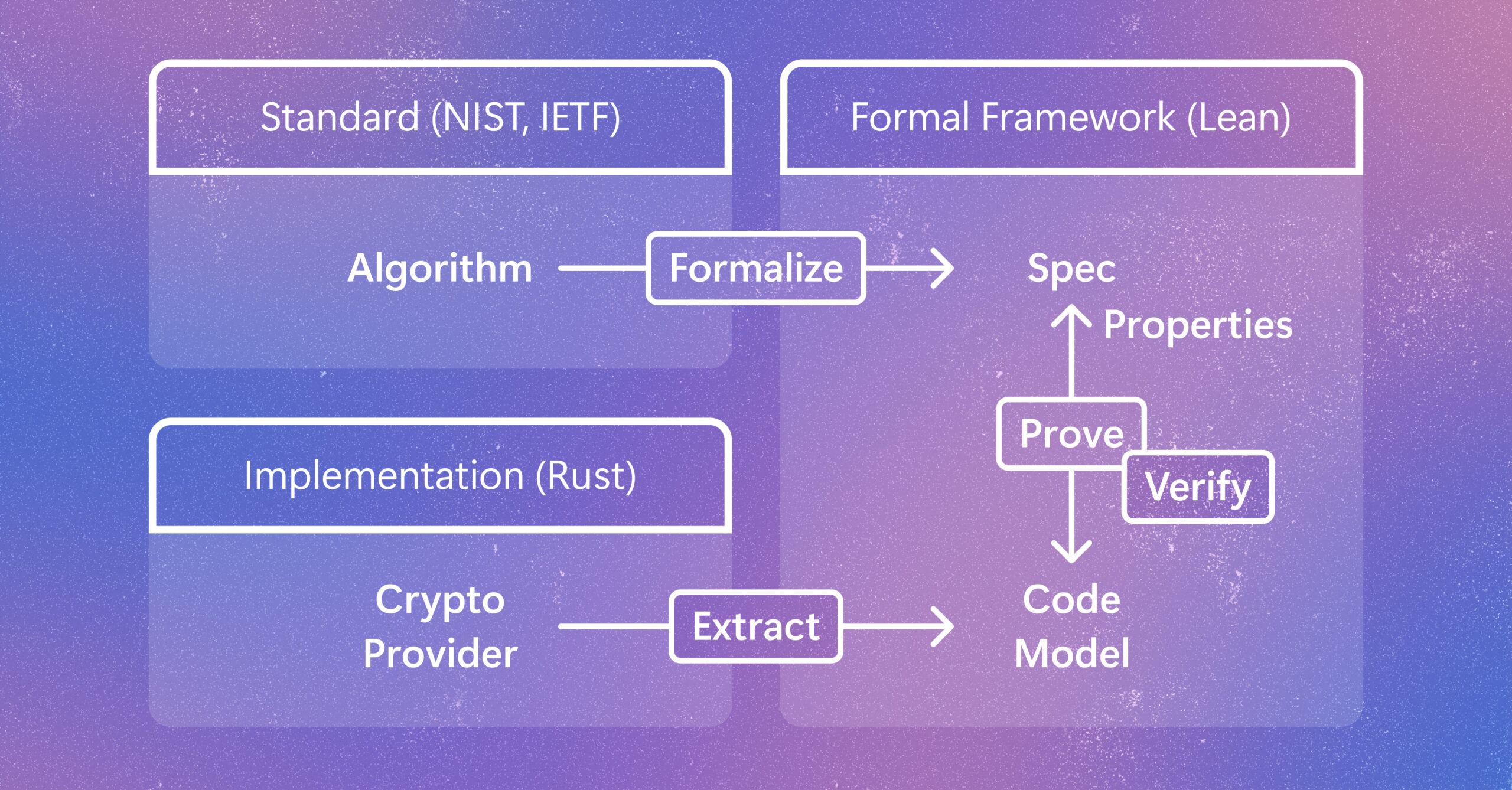
Cryptographic code supports vital protections in modern computing systems. Learn how a new method helps verify code as developers write it while preserving speed and adaptability as it gets implemented and evolves. The post Verifying Rust cryptography in SymCrypt, from standards to code appeared first on Microsoft Research.
MIT News · Artificial Intelligence· news.mit.eduJul 6, 2026
PhD student Rachel Sava, winner of the Envisioning the Future of Computing Prize, explores transformative improvements and dystopian risks of neural technology.
We use cookies to run the site and, with your consent, for analytics and to show ads.
See our Cookie Policy.