Skip to content

Optimization of Resource Allocation in 5G Networks Using Game Theory-Based Algorithms

Sep 2026 · Journal of Circuits, Systems and Computers · 0 citations
Advanced MIMO Systems Optimization

TL;DR

Experimental results on a realistic 5G QoS dataset demonstrate significant improvements over baseline methods, including higher throughput, lower latency, improved fairness, reduced packet loss, and enhanced energy efficiency, confirming the framework's scalability and QoS awareness.
Abstract

The rapid densification of 5G networks and the growing diversity of service demands have made efficient and fair resource allocation increasingly challenging for network operators. Traditional optimization and heuristic game-theoretic approaches struggle to adapt to highly dynamic network conditions, often resulting in reduced throughput, increased latency, and imbalanced resource utilization. To address these issues, this paper proposes a Game-Theory-Driven Hybrid Graph Neural Network and Multi-Agent Deep Reinforcement Learning (GNN-MADRL) framework for dynamic resource allocation in multi-cell 5G networks. The framework employs GNNs to model spatial topology, interference relationships, and user-base station interactions, while MADRL agents learn adaptive strategies for bandwidth, power, and subcarrier allocation. A Nash equilibrium layer is integrated to stabilize agent interactions and ensure fairness and convergence. Experimental results on a realistic 5G QoS dataset demonstrate significant improvements over baseline methods, including higher throughput, lower latency, improved fairness, reduced packet loss, and enhanced energy efficiency, confirming the framework's scalability and QoS awareness.

View source

Similar papers

Sep 2026

QoS-Aware Resource Allocation in LEO Satellite Networks: A Graph Neural Network Approach

Efficient radio resource allocation is pivotal for maximizing the service capability of Low Earth Orbit (LEO) satellite networks. However, the high mobility of satellites and the rapidly time-varying channel conditions pose significant challenges to traditional resource management schemes. Conventional optimization met...

Wen-Bo Yu, Cheng Wang, Gao-Feng Cui et al. · 0 citations
Preprint Aug 2026

Deep Reinforcement Learning Orchestration of Game-Theoretic User Association and Resource Allocation in HetNets

A novel orchestration scheme for game-theoretic UARA in HetNets that closely approximates the optimal policy for the considered operational objectives, while delivering higher network throughput than conventional association methods.

Sotiris Kopsinos, Alexandros I. Papadopoulos, Antonios Lalas et al. · 0 citations
Conference Sep 2026

Game-theoretic joint optimization of spectrum sharing and task offloading for digital twin-assisted IoV

The Internet of Vehicles (IoV) enables advanced applications such as autonomous driving, but it also demands significantly more computing and communication resources. Current research on task offloading struggles to address key challenges, including limited spectrum resources, real-time decision-making in highly dynami...

Feng-Hui Zhang · 0 citations
Conference Aug 2026

An Efficient SAC Algorithm with Adaptive Mixture Model for Multiple Resource Allocation in MEC

In mobile edge computing, multiple heterogeneous tasks require different trade-offs between communication and computing resource, making joint offloading and resource allocation challenging. We propose an adaptive parameterized mixture model to characterize task-source composition and demand heterogeneity. Based on thi...

Yang-Yi Liu, Yu-Ming Han · 0 citations
Open access Aug 2026

Energy-Efficient Cooperative Data Offloading in Cellular Networks Using Reinforcement Learning

This research is among the first to employ MARL to this extent, and it offers an end-to-end solution that combines cellular, Wi-Fi, and device-to-device (D2D) communications and considers practical network environments like user mobility and channel conditions.

Nabeel Abdolrazagh Yaseen Alrashedi, Rasool Sadeghi, Wael Hussein Zayer Al-Lamy et al. · 0 citations
Open access Sep 2026

JOINT POWER CONTROL AND SPECTRUM ACCESS OPTIMIZATION IN FANET VIA REINFORCEMENT LEARNING

This paper studies joint power control and spectrum access in dynamic flying ad hoc networks (FANETs) under co-channel interference and adaptive jamming. We propose a graph neural network-aided multi-agent reinforcement learning (GNN- MARL) framework that enables distributed, topology-aware decision-making. Each UAV ex...

D. T. Nguyen · 0 citations

Related blog posts

Microsoft Research Blog Jul 13, 2026

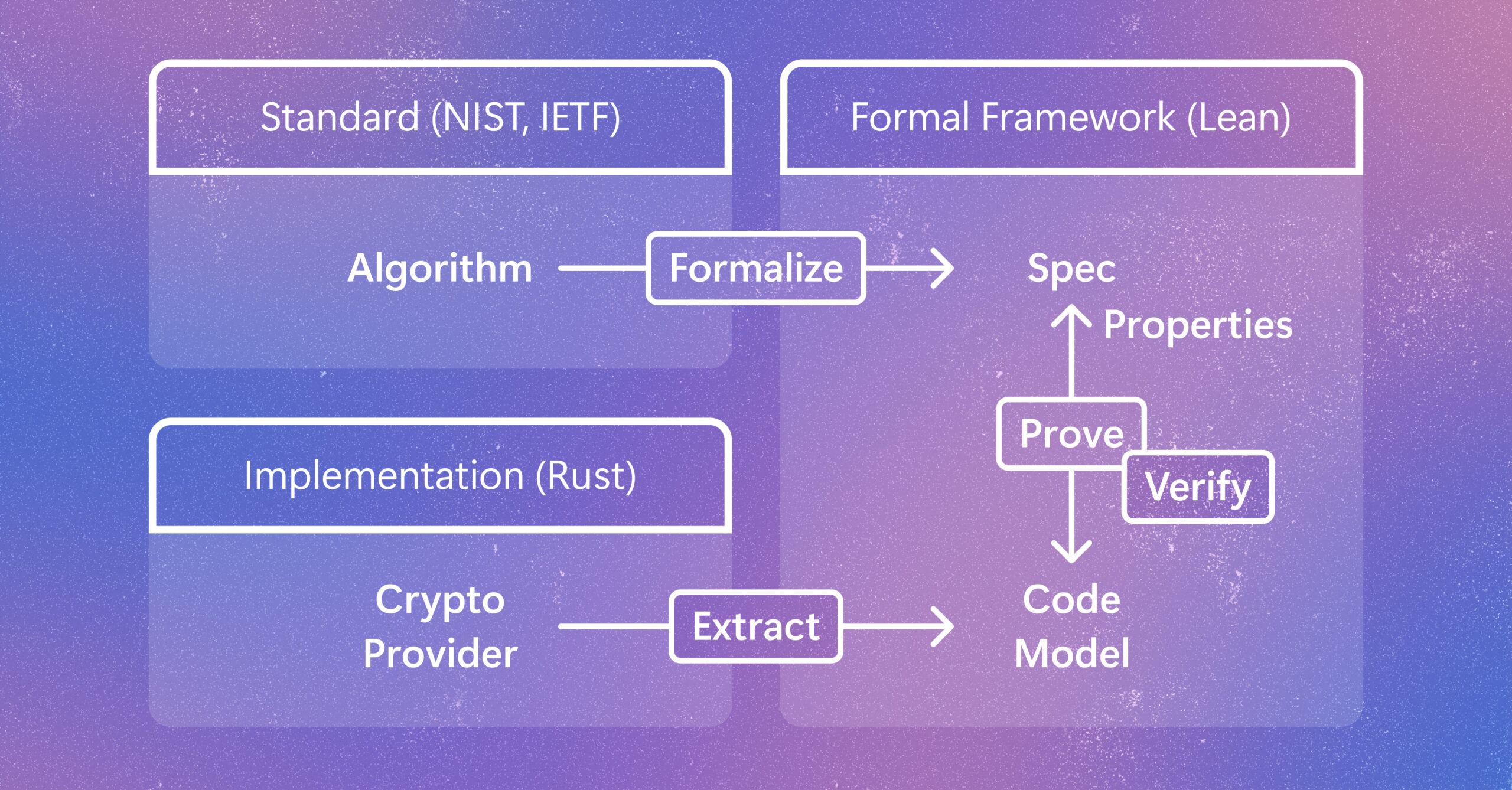
Verifying Rust cryptography in SymCrypt, from standards to code

Cryptographic code supports vital protections in modern computing systems. Learn how a new method helps verify code as developers write it while preserving speed and adaptability as it gets implemented and evolves. The post Verifying Rust cryptography in SymCrypt, from standards to code appeared first on Microsoft Research.

We use cookies to run the site and, with your consent, for analytics and to show ads. See our Cookie Policy.