Skip to content

An Edge-Deployable Lightweight Dynamic Spatio-Temporal Graph Neural Network for Joint Distribution-Network Line-Loss Prediction and Operating-State Recognition

Sep 2026 · International journal of pattern recognition and artificial intelligence · 0 citations

Abstract

A lightweight dynamic spatio-temporal graph neural network, EdgeLite-DSTGNN, is proposed to address the intensified spatio-temporal coupling of line-loss rates, complex state correlations, and limited edge-terminal resources in distribution networks with high renewable-energy penetration. The method treats branches as graph nodes and constructs a dynamic sparse graph by integrating physical topology, time-varying electrical relationships, and adaptive associations. Shared features are extracted using depthwise separable dilated causal convolutions, Top-k sparse graph attention, and gated fusion to jointly perform multi-step line-loss-rate prediction and identify high line loss, overload, voltage violations, and reverse power flow. Knowledge distillation, structured pruning, INT8 quantization, and event-triggered graph construction are further incorporated for edge deployment. Experiments on modified IEEE 33- and 69-bus systems show that, compared with PC-GAT, the proposed method reduces MAE, RMSE, and MAPE by 13.76%, 12.80%, and 13.58%, respectively, while improving Macro-F1 by 1.7 percentage points. The final INT8 model reduces file size, peak memory, inference latency, and energy consumption by 93.8%, 73.0%, 81.8%, and 81.7%, respectively, and the event-triggered mechanism lowers the average end-to-end latency from 12.8 ms to 9.3 ms.
View source

Similar papers

Conference Aug 2026

STGNN-AMD: Spatio-Temporal Graph Neural Network with Adaptive Multi-Scale Decomposition for Mobile Network Traffic Prediction

In next-generation communication networks, adaptive resource orchestration, traffic engineering, and quality-ofservice (QoS) assurance are increasingly important, and accurate traffic prediction (TP) is a key enabling factor because it supports proactive and demand-aware resource allocation. Recently, graph neural netw...

Ling-Chao Meng, Li-Cheng Zhang, Yu-Qian Chen et al. · 0 citations
Conference 2026

Adpt-STGIN: An Adaptive Spatio-Temporal Graph Inductive Network for Topology-Robust Traffic Prediction in Data Center Networks

A deeply fused GraphSAGE-GRU cell that embeds independent inductive GraphSAGE(SAmple and aggreGatE) encoders directly into each GRU gate, enabling simultaneous spatio-temporal feature extraction at every time step while remaining topology-agnostic.

Xuran Chen · 0 citations

Spatio-temporal graph neural network for state awareness and fault diagnosis in virtual power plant communication networks

Power communication networks in virtual power plants (VPPs) play a critical role in enabling reliable information exchange among distributed energy resources, energy storage systems, controllable loads, and dispatch centers. However, their complex topology, strong inter-node dependency, and hidden fault propagation pat...

Ting-Ting Ren, Cai-Xiao Ouyang, Li Yang et al. · 0 citations
Preprint Aug 2026

Hybrid spatial-temporal graph neural network Powered NDTs:Towards Next-Gen Smart Infrastructure Twins

This work proposes a novel Hybrid Spatial-Temporal Graph Neural Network (HSTGNN) architecture that combines three complementary message-passing paradigms: local neighborhood aggregation, spectral filtering, and learnable attention-based weighting and achieves superior performance when benchmarked against other approach...

J. Sengendo, Fabrizio Granelli · 0 citations
Open access Aug 2026

A traffic flow forecasting model with embedded sparse dynamic graph convolution and multi-head attention LSTM

Experimental results on the public PEMS04 and PEMS08 datasets demonstrate that the proposed ESDG-ALSTM model significantly improves forecasting accuracy, confirming that ESDG-ALSTM is more sensitive to abrupt events and multimodal evolution patterns and can effectively enhance prediction performance in complex traffic...

Guozheng Li, Bai-Jing Wu, Ke Gao et al. · 0 citations
Open access Aug 2026

Long Short-Term Memory Network and Graph Embedding to Analyze Distributed Photovoltaic Output Characteristics

A hybrid spatiotemporal prediction framework integrating an improved Long Short-Term Memory (LSTM) network with dynamic graph embedding for deep feature mining and coordinated forecasting and offers methodological support for intelligent electromagnetic energy management and resilient smart power systems is proposed.

S. Wan, J. Tan, Teng Luo et al. · 0 citations

Related blog posts

Microsoft Research Blog Jul 13, 2026

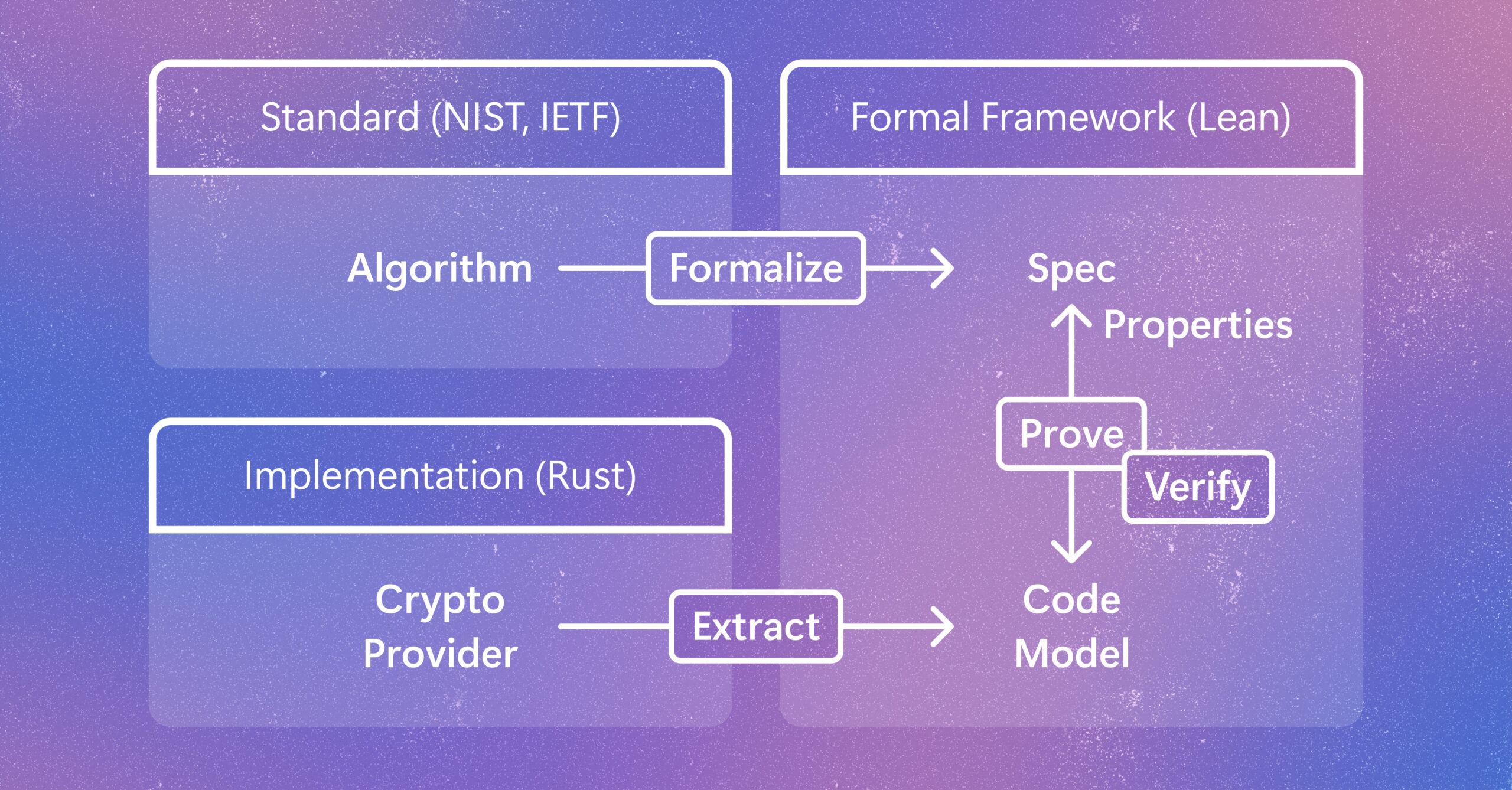
Verifying Rust cryptography in SymCrypt, from standards to code

Cryptographic code supports vital protections in modern computing systems. Learn how a new method helps verify code as developers write it while preserving speed and adaptability as it gets implemented and evolves. The post Verifying Rust cryptography in SymCrypt, from standards to code appeared first on Microsoft Research.

We use cookies to run the site and, with your consent, for analytics and to show ads. See our Cookie Policy.