Sep 2026· International Journal of Numerical Methods for Heat & Fluid Flow· 36 references
Nanofluid Flow and Heat Transfer
Abstract
Purpose This study aims to numerically investigate steady two-dimensional MHD Darcy–Forchheimer mixed convection flow of a Boger nanofluid (Cu/H2O) with coupled heat and mass transfer inside a Y-shaped hourglass cavity containing a cylindrical obstacle, incorporating thermal radiation, Cattaneo–Christov heat flux, Soret effects and chemical reaction to capture non-Fourier conduction and thermo-solutal transport. Methodology The coupled nonlinear partial differential equations are solved using a combined FEM–ANN–GNN strategy: the finite element method (FEM) generates accurate solutions, the artificial neural network (ANN) learns nonlinear input–output relationships and the graph neural network (GNN) preserves spatial interactions and mesh connectivity. Parametric studies span solvent fraction, relaxation, Forchheimer, Darcy, Hartmann, Richardson, radiation, thermal relaxation, nanolayer thickness, nanoparticle radius, Lewis, Soret and chemical reaction parameters. Findings Flow circulation and transport are governed by the interplay of porous resistance, magnetic effects and buoyancy. Increasing permeability and solutal buoyancy enhance fluid motion and transport, whereas inertial resistance and thermal buoyancy suppress flow. Thermal radiation and nanolayer effects improve heat transfer, while larger nanoparticle size reduces thermal efficiency. The ANN yields rapid predictions with major computational savings and the GNN attains superior accuracy by preserving mesh connectivity, agreeing closely with FEM results. Originality/value This work introduces a novel FEM–ANN–GNN framework for coupled thermo-fluidic transport in MHD Darcy–Forchheimer Boger nanofluids within a complex Y-shaped hourglass geometry. By integrating graph-based spatial learning with numerical and neural approaches, it delivers high efficiency and accuracy, enabling fast parametric analysis and real-time prediction of complex thermo-fluidic systems.
Agile methods continue to gain popularity. In particular, the Scrum method appears to be on the verge of becoming a de-facto standard in the industry, leading the so called Agile movement. While there are success stories and recommendations, there is little scientifically valid evidence of the challenges in the adoptio...
A. Marchenko, P. Abrahamsson· Agile Conference· 59 citations· ⚡11
A comprehensive taxonomy of the challenges faced when a medium-scale organization decided to adopt software platforms is provided, namely: business challenges, organizational challenges, technical challenges, and people challenges.
Yaser Ghanam, F. Maurer, P. Abrahamsson· Information and Software Tec...· 41 citations· ⚡3
It is shown that high article processing charges are not sufficiently justified by the publishers, which often lack transparency and may prevent authors from adopting OA.
D. Graziotin, Xiaofeng Wang, P. Abrahamsson· Scientometrics· 21 citations· ⚡1
MCGLPPI, a novel geometric representation learning framework that combines graph neural networks (GNNs) with the MARTINI molecular coarse-grained (CG) model to predict overall PPI properties accurately and efficiently, offers an effective and efficient solution for PPI overall property predictions.
Yang Yue, Shu Li, Yihua Cheng et al.· bioRxiv· 15 citations
PepPCBench enables a robust evaluation of PFNN-based methods and supports their continued development for peptide-protein structure prediction, and highlights the influence of peptide length, conformational flexibility, and training set similarity on prediction accuracy.
Si-Long Zhai, Huifeng Zhao, Ji-Ke Wang et al.· Journal of Chemical Informat...· 13 citations· ⚡1
OmniMol is presented, a framework using hypergraphs to improve predictions of molecular properties, addressing challenges of imperfect data annotation and enhancing model explainability, and achieves state-of-the-art performance in properties prediction.
Assistant Professor Pat Pataranutaporn describes a new interface that lets everyday users glimpse inside an AI's neural network before their chatbot ever says a word.
Microsoft Research Blog· microsoft.comJul 13, 2026
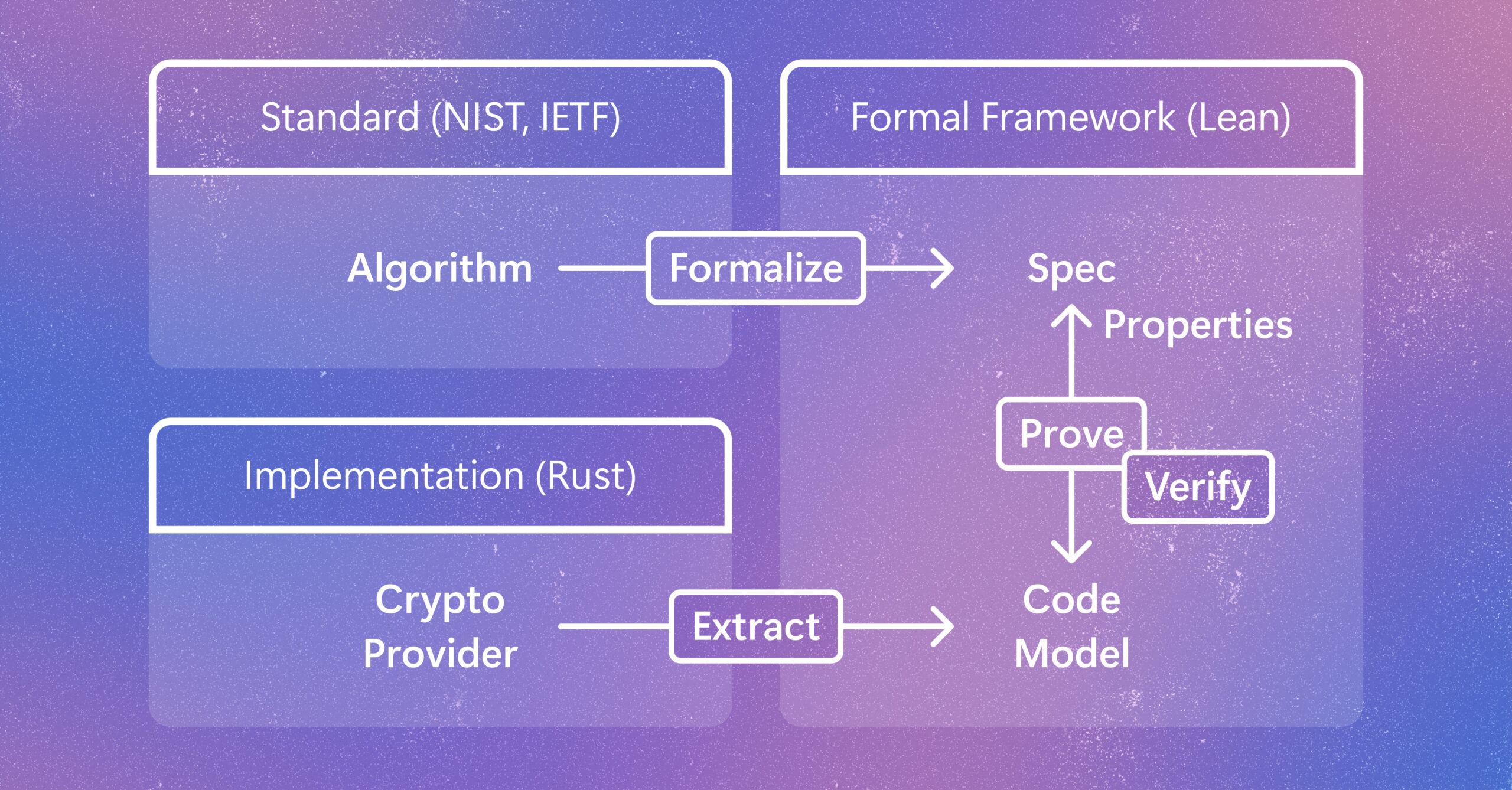
Cryptographic code supports vital protections in modern computing systems. Learn how a new method helps verify code as developers write it while preserving speed and adaptability as it gets implemented and evolves. The post Verifying Rust cryptography in SymCrypt, from standards to code appeared first on Microsoft Research.
MIT News · Artificial Intelligence· news.mit.eduJul 6, 2026
PhD student Rachel Sava, winner of the Envisioning the Future of Computing Prize, explores transformative improvements and dystopian risks of neural technology.