Skip to content

Morphological Memory: Grounding Synthetic Agent Architectures in Basal Cognition and Non-Neural Morphogenesis

Sep 2026 · Zenodo (CERN European Organization for Nuclear Research)
Slime Mold and Myxomycetes Research Neural Networks and Reservoir Computing

Abstract

Overview Contemporary Large Language Model (LLM) agent architectures treat memory primarily as retrieval over an append-only retrospective log. This paradigm incurs four foundational operational pathologies: Retrospective bias: Memory prioritises what was logged over what is dynamically needed. Write-time salience fixation: Initial prompt context artificially locks memory priority. Absence of intrinsic decay: Unchecked accretion leads to noise saturation. Catastrophic semantic dilution: Unbounded flat vector searches degrade precision over long horizons. In this paper, we introduce Morphological Memory, a cognitive architecture grounded in the principles of basal cognition and non-neural morphogenesis (translating somatic bioelectric Vmem pattern memories, Physarum polycephalum memristive flow remodelling, and morphogenetic Active Inference). Four Architectural Pillars Prospective Memory Setpoints: Top-down homeostatic target states guiding dynamic memory configuration rather than passive past retrieval. Decay-Weighted Associative Graph Dynamics: Co-activation topology with dual-rate homeostatic anchoring and power-law decay. Filesystem Stigmergy as Extended Phenotype: Environmental modification and trace deposition as an integral cognitive substrate. Topological Gating: Structural isolation preventing unbounded cross-talk and prompt-space pollution. Empirical Baselines & Wipe-Resumption Benchmark All claims are paired with reproducible, open-source benchmarks in the companion simulation suite biofield_sim: Reservoir-Computing Baselines: Matched-protocol experiments (biofield_sim v0.5.0) indicate that conventional Echo State Networks outperform bioelectric-lattice and memristive substrates on linear memory capacity and NARMA-10, demonstrating that continuous reservoir dynamics alone are the wrong instrument for structured agent memory. Wipe-Resumption Benchmark: In an LLM-free evaluation (v0.6.0, 30 seeds), a decay-weighted associative graph achieves recall@8 = 0.61 following a complete context wipe (compared to 0.25 / chance for flat cosine similarity), while empirically quantifying write-time fixation. Negative Result on Literal Flux Remodelling: Evaluating Physarum tube-adaptation rules revealed that competitive branch pruning is the wrong inductive bias for associative recall, underperforming Hebbian decay across all tested exponents. The biological inspiration is retained while the literal flow rule is transparently withdrawn. Links & Code Availability Companion Code & Benchmarks: https://github.com/OpenTangent/biofield-sim Interactive Live Visualizer: https://opentangent.github.io/biofield-sim/ License: Creative Commons Attribution 4.0 International (CC-BY 4.0); Code under MIT License.
View source

Similar papers

#computer vision Conference Aug 2008

Scrum in a Multiproject Environment: An Ethnographically-Inspired Case Study on the Adoption Challenges

Agile methods continue to gain popularity. In particular, the Scrum method appears to be on the verge of becoming a de-facto standard in the industry, leading the so called Agile movement. While there are success stories and recommendations, there is little scientifically valid evidence of the challenges in the adoptio...

A. Marchenko, P. Abrahamsson · 59 citations · ⚡11
#computer vision Open access Sep 2012

Making the leap to a software platform strategy: Issues and challenges

A comprehensive taxonomy of the challenges faced when a medium-scale organization decided to adopt software platforms is provided, namely: business challenges, organizational challenges, technical challenges, and people challenges.

Yaser Ghanam, F. Maurer, P. Abrahamsson · 41 citations · ⚡3
#machine learning Open access Mar 2024

Integration of molecular coarse-grained model into geometric representation learning framework for protein-protein complex property prediction

MCGLPPI, a novel geometric representation learning framework that combines graph neural networks (GNNs) with the MARTINI molecular coarse-grained (CG) model to predict overall PPI properties accurately and efficiently, offers an effective and efficient solution for PPI overall property predictions.

Yang Yue, Shu Li, Yihua Cheng et al. · 15 citations

PepPCBench is a Comprehensive Benchmarking Framework for Protein-Peptide Complex Structure Prediction

PepPCBench enables a robust evaluation of PFNN-based methods and supports their continued development for peptide-protein structure prediction, and highlights the influence of peptide length, conformational flexibility, and training set similarity on prediction accuracy.

Si-Long Zhai, Huifeng Zhao, Ji-Ke Wang et al. · 13 citations · ⚡1
#machine learning Open access Sep 2025

Unified and explainable molecular representation learning for imperfectly annotated data from the hypergraph view

OmniMol is presented, a framework using hypergraphs to improve predictions of molecular properties, addressing challenges of imperfect data annotation and enhancing model explainability, and achieves state-of-the-art performance in properties prediction.

Bowen Wang, Junyou Li, Donghao Zhou et al. · 11 citations

Related blog posts

Microsoft Research Blog Jul 13, 2026

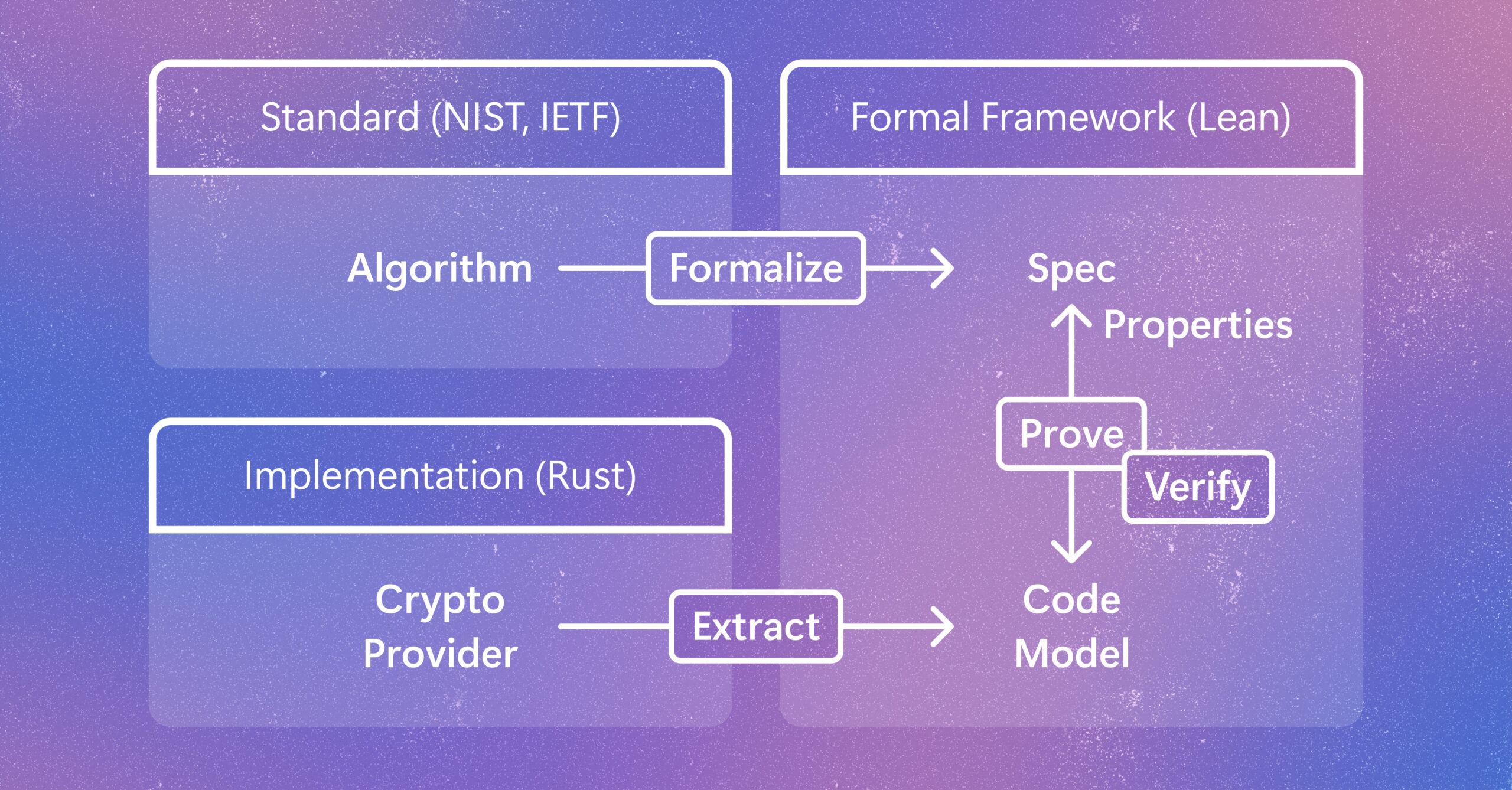
Verifying Rust cryptography in SymCrypt, from standards to code

Cryptographic code supports vital protections in modern computing systems. Learn how a new method helps verify code as developers write it while preserving speed and adaptability as it gets implemented and evolves. The post Verifying Rust cryptography in SymCrypt, from standards to code appeared first on Microsoft Research.

We use cookies to run the site and, with your consent, for analytics and to show ads. See our Cookie Policy.