Background Deep brain stimulation (DBS) is an established therapy for movement and psychiatric disorders, yet its effects vary substantially across individuals. The pre-operative brain provides the individual circuitry upon which DBS acts, but how this circuitry shapes surgical outcomes remains poorly characterized. Methods We conducted a systematic review (CRD42024567015) of studies relating pre-operative neuroimaging (structural, functional, or molecular) to DBS outcomes. Reported regions generated disease-specific frequency maps, which informed two normative connectivity analyses: (1) identifying central regions driving the network via graph theory metrics (internal network) and (2) assessing brain-wide circuit engagement (external network). Results Fifty-three studies (n = 1758 patients) were included. Movement disorders comprised 73.6%, primarily Parkinson's disease (PD), while psychiatric disorders comprised 20.8%, mainly major depressive disorder (MDD). Frequency maps showed disease-specific involvement, most commonly the primary motor cortex (PD) and anterior cingulate cortex (MDD). Internal network analysis identified the primary motor cortex, left thalamus, brainstem, and right subthalamic nucleus as central in PD, and the bilateral amygdala, middle frontal gyrus, and frontal operculum cortex in MDD. External networks showed basal ganglia and limbic engagement in PD and MDD, respectively, plus shared higher-order networks (salience, cerebellar, and default mode). Conclusions Across movement and psychiatric disorders, DBS outcomes were associated with the pre-operative organization of disease-specific circuits and shared higher-order control networks. We propose that individual variation within these networks is a key determinant of surgical benefit. Upon further validation, these findings may open the door to imaging-informed, network-level patient selection.
Agile methods continue to gain popularity. In particular, the Scrum method appears to be on the verge of becoming a de-facto standard in the industry, leading the so called Agile movement. While there are success stories and recommendations, there is little scientifically valid evidence of the challenges in the adoptio...
A. Marchenko, P. Abrahamsson· Agile Conference· 59 citations· ⚡11
A comprehensive taxonomy of the challenges faced when a medium-scale organization decided to adopt software platforms is provided, namely: business challenges, organizational challenges, technical challenges, and people challenges.
Yaser Ghanam, F. Maurer, P. Abrahamsson· Information and Software Tec...· 41 citations· ⚡3
It is shown that high article processing charges are not sufficiently justified by the publishers, which often lack transparency and may prevent authors from adopting OA.
D. Graziotin, Xiaofeng Wang, P. Abrahamsson· Scientometrics· 21 citations· ⚡1
MCGLPPI, a novel geometric representation learning framework that combines graph neural networks (GNNs) with the MARTINI molecular coarse-grained (CG) model to predict overall PPI properties accurately and efficiently, offers an effective and efficient solution for PPI overall property predictions.
Yang Yue, Shu Li, Yihua Cheng et al.· bioRxiv· 15 citations
PepPCBench enables a robust evaluation of PFNN-based methods and supports their continued development for peptide-protein structure prediction, and highlights the influence of peptide length, conformational flexibility, and training set similarity on prediction accuracy.
Si-Long Zhai, Huifeng Zhao, Ji-Ke Wang et al.· Journal of Chemical Informat...· 13 citations· ⚡1
OmniMol is presented, a framework using hypergraphs to improve predictions of molecular properties, addressing challenges of imperfect data annotation and enhancing model explainability, and achieves state-of-the-art performance in properties prediction.
Assistant Professor Pat Pataranutaporn describes a new interface that lets everyday users glimpse inside an AI's neural network before their chatbot ever says a word.
Microsoft Research Blog· microsoft.comJul 13, 2026
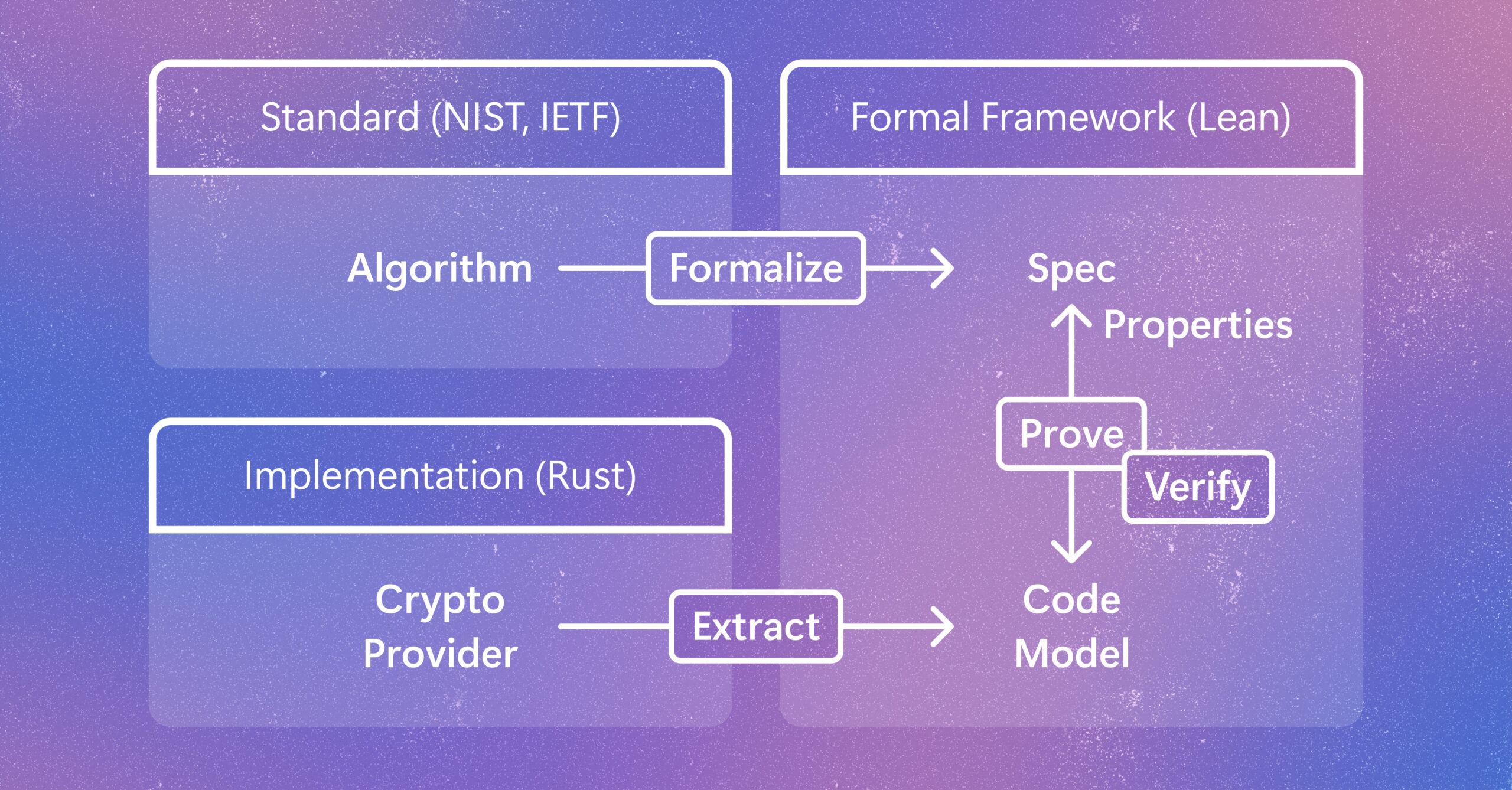
Cryptographic code supports vital protections in modern computing systems. Learn how a new method helps verify code as developers write it while preserving speed and adaptability as it gets implemented and evolves. The post Verifying Rust cryptography in SymCrypt, from standards to code appeared first on Microsoft Research.
MIT News · Artificial Intelligence· news.mit.eduJul 6, 2026
PhD student Rachel Sava, winner of the Envisioning the Future of Computing Prize, explores transformative improvements and dystopian risks of neural technology.