Oct 2026· IEEE Transactions on Mobile Computing· Vol 25, pp. 18593-18609· 0 citations· 38 references
Abstract
Semantic communication systems in mobile networks necessitate real-time collaborative updates of semantic encoders as a result of node mobility that induces semantic extraction drift. However, diversity within modal transmission content and heterogeneous encoder architectures, along with challenges such as imbalanced training requirements and pseudo-label noise, limit the effectiveness of general collaborative update approaches. In this paper, we propose Fed-MoSeC, a novel federated learning framework for updating cross-modal semantic encoders. Our framework trains only a newly designed graph neural network-based adapter while freezing heterogeneous encoders for various modalities, converting heterogeneous cross-modal updates into a homogeneous aggregation task, and significantly reducing communication overhead. By combining confidence-based filtering with similarity-matrix distillation, the novel integrated Pseudo-label Noise Counteracting Component (PNCC) is designed to be robust to noisy data. The Training Optimization Component (TOC) based on a bi-level Cournot–Stackelberg game theoretical algorithm achieves near-optimal Subgame-Perfect Nash Equilibrium (SPNE) to incentivize across nodes and maximize update nodes’ utilities with different training levels. Experimental results highlight the advantages of Fed-MoSeC over existing potential application algorithms, reducing communication by 95–97% and improving RSUM by 18% at 70% pseudo-label noise.

Compared to CNN- and GNN-based methods, the results show that the suggested semantic enabled FFNN framework provides a better balance of accuracy, communication efficiency, scalability, and privacy preservation, making it a workable and efficient solution for safe, extensive, cross-institutional research collaboration...
O. Akpovona· International Journal of Com...· 0 citations
A personalized DSC framework that cuts off cross-task interference by limiting the system to absorbing complementary knowledge while actively blocking mismatched parameter updates, and which achieves a 4.77% global relative improvement over the no-aggregation baseline and outperforms decentralized FedAvg, FedAMP, and h...
Linqi Yin, Tie-Jun Lv, Wei-Cai Li et al.· IEEE Transactions on Communi...· 0 citations
Cognitive-semantic communication encodes task-relevant meaning rather than raw bits, improving 6G spectral efficiency and reducing latency, yet evidence remains fragmented across methods, evaluations, and deployments. This PRISMA-based review screens 782 records (2019-2025) from seven databases, retaining 73 studies or...
Sushil Kumar Singh, Danish Ali, Muhammad Talha Usman et al.· ICCK Transactions on Sensing...· 0 citations
Federated generative semantic communication (FedGenSC) is proposed, which mitigates all three failure modes of naive GAN federation by employing a global generator with local-only discriminators, providing cross-client semantic information through a semantic prototype bank, and conditioning generation on the instantane...
Rita Abou Fares, Razan Al Kakoun, Maher Nouiehed et al.· 0 citations
Semantic communication is developing into a very promising paradigm for sixth-generation (6G) wireless systems. However, most existing approaches suffer from equal treatment of all semantic data, predominantly neural recovery methods, and catastrophic forgetting of previously learned information when adapting to new do...
Machine-learning networks can learn without detailed instructions from a designer. Those that do may offer insight into how the brain reorganizes itself during learning.
Microsoft Research Blog· microsoft.comJul 13, 2026
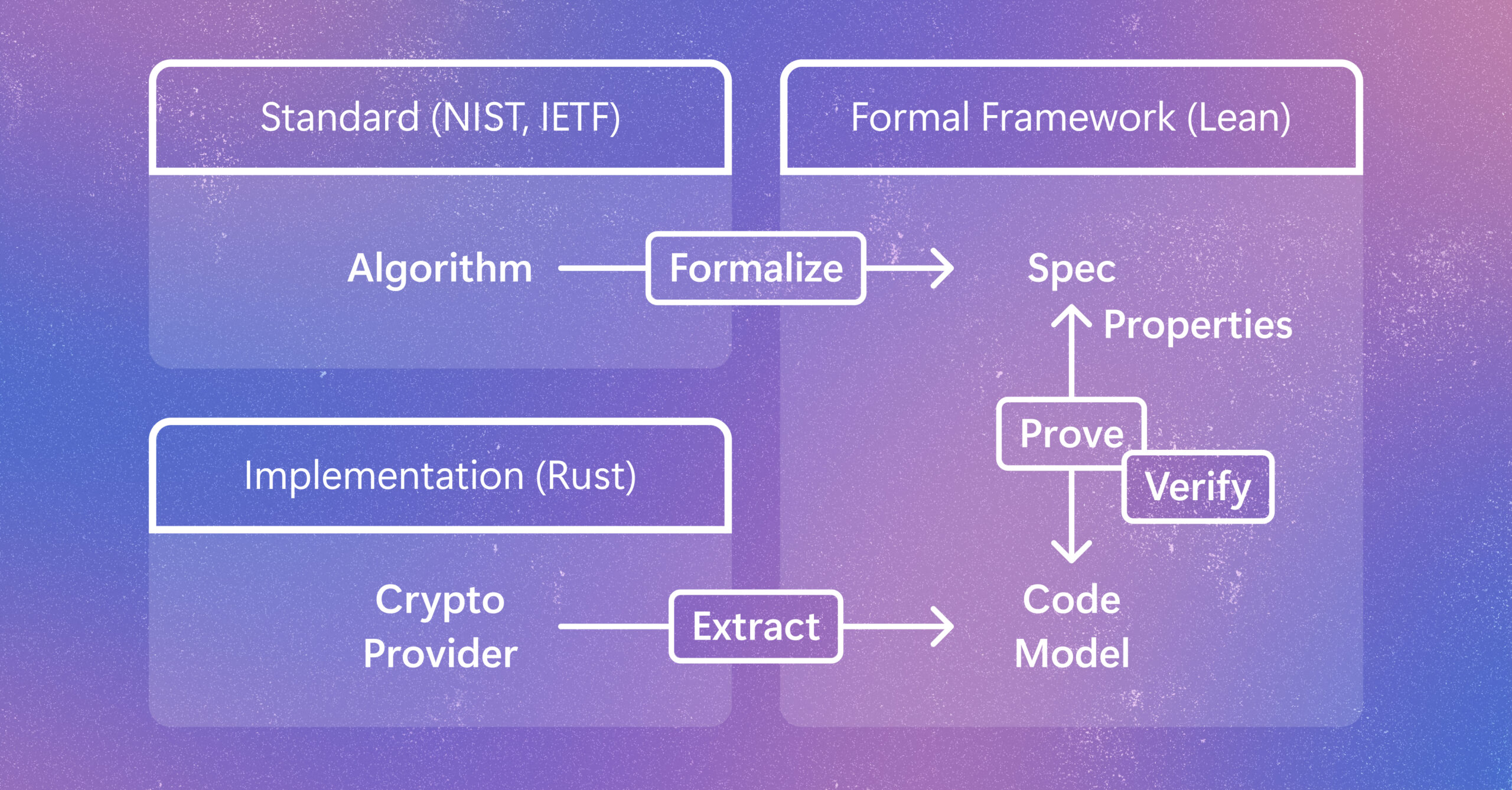
Cryptographic code supports vital protections in modern computing systems. Learn how a new method helps verify code as developers write it while preserving speed and adaptability as it gets implemented and evolves. The post Verifying Rust cryptography in SymCrypt, from standards to code appeared first on Microsoft Research.
Prabha Jha used her experience with MIT Open Learning’s program for senior executives to develop AI solutions for her employer, Verizon, and to write a book.
We use cookies to run the site and, with your consent, for analytics and to show ads.
See our Cookie Policy.