This review systematically examines recent progress in AI-enabled energy management strategies for self-powered flexible electronic systems and categorizes AI integration across three key dimensions: at the algorithmic level, predictive models and reinforcement learning enable dynamic power allocation and coordinate multi-source energy harvesting from intermittent sources.
Abstract
Flexible electronic systems hold immense potential for applications such as wearable devices, electronic skin, and healthcare monitoring, but their advancement is significantly hindered by the bulky size and mechanical limitations of conventional rigid batteries. Furthermore, existing flexible battery technologies still face a persistent trade-off between energy density and mechanical flexibility. To address the fundamental mismatch between energy supply and demand, this review systematically examines recent progress in AI-enabled energy management strategies for self-powered flexible electronic systems. Facilitated by the development of lightweight models and Edge AI, artificial intelligence can now be deployed on resource-constrained devices to reduce reliance on cloud computing and minimize latency. This paper categorizes AI integration across three key dimensions: at the algorithmic level, predictive models and reinforcement learning enable dynamic power allocation and coordinate multi-source energy harvesting from intermittent sources like triboelectric and thermoelectric generators; at the device and circuit level, AI facilitates adaptive voltage regulation and dynamic compensation for hardware performance degradation over time; and at the system level, AI transforms traditional passive architectures into autonomous, self-optimizing platforms capable of prioritizing and scheduling tasks based on real-time energy conditions. While significant progress has been made, challenges regarding the high computational demands of AI, long-term device reliability, system integration complexity, and data privacy remain. Future advancements will rely on cross-layer co-optimization to fully realize sustainable, intelligent, and autonomous flexible electronic platforms.

The relentless proliferation of the Internet of Things (IoT), wearable bioelectronics, and cyber-physical infrastructure has rendered the conventional electrochemical battery the single most prohibitive bottleneck to long-term, maintenance-free autonomous microsystems. Energy harvesting, i.e. the conversion of ambient...
Lyuye Lin, Zhi-Fu Feng, E. Miele et al.· 0 citations
The convergence of artificial intelligence and biomedicine is creating opportunities for smart sensing systems in precision medicine. Conventional sensors, however, remain dependent on external power sources. Short battery life, difficult replacement, and potential biological risks limit their use in implantable, wea...
Fu-Ting Wang, Dan Yang, Ren Cai· Chemistry of Materials· 0 citations
Ensuring long-term, stable operation of self-powered systems considering the stochastic and fluctuating nature of ambient energy remains a pivotal challenge, as existing multi-source harvesting architectures are confined to static, non-responsive paradigms. This work presents a self-powered wireless sensing system that...
Zhi-Heng Wang, Yu-Xi Li, Yu-Peng Li et al.· Nanotechnology and Precision...· 0 citations
ABSTRACT Recent advances in wearable biosensing technologies have underscored the importance of continuous and reliable personal health monitoring. However, the limited size and capacity of conventional batteries remain a critical bottleneck for long‐term operation. Here, we present integrated self‐powered wearable bio...
Ji-Seok Kim, T. Kang, H. Yoo et al.· Advancement of science· 0 citations
The increasing proliferation of the Internet of Things (IoT), wireless sensor networks (WSN), wearable electronics, and smart sensing platforms have intensified the demand for sustainable and maintenance-free power sources. Energy harvesting has emerged as a promising solution to replace or complement traditional batte...
High-fidelity sensing remains highly challenging in self-powered systems, as the limited power of energy harvesters constrains data acquisition and transmission. In this work, we present a wireless, intelligent, self-powered environmental node (WISE-Node) that simultaneously harvests energy and collects sensing informa...
Hong-Yong Yu, Ya-Wei Wang, Heng-Xu Du et al.· Science Advances· 1 citation
Related blog posts
MIT News · Artificial Intelligence· news.mit.eduOct 2, 2026
A weeklong summer workshop brought higher education faculty to campus to explore how AI and machine learning materials can be adapted for their classrooms.
MIT News · Artificial Intelligence· news.mit.eduAug 27, 2026
A new machine-learning framework aims to improve the success rate of computational protein design while moving away from results that reproduce sequences found in nature.
Microsoft Research Blog· microsoft.comAug 20, 2026
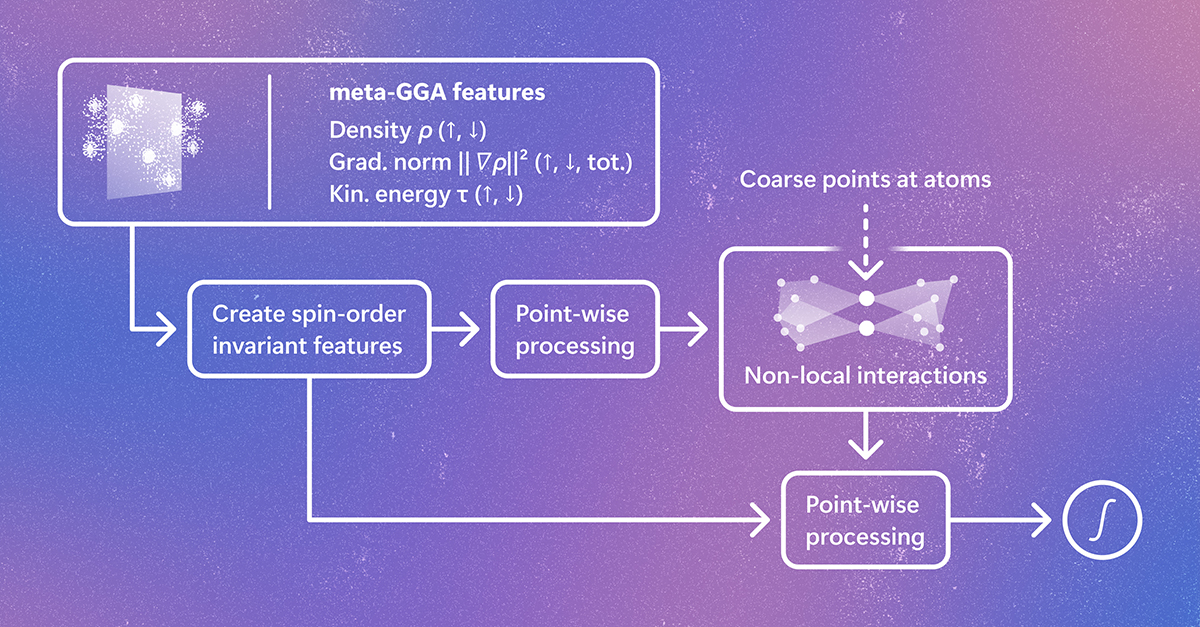
Skala 1.1, the updated deep-learning exchange-correlation functional from Microsoft Research, provides greater accuracy, expanded accessibility across the computational chemistry ecosystem, and a living benchmark to track computational performance. The post Broadening access to Skala creates a faster path to predictive DFT appeared first on Microsoft Research.
We use cookies to run the site and, with your consent, for analytics and to show ads.
See our Cookie Policy.